
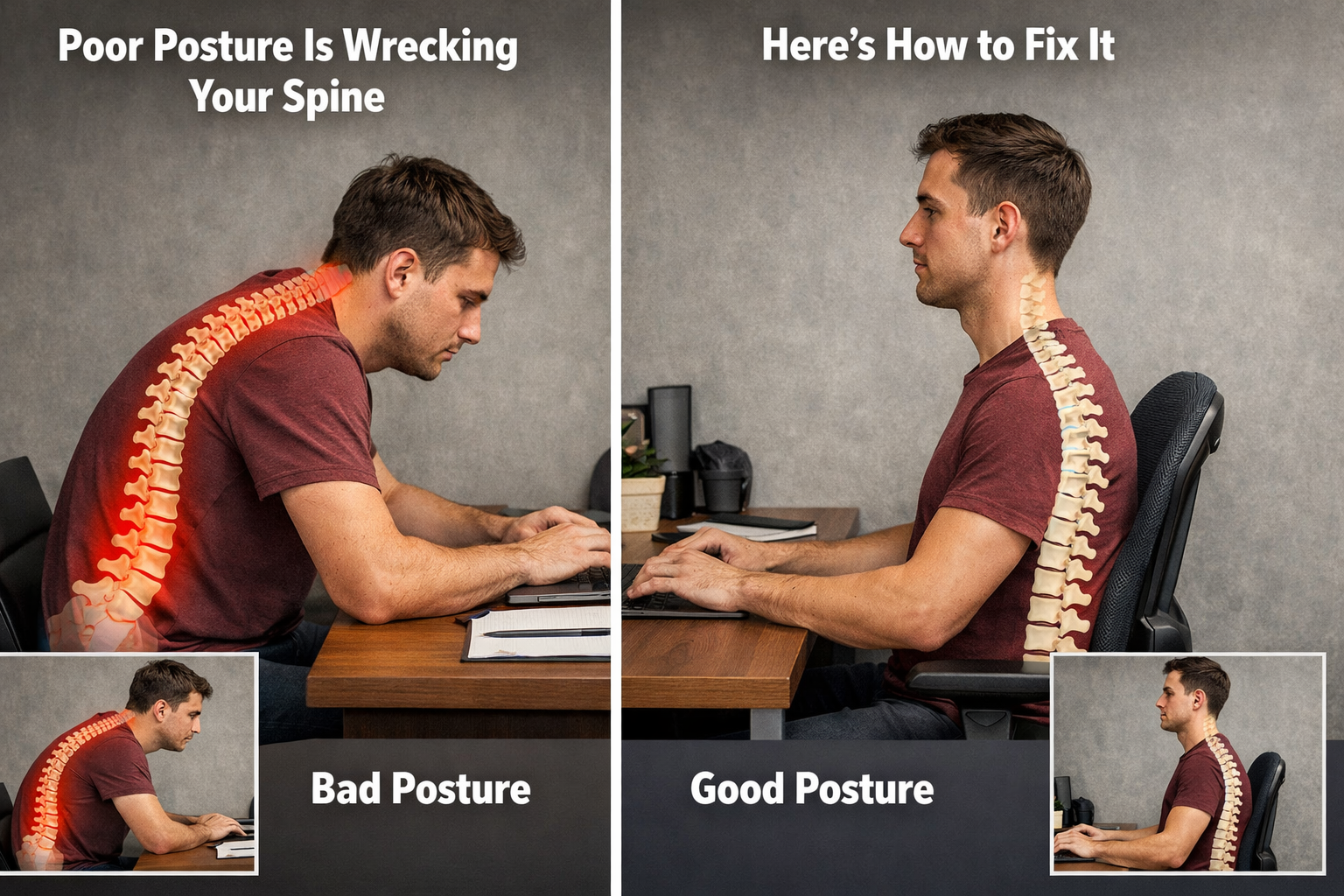
In today’s fast-paced digital world, most of us spend countless hours hunched over computers, staring at phones, or sitting at desks without moving. While these habits may seem harmless at first, poor posture quietly damages your spine over time, leading to chronic pain, decreased mobility, and even long-term health problems. Unlike an obvious injury, the effects of poor posture accumulate gradually, making it difficult to notice until discomfort becomes constant. Understanding the underlying causes, recognizing early warning signs, and taking deliberate steps to correct posture are essential for maintaining spinal health, improving overall well-being, and preventing conditions that can affect every aspect of daily life.
The Hidden Dangers of Poor Posture
Poor posture is far more than a cosmetic concern; it is a serious health issue. When the spine is misaligned due to slouching or hunching, the body compensates in ways that place additional strain on muscles, ligaments, and discs. Over time, this stress can result in chronic back or neck pain, tension headaches, and reduced flexibility. Beyond musculoskeletal problems, poor posture can even affect internal systems. A slumped position compresses the chest cavity, limiting lung capacity and oxygen intake, and may affect digestion by compressing abdominal organs. The resulting fatigue, muscle tightness, and restricted mobility can interfere with everyday tasks and reduce overall quality of life. Addressing posture early can prevent these issues and help restore natural alignment, which supports both physical and mental wellness.
Common Causes of Poor Posture
While some people are predisposed to posture problems due to genetics or medical conditions, lifestyle habits are often the main culprits. Sedentary work routines, especially extended periods spent at a desk or in front of a screen, encourage slouching and forward head posture. Poor ergonomics such as a chair that does not support the lower back, a monitor placed too low or high, or a keyboard that strains the wrists can worsen the problem. Weak core and back muscles leave the spine unsupported, making it more difficult to maintain proper alignment, while carrying heavy backpacks or lifting improperly can shift the spine out of its natural position. Additionally, modern technology use has created the phenomenon known as “text neck,” where prolonged device use causes the head to jut forward, putting extra stress on the cervical spine. Recognizing these habits and their impact is the first step toward corrective action.
Signs Your Spine Needs Attention
Spinal problems often develop silently, so it is important to notice subtle signs before they escalate. Persistent neck, shoulder, or back pain is a common indicator that your posture may be affecting spinal health. Physical changes, such as rounded shoulders, a hunched back, or a forward head that extends beyond the shoulders, are visual cues that the spine is under stress. Other symptoms can include rapid fatigue during light activity, decreased range of motion, and tension headaches caused by upper spinal strain. Paying attention to these signs and acting promptly can prevent further damage and improve long-term spinal function.
Strategies to Correct Poor Posture
Correcting poor posture is a multifaceted process that involves awareness, exercises, lifestyle adjustments, and professional care. One of the most effective strategies is optimizing your workspace ergonomics. Chairs that support the natural curve of the lower back, monitors positioned at eye level, and keyboards and mice that allow elbows to remain at a comfortable angle all help reduce spinal strain. Standing desks or adjustable seating can also encourage better alignment during long hours of work. Strengthening exercises targeting the core, back, and shoulder muscles play a critical role as well, since a strong support system makes it easier to maintain proper posture throughout the day. Exercises like planks, rows, reverse flys, and chest stretches help stabilize the spine and counteract slouching.
Equally important is posture awareness, which involves consciously checking alignment throughout the day. Small reminders, apps, or wearable devices can help make proper posture habitual, preventing strain before it develops into pain. Stretching and mobility exercises targeting tight muscles, including the chest, shoulders, hip flexors, and hamstrings, also improve range of motion and reduce spinal tension. Incorporating yoga or Pilates can combine stretching and strengthening in a holistic approach. Regular movement breaks are essential for mitigating the effects of prolonged sitting, as even short walks or stretches every 30–60 minutes relieve pressure on the spine and improve circulation.
How Professional Chiropractic Care Supports Posture Correction
While lifestyle changes are essential, professional chiropractic care can accelerate recovery and ensure the spine is properly aligned. Chiropractors specialize in assessing spinal health, identifying misalignments, and providing individualized treatments that restore optimal function. Spinal adjustments help correct structural imbalances, while targeted exercises strengthen supporting muscles to prevent recurrence. Chiropractors also provide education on posture habits tailored to daily routines, addressing both immediate pain and long-term prevention. Many patients experience reduced discomfort, improved mobility, and enhanced overall wellness when combining chiropractic care with consistent posture practices.
Virginia Family Chiropractic & PM: Your Partner in Spinal Health
For residents in Virginia seeking expert care, Virginia Family Chiropractic & PM offers a comprehensive approach to posture correction and spinal wellness. The clinic focuses on patient-centered care, evaluating the root causes of posture issues and developing customized treatment plans designed to restore proper alignment and improve overall function. Services include advanced spinal adjustments, personalized posture correction programs, core and strength-building guidance, and preventative care to maintain long-term spinal health. By combining professional treatment with lifestyle recommendations, Virginia Family Chiropractic & PM ensures that patients not only relieve pain but also prevent future complications. The team’s holistic approach emphasizes education, treatment, and prevention, creating sustainable solutions for optimal spinal function and overall well-being.
Frequently Asked Questions (FAQ)
How quickly can posture improve with chiropractic care?
The timeline varies depending on the severity of misalignment, muscle weakness, and lifestyle habits. Some patients notice improvement within weeks, while others may require several months of consistent care and exercises to achieve lasting results.
Can poor posture cause headaches?
Yes, forward head posture and upper back tension can lead to chronic tension headaches. Chiropractic adjustments, combined with strengthening and stretching exercises, often reduce headache frequency and intensity.
Are posture corrector braces effective?
Posture correctors can provide temporary support and improve awareness, but they should not replace exercises and professional guidance. They work best as a supplemental tool alongside a comprehensive posture improvement plan.
Is poor posture reversible?
In most cases, poor posture can be significantly improved through consistent exercises, ergonomic adjustments, and professional chiropractic care. Chronic or severe misalignments may require ongoing management to maintain results.
How does sitting affect spinal health?
Prolonged sitting compresses spinal discs, weakens postural muscles, and restricts circulation. Incorporating movement breaks, proper seating, and core-strengthening exercises helps reduce these negative effects.
Can children develop posture problems?
Yes, children who spend long hours on devices or carry heavy backpacks are at risk. Early intervention, education, and physical activity can prevent long-term complications.
Taking Control of Your Spinal Health
Improving posture is not just about relieving pain; it is about enhancing the overall function of your body and quality of life. By addressing poor posture through proper ergonomics, regular exercise, mindful awareness, and professional chiropractic care, you can prevent chronic pain, increase mobility, and support long-term wellness. Spinal health is the foundation for everyday comfort, energy, and overall vitality, and taking steps today ensures that your body remains strong and resilient for years to come. With guidance from experienced professionals like Virginia Family Chiropractic & PM, achieving and maintaining proper posture becomes a practical, sustainable goal rather than a distant aspiration.
Business Name: Virginia Family Chiropractic & PM
Address: 50 S Pickett St STE 114, Alexandria, VA 22304
Phone Number: (703) 370-5300
