Modern software development moves quickly. Product teams ship updates weekly, sometimes daily, and users expect seamless digital experiences across every device. Yet behind every successful release lies a challenge that many teams still struggle to solve: the communication gap between developers and QA engineers.
Developers focus on building features and solving technical problems. QA teams concentrate on validating functionality, preventing regressions, and protecting user experience. While both groups share the same goal, misaligned expectations, unclear requirements, and inconsistent test documentation often create friction. These disconnects can slow down releases, increase rework, and reduce overall confidence in the product.
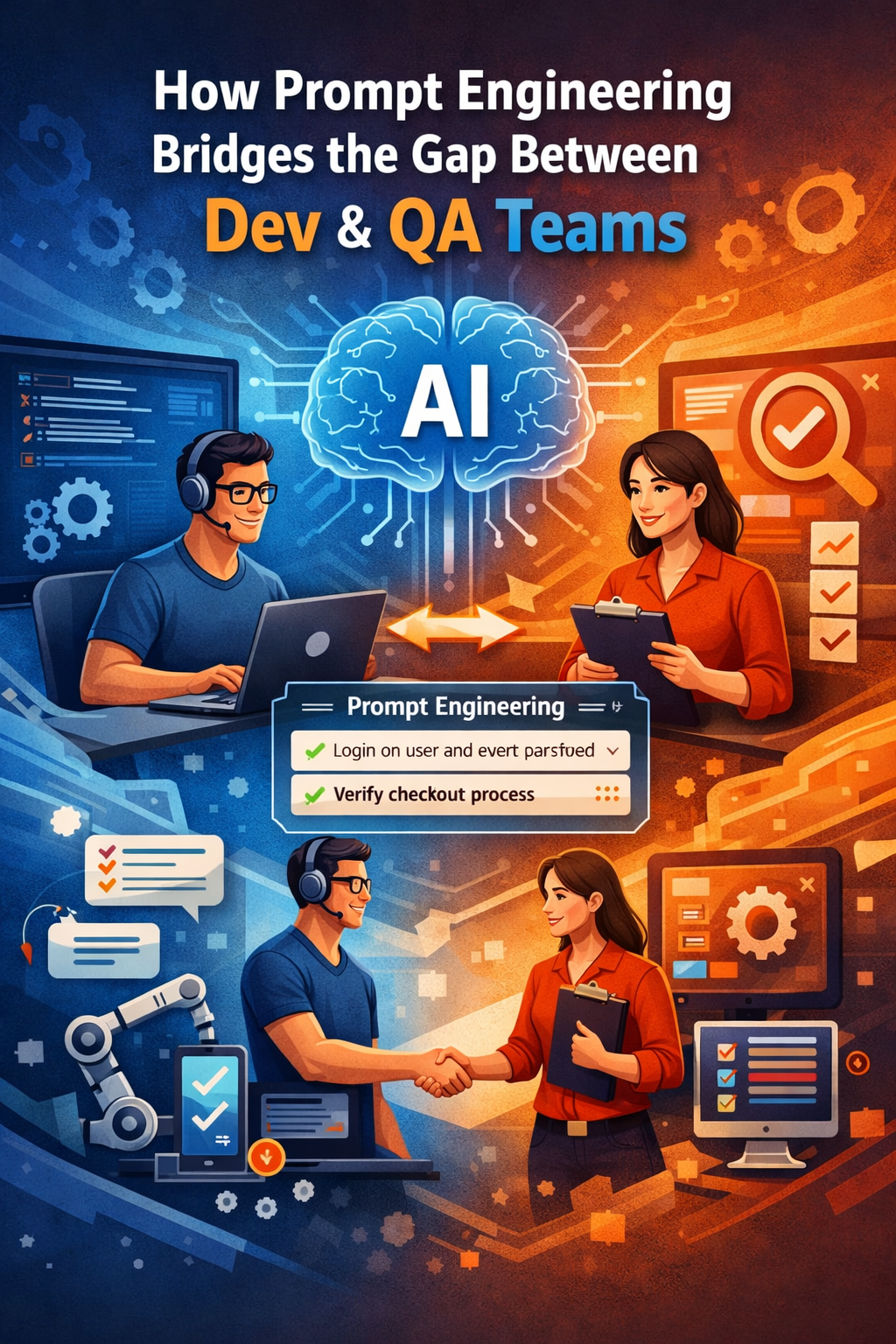
As artificial intelligence becomes more embedded in software workflows, a new approach is emerging that helps bridge this divide. Prompt engineering offers a structured way to communicate intent to AI-powered testing tools, translating business requirements into clear, executable validation steps. When implemented thoughtfully, it can strengthen collaboration between development and QA teams and dramatically improve release efficiency.
The Root of the Dev and QA Disconnect
To understand how prompt engineering helps, it is important to identify why gaps form in the first place.
First, requirements are often written in business language. Product managers describe user journeys, acceptance criteria, and edge cases in documents or tickets. Developers interpret these into code. QA engineers then interpret both the documentation and the implemented feature into test cases. Each handoff introduces room for ambiguity.
Second, test automation frameworks traditionally require scripting knowledge. If QA engineers write automated tests in code-heavy tools, developers may not fully understand how those tests are structured. Conversely, if developers contribute to test automation, they may not align with QA’s validation strategy or coverage goals.
Third, feedback loops can be slow. When a test fails, developers must decipher whether the issue stems from incorrect logic, environmental instability, or a misunderstanding of requirements. This back and forth consumes time and reduces team momentum.
The result is not necessarily conflict, but inefficiency. Teams spend more time clarifying intent than delivering value.
What Prompt Engineering Brings to the Table
Prompt engineering is the practice of crafting precise, structured instructions for AI systems to generate accurate outputs. In the context of testing, it involves translating feature requirements and expected behaviors into well-defined prompts that AI-driven tools can convert into automated test scenarios.
Instead of writing complex scripts, QA engineers can describe user actions and expected results in plain language. Developers can review and refine these prompts because they are readable and closely aligned with acceptance criteria. This shared language reduces ambiguity.
When teams adopt structured prompting methods, they create a repeatable pattern for expressing requirements. Prompts can include context such as user roles, system states, expected validations, and boundary conditions. AI systems then interpret these prompts to generate or execute tests automatically.
This shift changes how collaboration happens. Instead of arguing over how a test script is written, teams focus on whether the described behavior accurately reflects the intended functionality.
Establishing a Shared Language
One of the most powerful benefits of prompt engineering is that it introduces a common communication framework.
Consider a typical user story: “As a customer, I want to reset my password so that I can regain access to my account.” Acceptance criteria might include email validation, secure token expiration, and confirmation messaging.
In a traditional workflow, developers implement the feature, QA writes manual test cases, and automation engineers later script regression tests. Each step involves interpretation.
With prompt-driven testing, the same acceptance criteria can be transformed into structured prompts that describe user behavior and expected outcomes. Both developers and QA can review these prompts before tests are executed. If something is unclear, it is corrected at the prompt level rather than after code or scripts have already been written.
This approach encourages earlier alignment. It integrates quality into the design phase rather than treating it as a final checkpoint.
Accelerating Feedback Loops
Speed is critical in modern development environments, especially those following agile or continuous integration practices. Prompt-based testing enables faster feedback in several ways.
First, tests can be generated and updated quickly when requirements change. Instead of rewriting large sections of automation code, teams adjust the prompt to reflect the new behavior.
Second, AI-driven systems can execute comprehensive test scenarios based on high-level instructions. This reduces the time spent building and maintaining test infrastructure.
Third, because prompts are written in readable language, developers can understand failed test scenarios more easily. When a test fails, the description clearly outlines what behavior was expected. This reduces guesswork and shortens debugging cycles.
As AI-driven workflows improve collaboration across teams, many organizations are exploring structured approaches such as prompt engineering in software testing to create clearer communication between requirements, validation, and implementation. This framework provides deeper insight into how carefully crafted prompts can enhance automated testing strategies and strengthen Dev and QA alignment.
Improving Test Coverage Without Increasing Complexity
Another challenge in Dev and QA collaboration is balancing speed with coverage. Developers want rapid releases. QA teams want thorough validation. These goals can feel at odds.
Prompt engineering helps reconcile this tension. Because prompts can include variations, edge cases, and user role scenarios, AI systems can expand coverage more efficiently than manual scripting alone.
For example, a single prompt describing a checkout process can be extended to cover multiple payment methods, invalid inputs, session timeouts, and device types. Instead of writing separate scripts for each scenario, QA engineers refine the prompt to include these conditions.
Developers benefit because they gain confidence that core flows are validated across multiple paths. QA benefits because they can scale coverage without dramatically increasing maintenance overhead.
Encouraging Cross-Functional Ownership of Quality
In high-performing teams, quality is not owned solely by QA. It is a shared responsibility. However, traditional automation tools can create silos. If only certain team members understand the framework, collaboration weakens.
Prompt engineering lowers the barrier to participation. Developers can suggest improvements to prompts. Product managers can review them to ensure alignment with user intent. QA can validate that risk areas are adequately covered.
This shared visibility fosters a culture where everyone contributes to quality assurance. Instead of treating test automation as a specialized discipline, it becomes an integrated part of product design.
Reducing Maintenance and Technical Debt
Test automation maintenance is often underestimated. As applications evolve, scripts break. Selectors change. Workflows shift. QA teams spend significant time updating test suites instead of creating new validations.
Prompt-based approaches reduce this burden. Because prompts focus on user intent rather than low-level implementation details, they are more resilient to UI changes or structural updates.
When AI tools interpret prompts dynamically, minor modifications in the application do not necessarily require rewriting test logic. This adaptability lowers long-term technical debt and frees teams to focus on innovation.
Practical Steps to Get Started
Adopting prompt engineering does not require a complete overhaul of existing processes. Teams can begin with small experiments.
Start by identifying a feature that frequently causes miscommunication. Translate its acceptance criteria into structured prompts. Involve both developers and QA in reviewing these prompts before implementation begins.
Next, evaluate AI-driven testing platforms that support natural language instructions. Assess how well they interpret prompts and generate accurate test scenarios.
Finally, measure outcomes. Track metrics such as defect escape rate, time to resolve failed tests, and overall release velocity. These indicators help demonstrate the value of improved collaboration.
The Bigger Picture
The relationship between developers and QA engineers shapes the quality and speed of every release. When communication falters, progress slows. When alignment strengthens, teams move confidently and efficiently.
Prompt engineering represents more than a technical trend. It introduces a collaborative mindset where clarity, structure, and shared understanding drive automation. By focusing on how requirements are expressed and interpreted, teams eliminate unnecessary friction.
As AI continues to influence software development, those who master structured prompting will gain a competitive advantage. They will release features faster, reduce misunderstandings, and build products that meet user expectations more consistently.
Bridging the gap between Dev and QA is not about choosing sides. It is about creating systems that support both. With prompt engineering as part of the workflow, teams can transform quality assurance from a bottleneck into a strategic asset that powers innovation and growth.
