
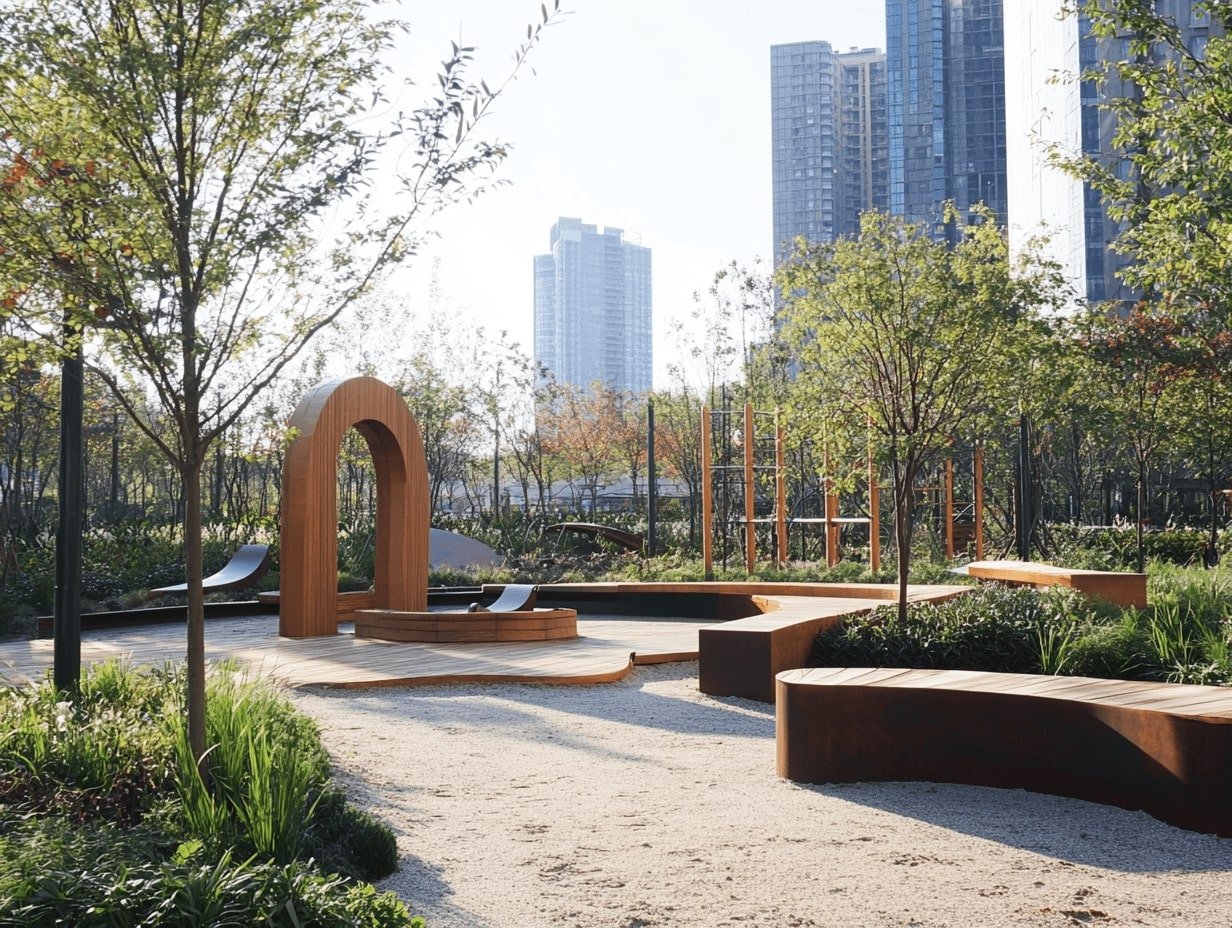
When thinking of your favourite boutique cafe, hotel lobby or modern community hub, you often love it for the atmosphere. However, behind this aesthetic lies a hidden battleground of daily wear, tear and foot traffic. Designers of public spaces have to satisfy two conflicting demands, as spaces need to look stunning to attract visitors, but be resilient enough to survive hundreds of people every single day. True modern design is not just about what looks good on social media, but about the clever use of commercial-grade materials that effortlessly balance visual style with industrial-strength practicality.
The Invisible Stress of Public Spaces
To a visitor, a coffee shop or local library can be a place of relaxation, focus or socialising. To the building itself, it is a high-impact zone facing a relentless, multi-directional assault for long periods every day of the week. There is heavy foot traffic tracking in grit, water and mud, scuffing of suitcases against walls, pulling and dragging of chairs and the cascade of spilled drinks and greasy food. For these reasons, high-street home interior solutions are unfit for these environments. If a designer uses standard household emulsion paint or trendy residential wallpaper, this will be scratched, stained or peeling within a short time. Domestic materials are engineered for gentle, predictable family life, whereas public spaces are entirely unpredictable.
There is also a hidden layer of complexity that the public never sees in strict legal compliance. Opening the door to the public means answering to rigorous government and local authority standards. Public seating should not just be comfortable, but it needs to adhere to strict UK commercial flame-retardant laws. Standard home furniture does not meet this criteria, meaning that a business could find its insurance voided in the event of an accident. Food preparation areas, public washrooms and community care spaces are subject to ruthless inspections by environmental health officers. Due to this, surfaces must be capable of being chemically disinfected repeatedly without degrading, and cannot have gaps where bacteria can hide.
The Secret Strength of Contract Furniture
To the average person, a chair is just a chair. Contract furniture is specifically engineered, stress-tested and certified for relentless use in public, commercial and high-traffic environments. While domestic furniture is often built for fast assembly and fleeting trends, contract furniture is a long-term investment. It is designed to be sat on thousands of times a year without losing its structural integrity or comfort.
Contract chairs and sofas use heavy duty steel frames or hardwoods with reinforced brackets, making them able to withstand heavy weights, rocking back and being dragged across hard floors. Unlike domestic tables, commercial bistro or dining tables use solid, weighted bases. This keeps the centre of gravity low, preventing the table from rocking around. Similarly, the upholstery and fabrics used in commercial furniture are made to withstand heavy use. Fabric durability is scientifically measured using a machine that rubs the textile in a circular motion under pressure until it wears out. A standard domestic sofa may survive around 15,000 rubs, whereas contract furniture can survive between 50,000 and over 100,000 rubs, meaning they can handle years of friction without thinning. These fabrics are also treated with microscopic, commercial-grade moisture barriers. If a customer spills something, the liquid does not soak into the foam core and will instead pool on the surface, allowing staff to restore the chair to its original condition with a quick wipe. By investing in contract-grade pieces, you ensure that your front-of-house consistently projects an image of premium quality, luxury and care, allowing you to attract more patrons and command premium prices.
Seamless Defense – Hygienic Wall Cladding
While floors take direct foot traffic, walls will bear the brunt of human momentum. In public zones, walls face constant, aggressive physical contact, whether this is the scraping of chair backs or the constant splattering of oils and steam. A wall is often the first thing a visitor notices, and if it looks dented, stained or chipped, their perception of a venue’s quality can be greatly affected.
In a high-traffic commercial environment, standard interior design choices fail durability and cleanliness tests. Standard plasterboard will behave like chalk under pressure, as one sharp bump can gouge a hole in the wall. This will then require a cycle of filling, sanding and repainting that can disrupt business operations. Another choice is wall tiling, but grout can be the ultimate structural weak link. As it is highly porous, it can act as a trap for grease, moisture and bacteria. Over time, heavy scrubbing with harsh cleaners can make it crack and crumble, resulting in an unhygienic, aged look that cannot be restored without regrouting.
However, this problem can be easily solved by using the ultimate material evolution for high traffic surfaces, hygienic wall cladding. These are solid, high-impact PVC or acrylic panels bonded directly to the wall structure. As they are slightly flexible and dense, they can handle heavy blows without cracking, denting or chipping. They also completely eliminate the problem of grout, as they use tight, interlocking tongue-and-groove joints or welded seams to create a continuous flush plane. This means that designers no longer have to compromise style for cleanliness, as modern cladding means they can capture their desired aesthetic while benefiting from a surface that is highly sanitary.
Combining Style, Safety and Low Maintenance
Good interior design will never look at elements in isolation, as a beautifully furnished room means nothing if the backdrop is peeling. The structural boundaries and human contact points of a room need to work in perfect harmony to achieve the ultimate goal, a space that feels luxurious and premium while operating with zero friction. As contract furniture features spill-proof, wipe-clean fabrics and cladding means the walls are seamless and non-porous, a major spill can be dealt with in seconds. Having trust in the surrounding environment can lower stress levels and encourage visitors to stay for longer, increasing their likelihood of spending money and turning them into long advocates for the brand.
The true art of modern interior design is the seamless bridge where beautiful style meets heavy-duty engineering. The design features used in public spaces can be applied in the home for the same effect. Choosing contract durability and seamless surfaces can help to future-proof any business, as well as a family home.
