
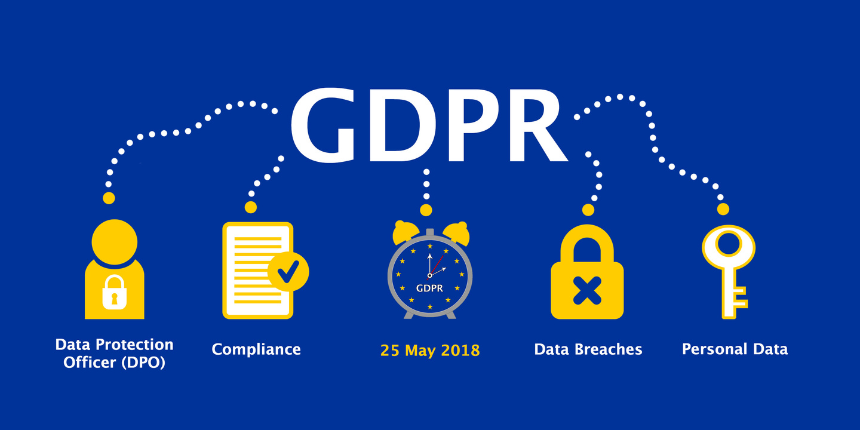
As digital banking continues to expand globally, financial institutions are under growing pressure to modernize their technology stacks while maintaining strict compliance with data protection regulations. Among these, the General Data Protection Regulation (GDPR) stands out as one of the most influential privacy laws shaping how banking software is designed, developed, and deployed.
Although GDPR is a European regulation, its impact extends far beyond the EU. US-based banks, fintech companies, and software vendors serving European customers—or processing EU residents’ data—must comply with its requirements. For organizations offering banking software development services in the USA, GDPR compliance has become a critical factor in building trustworthy, scalable, and future-ready financial systems.
This article explores how GDPR affects banking software development, the key compliance challenges banks face, and practical strategies for building secure, privacy-first financial platforms.
Why GDPR Matters in Banking Software Development
Banking software handles some of the most sensitive personal and financial data, including customer identities, transaction histories, account details, and behavioral data. GDPR classifies much of this information as personal data, placing strict obligations on how it is collected, processed, stored, and shared.
Non-compliance can result in heavy financial penalties of up to €20 million or 4% of global annual turnover, regulatory investigations and audits, loss of customer trust, reputational damage, and restrictions on cross-border data transfers.
For banks and fintech companies operating across regions, GDPR compliance is no longer optional—it is a foundational requirement for sustainable digital growth.
Core GDPR Principles Relevant to Banking Software
To understand how GDPR influences banking software development, it is essential to look at its core principles and how they translate into technical and architectural decisions.
Lawfulness, Fairness, and Transparency
Banking software must clearly define the legal basis for processing customer data, whether through consent, contractual necessity, or regulatory obligation. Systems should also support transparency by enabling customers to understand how their data is used.
This often requires clear consent management modules, user-friendly privacy notices within digital banking platforms, and backend systems that track consent status across services.
Purpose Limitation and Data Minimization
Banks must collect only the data necessary for specific, legitimate purposes. From a development perspective, this means avoiding excessive data collection and designing systems that separate core banking data from analytics or marketing data.
Accuracy and Data Integrity
Banking software must ensure personal data remains accurate and up to date. This requires robust validation mechanisms, synchronization across systems, and controlled access for updates.
Storage Limitation
GDPR mandates that personal data should not be retained longer than necessary. Banking platforms must include configurable data retention policies aligned with regulatory and business requirements.
Integrity and Confidentiality
This principle has the most direct impact on banking software development. It requires strong security controls to protect personal data against unauthorized access, breaches, or loss.
Privacy by Design in Banking Software
One of the most important GDPR concepts for developers is Privacy by Design and by Default. Rather than treating compliance as an afterthought, privacy must be embedded into the software development lifecycle from the earliest stages.
Secure Architecture and System Design
Banking platforms should be built with layered security architectures that include segregation of sensitive data, role-based access controls, secure APIs and microservices, and strong identity and authentication mechanisms.
Encryption and Data Protection
GDPR does not mandate specific technologies but expects organizations to implement appropriate technical measures. In banking software, this typically includes encryption of data at rest and in transit, secure key management practices, and tokenization or pseudonymization of sensitive data.
Default Privacy Settings
Customer-facing banking applications should be configured with privacy-friendly defaults. Optional data sharing features should be disabled unless explicitly enabled by the user.
Managing Data Subject Rights in Banking Applications
GDPR grants individuals several rights over their personal data, and banking software must be capable of supporting these rights efficiently.
Right of Access and Data Portability
Customers have the right to access their data and request it in a structured, machine-readable format. Banking systems should include centralized data repositories or data mapping, secure export mechanisms, and audit logs to track data access requests.
Right to Rectification
Systems must allow customers or authorized personnel to correct inaccurate information without compromising data integrity.
Right to Erasure
This is particularly complex in banking, as financial institutions are often legally required to retain certain records. Banking software must balance GDPR requirements with regulatory retention obligations by selectively anonymizing data where deletion is not permitted and maintaining clear data classification and retention logic.
Third-Party Integrations and Vendor Risk
Modern banking platforms rely heavily on third-party services, including cloud providers, payment processors, analytics tools, and open banking APIs. Under GDPR, banks remain responsible for how customer data is handled—even when processed by external vendors.
From a software development standpoint, this requires secure API integrations with strict access controls, data processing agreements reflected in system design, and continuous monitoring and logging of third-party data flows. Organizations providing banking technology consulting often help banks assess vendor risks and build compliant integration frameworks.
Cross-Border Data Transfers and Cloud Banking
Many banks use global cloud infrastructure to achieve scalability and resilience. However, GDPR places restrictions on transferring EU personal data outside the EU.
Banking software must support data localization strategies where required, region-specific data storage configurations, and encryption and contractual safeguards for international data transfers. This is especially relevant for US-based institutions serving European customers.
GDPR, Security Standards, and Banking Regulations
GDPR does not exist in isolation. Banking software must also align with other regulatory and security frameworks such as PCI DSS for payment data, ISO 27001 for information security management, and local banking supervisory guidelines.
A well-designed banking platform integrates GDPR requirements with these standards to create a unified compliance and security posture, reducing audit complexity and improving operational resilience.
Role of Secure Development Practices
Beyond architecture, GDPR compliance depends heavily on secure development processes.
Banks and vendors should follow a secure software development lifecycle that includes threat modeling, secure coding standards, regular vulnerability assessments, and penetration testing.
Banking systems must also include comprehensive logging and monitoring, automated alerts for suspicious activities, and defined incident response workflows to meet GDPR breach notification requirements.
GDPR as a Business Enabler for Banking Software
While GDPR is often viewed as a regulatory burden, it can also act as a business enabler. Privacy-first banking platforms strengthen customer trust, reduce long-term risk, and support global expansion.
Banks investing in compliant software benefit from improved customer confidence, reduced legal exposure, easier entry into international markets, and stronger fintech partnerships. For providers of banking software development services in the USA, GDPR readiness is now a key competitive differentiator.
Conclusion
GDPR has fundamentally reshaped how banking software is designed and delivered. In an era of cloud-native banking, open APIs, and cross-border financial services, privacy and security are essential components of modern financial systems.
By embedding GDPR principles into architecture, development workflows, and operational practices, banks can build secure, resilient, and privacy-first platforms. With the right mix of technical expertise and strategic banking technology consulting, GDPR compliance becomes a foundation for innovation rather than a constraint.
