
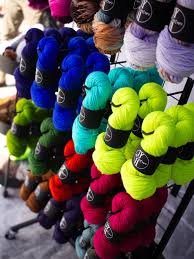
The DFW crafting scene has been quietly building momentum.
From pop-up markets in Deep Ellum to craft nights at local bars in Uptown to a growing network of knitting circles meeting in coffee shops across Plano, Frisco, and Fort Worth, the fiber arts community in Dallas-Fort Worth is more active and more visible than it’s been in years.
And if you haven’t picked up a pair of knitting needles or a crochet hook yet — or haven’t touched one since a grandparent tried to teach you years ago — this is a genuinely good time to start.
What’s Driving the Craft Revival in DFW
Trends in consumer culture tend to show up in major metros before they spread, and the craft revival is no exception.
In Dallas, the same energy that’s driving the growth of local makers markets, independent home goods shops, and handmade goods on social media is feeding a renewed interest in fiber arts. People are buying less and making more — and discovering that the making is, in many ways, the point.
Knitting and crochet have specific advantages over other handcraft categories: they’re portable, they scale beautifully from beginner to expert, the learning curve is fast enough that most people have something finished within their first week, and the finished products are genuinely useful.
A throw blanket, a set of dishcloths, a market bag, a hat for the one week of Dallas winter — these aren’t craft projects that live in a drawer. They get used.
Choosing Your First Yarn: Why This Decision Matters
The most common beginner mistake is buying the cheapest yarn available and then blaming themselves when the project is frustrating to work with.
Bad yarn pills. It tangles on itself. It lacks the structure to hold consistent stitches. It bleeds color in the wash. The experience of working with it makes learning harder than it needs to be — and many beginners conclude that they’re bad at knitting when the real problem is the materials.
That’s the gap Big Twist fills well — accessible pricing without dropping the workability that makes learning actually enjoyable. Enough structure to show stitches clearly (essential when you’re learning to read your knitting), and a color and weight range that carries you from a first beginner project through more ambitious follow-up work.
Start with yarn that works with you. It makes everything else easier.
Crochet vs. Knitting: Which Is Right for You?
This debate has lived in craft communities for decades and produces strong opinions on both sides. The honest answer is that neither is objectively better — they’re different tools that suit different people and projects.
Knitting uses two needles and produces a fabric with a characteristic stretchy, jersey-like texture. It’s generally better for fitted garments, socks, and anything where drape and elasticity matter.
Crochet uses a single hook and tends to be faster for many projects, especially beginners. The fabric is slightly thicker and denser, which makes it excellent for home goods like blankets, dishcloths, and bags. Many people find crochet easier to pick up initially — it’s more forgiving of uneven tension and easier to correct mistakes.
For chunky blankets and home décor projects — among the most satisfying beginner projects in either craft — Loops & Threads is worth knowing. The weight range and fiber variety hold up as your skills progress, so you’re not switching brands the moment you outgrow beginner territory.
Try both if you’re not sure. Most crafters end up with a preference that becomes clear quickly.
The Social Side of Crafting in Dallas
One aspect of the craft revival that surprises newcomers is how social it is.
Knitting circles, crochet-alongs, craft nights, and stitch-and-bitch gatherings — the terminology varies but the structure is the same: a group of people making things together in a social setting.
These groups exist across DFW in abundance. Some are organized through local yarn shops. Others form through social media and meet in coffee shops, bars, or members’ homes. Many welcome total beginners.
The social context accelerates learning dramatically. Being surrounded by people at different skill levels — some who can answer the question you’re stuck on, some who are working through the same challenges you are — is a faster and more enjoyable learning environment than solo tutorials.
Find your local group. Go once. See if it sticks.
Projects That Are Perfect for Dallas Beginners
Here’s the practical note: some projects are genuinely better for learning than others.
A garter stitch dishcloth — literally just knit every row — produces a finished, useful object in a few hours and teaches you the foundational movements of knitting with nothing to confuse the process.
A single-crochet washcloth does the same for crochet. A simple chain-and-single-crochet infinity scarf takes a few evenings and produces something wearable.
The principle is the same in both cases: choose a project that builds the core skill without introducing too many variables at once. Finish it. The confidence from a completed first project is what propels most people into a sustained practice.
What Happens After the First Project
The second project is usually where things get interesting.
With the basic technique in your hands, you can start paying attention to pattern structure — understanding how directions build on each other, how increases and decreases shape fabric, how different stitch patterns create texture.
This is the point where knitting and crochet start to feel less like following instructions and more like understanding a language. Once you can read what your needles or hook are doing, the range of possible projects expands dramatically.
Most people who stick with fiber crafts past the first two or three projects develop a practice that stays with them for years — in DFW and wherever else life takes them.
Get Started
The supplies you need to begin are genuinely modest. A set of beginner knitting needles or a crochet hook, one skein of easy-to-work-with yarn, and a beginner pattern — the entire startup cost is under twenty dollars.
That low barrier is one of the craft’s best qualities.
DFW’s craft community is active, welcoming, and growing. The yarn shops are stocked, the social events are happening, and the makers market scene provides constant inspiration for what a finished handmade object can be.
Pick up the needles. Start the first project. See what happens after that.
Dallas has a craft scene worth joining.
