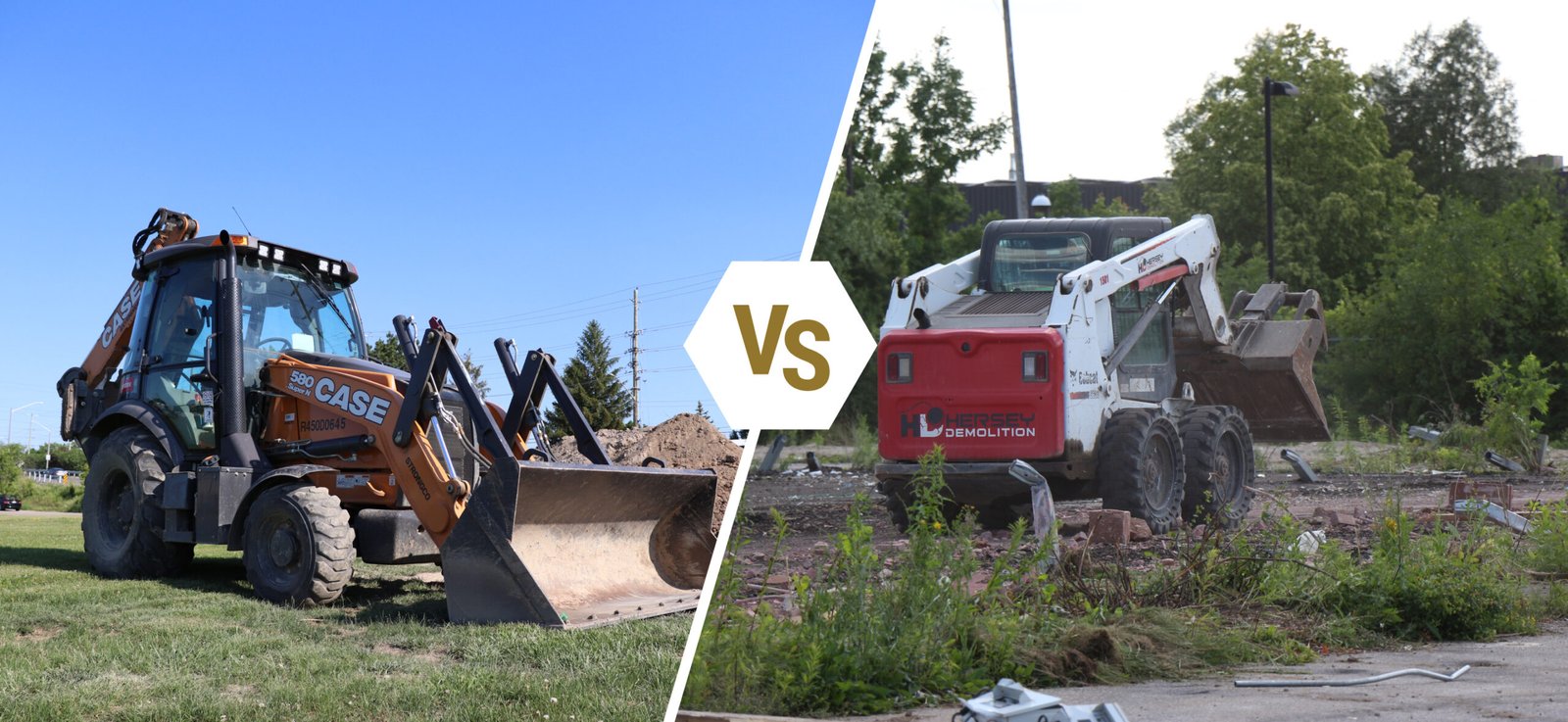
Choosing the right heavy equipment is one of the most important decisions a business can make. Get it right, and you gain a machine that pays for itself many times over. Get it wrong, and you are left with a costly asset that does not match your operational needs. So, when the debate comes down to two of the most popular compact machines on the market today, the question is simple: which one actually delivers better value for your investment?
The Conventional Forklift
Let us start with what most buyers already know. The forklift remains a staple in warehouses, distribution centers, and manufacturing facilities worldwide. It is dependable, widely understood, and built for a very specific job. But outside of those environments, when the work gets more complex and the terrain gets more demanding, buyers need to think differently.
The backhoe loader is often the first machine that comes to mind for contractors and civil engineers. And for good reason. It is a dual-purpose powerhouse. The front bucket handles loading and grading, while the rear arm digs with precision. One machine, two functions, and a level of versatility that is hard to argue against. For mid-sized construction companies juggling multiple tasks on a single site, this kind of flexibility translates directly into savings on equipment rental, labor, and project timelines.
The Dependable Backhoe Loader
But versatility alone does not win every argument. There are job sites where the backhoe loader, despite its strengths, is simply too large or too cumbersome to operate effectively. Tight urban construction zones, interior demolition projects, and landscaping work in confined spaces all call for something more agile.
That is exactly where compact equipment earns its keep. Machines with smaller footprints and faster cycle times are increasingly preferred on sites where efficiency per square meter matters more than raw digging power. Contractors who have made the switch often report measurable improvements in daily output, simply because their equipment can move freely without constant repositioning.
Attachments also play a major role in the buying decision. Today’s compact machines can be fitted with augers, trenchers, sweepers, hydraulic breakers, and more, giving operators the ability to shift between tasks within minutes. This kind of adaptability is changing how contractors approach project planning altogether.
Operator comfort and training requirements are also worth factoring in. A machine that is difficult to operate or requires extensive training adds hidden costs to every project. The best equipment strikes a balance between capability and ease of use, reducing the learning curve for new operators while still delivering professional-grade performance. Businesses that invest in operator-friendly machinery consistently see better productivity, fewer errors, and lower rates of equipment misuse or accidental damage on site.
Safety is another dimension that deserves serious attention. Job site accidents involving heavy equipment are costly in every sense of the word. Modern compact machines come equipped with rollover protection structures, enhanced visibility cabs, and proximity warning systems that reduce risk significantly. When evaluating two machines of similar capability, the one with a stronger safety track record and better built-in protection features should always get the edge.
Cost of ownership over time is another critical factor. Fuel consumption, maintenance frequency, parts availability, and resale value all factor into what a machine truly costs beyond its sticker price. Smart buyers run these numbers before signing anything.
Finally, The Skid Steer Loader
For operations that prioritise maneuverability, fast attachment changes, and lower operating costs, the skid steer loader consistently proves its worth. It is compact, capable, and built for the kind of work that demands speed and flexibility in equal measure. For the right operation, it is not just a smart investment. It is the obvious one that goes the extra mile.
