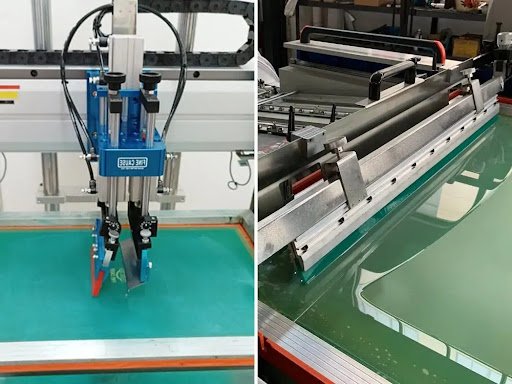
In today’s competitive manufacturing landscape, choosing the right screen printing equipment is essential for improving efficiency, maintaining quality, and controlling production costs. One of the most important decisions businesses face is whether to invest in semi automatic or fully automatic screen printing machines—especially when printing on cylindrical products like bottles, jars, and tubes.
Understanding the differences between these two options can help you select the most suitable solution for your production needs.
Understanding Screen Printing Automation
Screen printing machines operate by transferring ink through a mesh screen onto a surface. While the core principle remains the same, the level of automation significantly affects workflow, speed, and consistency.
Semi automatic machines combine manual handling with automated printing strokes, while fully automatic machines handle the entire process—from feeding to printing and unloading—without requiring constant operator involvement.
For industries dealing with round packaging, selecting the right cylindrical screen printing machine can directly impact both output and product quality.
What Is a Semi Automatic Screen Printing Machine?
A semi automatic screen printing machine requires an operator to load and position the product manually, while the machine performs the printing action automatically.
This setup makes it a practical choice for businesses with moderate production needs or those handling customized orders.
Advantages of Semi Automatic Machines
- Lower upfront investment, ideal for startups and small businesses
- Greater flexibility for handling different product shapes and designs
- Easier operation and maintenance
- Better control for detailed or custom printing jobs
However, these machines rely more on manual labor, which can limit production speed and introduce slight variations between prints.
What Is a Fully Automatic Screen Printing Machine?
Fully automatic machines are designed for high-speed, large-scale production. They automate every step of the process, including product feeding, positioning, printing, and unloading.
This level of automation significantly increases efficiency and ensures consistent output across large production runs.
Advantages of Fully Automatic Machines
- High production speed suitable for mass manufacturing
- Minimal labor requirements
- Excellent print consistency and precision
- Lower long-term cost per unit for large volumes
These machines are commonly used in industries such as beverage packaging, cosmetics, and pharmaceuticals, where large quantities and consistent branding are essential.
Key Differences Between Semi Automatic and Fully Automatic Machines
1. Production Efficiency
Fully automatic machines outperform semi automatic ones in speed and output. They are capable of continuous operation, making them ideal for large-scale production lines.
Semi automatic machines, while slower, are better suited for smaller batches and customized jobs.
2. Labor Requirements
Semi automatic machines require operators for loading and unloading, while fully automatic machines can operate with minimal human involvement, reducing labor costs over time.
3. Print Consistency
Automation ensures uniform pressure, alignment, and ink distribution in fully automatic machines. Semi automatic machines may show slight inconsistencies due to manual positioning.
4. Investment and ROI
Semi automatic machines have a lower initial cost, making them accessible for smaller businesses. Fully automatic machines require a higher investment but provide better returns in high-volume production environments.
5. Flexibility
Semi automatic machines offer greater flexibility for handling diverse products and short production runs. Fully automatic machines are optimized for repetitive, large-scale production.
Applications in Cylindrical Printing
Both semi automatic and fully automatic machines can be used for printing on cylindrical objects such as glass bottles, plastic containers, and metal cans.
However, the choice depends on production scale:
- Semi automatic machines are ideal for small to medium production
- Fully automatic machines are better suited for large-scale manufacturing
Working with an experienced round screen printing machine manufacturer ensures that you get the right equipment tailored to your specific application and production goals.
Which One Should You Choose?
The decision ultimately depends on your business requirements:
- Choose semi automatic machines if you need flexibility, lower investment, and customization
- Choose fully automatic machines if you prioritize speed, efficiency, and high-volume output
Many businesses start with semi automatic machines and upgrade to fully automatic systems as demand increases.
Conclusion
Both semi automatic and fully automatic screen printing machines have their own advantages. Semi automatic machines provide flexibility and affordability, while fully automatic machines offer unmatched efficiency and consistency.
By understanding your production needs and long-term goals, you can choose the right solution to enhance productivity, improve product quality, and stay competitive in the market.
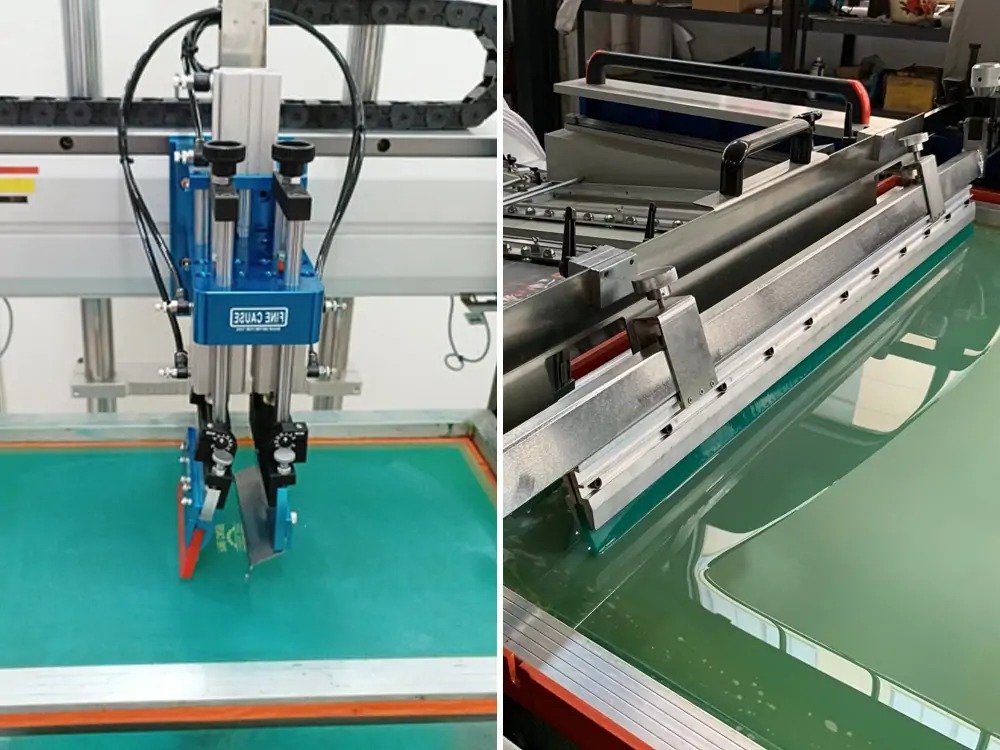
In today’s competitive manufacturing landscape, choosing the right screen printing equipment is essential for improving efficiency, maintaining quality, and controlling production costs. One of the most important decisions businesses face is whether to invest in semi automatic or fully automatic screen printing machines—especially when printing on cylindrical products like bottles, jars, and tubes.
Understanding the differences between these two options can help you select the most suitable solution for your production needs.
Understanding Screen Printing Automation
Screen printing machines operate by transferring ink through a mesh screen onto a surface. While the core principle remains the same, the level of automation significantly affects workflow, speed, and consistency.
Semi automatic machines combine manual handling with automated printing strokes, while fully automatic machines handle the entire process—from feeding to printing and unloading—without requiring constant operator involvement.
For industries dealing with round packaging, selecting the right cylindrical screen printing machine can directly impact both output and product quality.
What Is a Semi Automatic Screen Printing Machine?
A semi automatic screen printing machine requires an operator to load and position the product manually, while the machine performs the printing action automatically.
This setup makes it a practical choice for businesses with moderate production needs or those handling customized orders.
Advantages of Semi Automatic Machines
- Lower upfront investment, ideal for startups and small businesses
- Greater flexibility for handling different product shapes and designs
- Easier operation and maintenance
- Better control for detailed or custom printing jobs
However, these machines rely more on manual labor, which can limit production speed and introduce slight variations between prints.
What Is a Fully Automatic Screen Printing Machine?
Fully automatic machines are designed for high-speed, large-scale production. They automate every step of the process, including product feeding, positioning, printing, and unloading.
This level of automation significantly increases efficiency and ensures consistent output across large production runs.
Advantages of Fully Automatic Machines
- High production speed suitable for mass manufacturing
- Minimal labor requirements
- Excellent print consistency and precision
- Lower long-term cost per unit for large volumes
These machines are commonly used in industries such as beverage packaging, cosmetics, and pharmaceuticals, where large quantities and consistent branding are essential.
Key Differences Between Semi Automatic and Fully Automatic Machines
1. Production Efficiency
Fully automatic machines outperform semi automatic ones in speed and output. They are capable of continuous operation, making them ideal for large-scale production lines.
Semi automatic machines, while slower, are better suited for smaller batches and customized jobs.
2. Labor Requirements
Semi automatic machines require operators for loading and unloading, while fully automatic machines can operate with minimal human involvement, reducing labor costs over time.
3. Print Consistency
Automation ensures uniform pressure, alignment, and ink distribution in fully automatic machines. Semi automatic machines may show slight inconsistencies due to manual positioning.
4. Investment and ROI
Semi automatic machines have a lower initial cost, making them accessible for smaller businesses. Fully automatic machines require a higher investment but provide better returns in high-volume production environments.
5. Flexibility
Semi automatic machines offer greater flexibility for handling diverse products and short production runs. Fully automatic machines are optimized for repetitive, large-scale production.
Applications in Cylindrical Printing
Both semi automatic and fully automatic machines can be used for printing on cylindrical objects such as glass bottles, plastic containers, and metal cans.
However, the choice depends on production scale:
- Semi automatic machines are ideal for small to medium production
- Fully automatic machines are better suited for large-scale manufacturing
Working with an experienced round screen printing machine manufacturer ensures that you get the right equipment tailored to your specific application and production goals.
Which One Should You Choose?
The decision ultimately depends on your business requirements:
- Choose semi automatic machines if you need flexibility, lower investment, and customization
- Choose fully automatic machines if you prioritize speed, efficiency, and high-volume output
Many businesses start with semi automatic machines and upgrade to fully automatic systems as demand increases.
Conclusion
Both semi automatic and fully automatic screen printing machines have their own advantages. Semi automatic machines provide flexibility and affordability, while fully automatic machines offer unmatched efficiency and consistency.
By understanding your production needs and long-term goals, you can choose the right solution to enhance productivity, improve product quality, and stay competitive in the market.
