
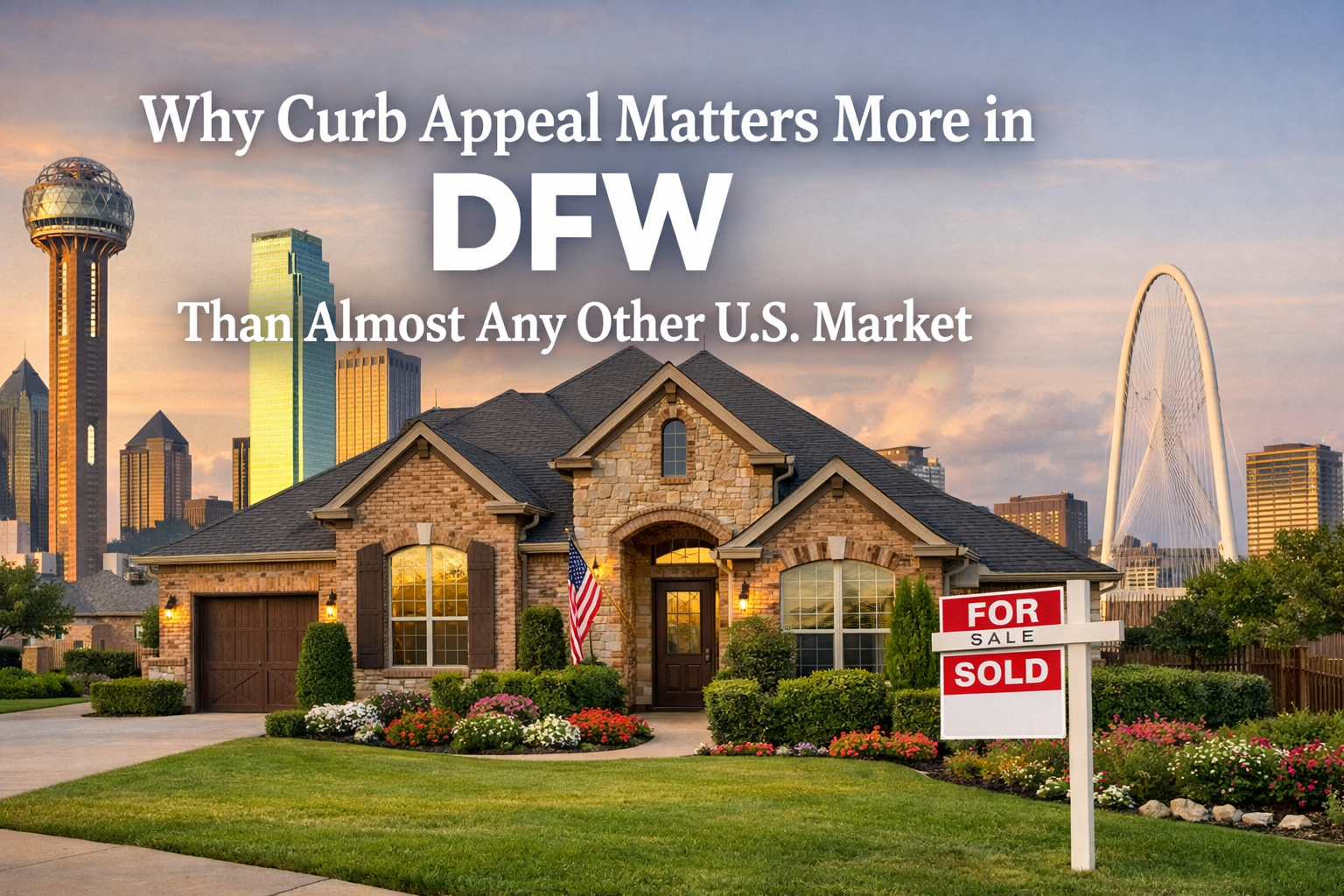
The Dallas-Fort Worth Metroplex has been one of the most active real estate markets in the United States for several years running. Population growth continues to drive demand. Prices in most submarkets have held at or near historic highs. And competition among sellers, even in a market with strong fundamentals, is real and ongoing.
In that environment, the factors that differentiate one property from another at the time of listing matter more than they would in a slower market where buyers have fewer options and less ability to be selective. Curb appeal is one of those factors, and in DFW it carries more weight than most homeowners realize.
What Research Actually Shows
The research on curb appeal and home value is consistent across multiple studies and market conditions. A study published by the American Society of Landscape Architects found that quality landscaping adds between 10 and 12 percent to a home’s perceived value. Research from the University of Alabama found that strong curb appeal adds up to 7 percent to a home’s sale price on average. Redfin data has shown that homes with standout curb appeal sell faster and closer to asking price than comparable homes with average or below-average exterior presentation.
In a market like DFW, where a median home price in many Metroplex submarkets sits above $400,000, even a 5 percent impact translates to $20,000 in value. The landscaping improvements that produce that impact typically cost a fraction of that.
Beyond sale price, curb appeal affects time on market, offer quality, and the psychology of the buyer during the showing. Buyers who form a positive impression at the curb enter the home looking for reasons to buy. Buyers who form a negative impression at the curb enter the home looking for reasons to justify their doubt. That psychological starting point influences how they evaluate everything they see inside, which affects both the offers they make and the contingencies they include.
Why DFW Is Specifically High-Stakes for Curb Appeal
Several characteristics of the DFW market make curb appeal particularly impactful here compared to other regions.
First, the climate means landscaping health is highly visible. A well-maintained yard in North Texas requires real investment in irrigation, appropriate plant selection, and seasonal care. When a yard looks lush and healthy during the DFW summer, buyers recognize that someone has put effort and resources into the property. When a yard is patchy, brown, or clearly neglected, it signals either a maintenance failure or an irrigation problem, neither of which is reassuring to a buyer.
Second, the architectural uniformity in many DFW suburban subdivisions means that exterior landscaping is one of the primary differentiators between similar homes. When the houses themselves look alike, the outdoor environment is what creates a distinct impression.
Third, DFW buyers are active online before they ever visit a property. The first impression now often happens in listing photography, not at the curb. A home with excellent curb appeal produces exterior photographs that generate more clicks, more saved listings, and more showing requests than a comparable home with average landscaping. Getting more showings in a competitive market translates directly to more offers and better terms.
The Landscaping Upgrades That Move the Needle
Not every landscaping improvement has an equal impact on buyer perception or sale outcome. These are the categories that consistently produce the most visible results.
Lawn health and condition. A dead, patchy, or poorly maintained lawn is the single largest curb appeal liability a seller can have. Buyers see a struggling lawn and calculate irrigation problems, high maintenance costs, or neglected care into their offer. Fresh sod in the front yard, or a properly irrigated and well-maintained Bermuda lawn entering the growing season in good condition, reads as a cared-for property and sets the right tone for everything else.
Planting bed definition and mulch. Clean concrete edging around planting beds and a fresh layer of mulch applied two to four weeks before listing is one of the highest ROI improvements available to a seller. It costs relatively little, takes one to two days to complete, and dramatically changes how intentional and maintained the landscaping appears. This is consistently among the first recommendations I make to homeowners preparing to list.
Shrub and tree maintenance. Foundation plantings that have grown to cover windows or obscure the front facade make a home look smaller and older than it is. Overgrown shrubs are a quick trim away from looking intentional again. Trees that have been neglected and have visible dead wood, crossing branches, or poor structure benefit significantly from professional pruning. These are fast, relatively affordable improvements with immediate visual impact.
Front walkway clarity and condition. The visual line from the street to the front door should be clear, even, well-surfaced, and well-lit. A cracked or settled walkway, grass growing over the edges, or missing lighting all detract from the approach to the home. Resurfacing, regrading, or replacing the front walkway is a meaningful investment for properties where it is in poor condition.
Landscape lighting. Homes with well-designed landscape lighting stand out in two important contexts: evening drive-bys by buyers who have already shortlisted the home, and twilight photography, which consistently outperforms daytime exterior photography in terms of engagement on listing platforms. Path lighting and uplighting on specimen trees and architectural features are the most impactful placements.
Plant Selection for DFW’s Climate
Curb appeal that lasts through the full sales season requires plants that perform well across DFW’s climate extremes. Plants that look great in spring and are dead or struggling by summer create exactly the wrong impression during the months when most homes transact.
Drought-tolerant, heat-adapted plants that maintain color and structure from spring through fall are the foundation of sustainable curb appeal in North Texas. Native and adaptive species like Texas sage, ornamental grasses including Gulf muhly and inland sea oats, black-eyed Susan, salvia varieties, and properly selected crape myrtles perform well in the heat, require less irrigation than many popular non-native alternatives, and look good across a long outdoor season.
A well-maintained Bermuda or Zoysia lawn backed by a functioning irrigation system and a planting scheme that includes heat-tolerant, regionally appropriate species will look good from March through November and photograph well at any time of year.
Timing the Investment
For sellers, curb appeal improvements are most effective when completed three to six weeks before listing. That window allows freshly planted material and new sod to establish and show at its best. It allows mulch to settle and lose the too-fresh look of a rushed last-minute application. And it allows time to address any issues with the improvement that need correction before photography.
Making curb appeal investments the week before listing produces results that look rushed in photography and may not look their best by the time buyers tour. Planning ahead produces a significantly better outcome.
Frequently Asked Questions
What is the most cost-effective curb appeal improvement before listing?
Fresh mulch in well-defined planting beds consistently delivers the highest visual impact per dollar. Combined with basic shrub trimming, it is the fastest and most affordable way to improve the exterior appearance of a home before listing.
How much should I budget for curb appeal improvements before selling?
A meaningful curb appeal refresh involving sod repair or replacement, bed edging, mulching, shrub trimming, and basic lighting typically runs between $3,000 and $8,000 depending on the size of the property and its current condition. This investment routinely generates a return several times its cost in sale price and time on market.
Does landscaping affect home appraisals?
Yes, appraisers consider the condition and quality of landscaping as part of the overall property assessment. While landscaping does not receive a separate line item in most appraisals, it contributes to the overall condition rating and comparable selection used to establish value.
About Streamline Landscape
Streamline Landscape is a full-service landscaping and outdoor living company based in Colleyville, serving homeowners throughout the Dallas Fort Worth Metroplex. Specializing in curb appeal enhancements, irrigation systems, drainage solutions, and outdoor kitchen installations, the company focuses on creating functional, beautiful, and sustainable outdoor spaces tailored to North Texas conditions.
With expertise in DFW’s clay soils, heat extremes, and seasonal climate challenges, Streamline Landscape prioritizes long-term performance through proper grading, plant selection, irrigation planning, and landscape maintenance. Every project is designed to maximize aesthetic appeal, property value, and usability while ensuring compliance with local codes and industry best practices.
Business Name: Streamline Landscape
Address: 6516 Colleyville Blvd, Colleyville, TX 76034
Phone number: (817) 701-8920
