
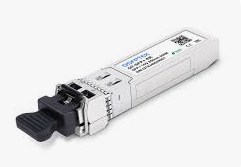
In many network upgrade discussions, speed is often treated as the ultimate goal. Moving from 10G to 25G is seen as a clear step forward, and optical modules are usually selected based on maximum supported data rate. However, in real enterprise networks, port speed alone rarely determines whether a deployment is successful. In many cases, 10/25G SR dual-rate modules deliver more practical value than fixed-speed optics, not because they are faster, but because they are more adaptable.
Port Speed vs. Network Reality
Enterprise data centers and campus networks rarely operate in a perfectly uniform environment. Even when new switches support 25G at the access layer, the connected devices often lag. Legacy servers, storage appliances, security systems, and management interfaces still rely heavily on 10G connectivity. As a result, networks frequently run in a mixed-speed state for years, not months.
In this context, selecting optics purely based on port speed can introduce unnecessary rigidity. Fixed 25G SR modules assume that every connected endpoint is ready to operate at 25G, which is often not the case. Dual-rate 10/25G SR modules, on the other hand, allow ports to adapt to the actual capability of the connected device without forcing immediate upgrades.
Why Dual-Rate Optics Add Real Value
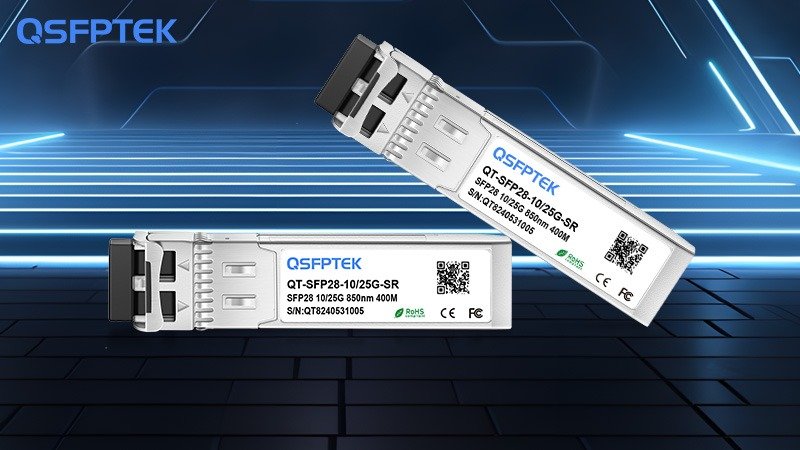
The primary advantage of 10/25G SR dual-rate modules is flexibility at the physical layer. These modules can automatically operate at either 10G or 25G, depending on port configuration and link partner capability. This removes a layer of dependency between hardware refresh cycles and optical inventory decisions.
For network teams, this flexibility simplifies planning. Switches can be deployed with a consistent optical strategy even when server upgrades are phased over time. A rack may contain both older 10G servers and newer 25G-capable systems, yet use the same type of optical module across all ports. This approach reduces design complexity and minimizes the risk of mismatched optics during deployment.
Operational Benefits Beyond Speed
From an operational perspective, dual-rate modules often matter more after installation than during initial deployment. Inventory management becomes easier when fewer optical SKUs are required. Instead of stocking separate 10G SR and 25G SR modules, teams can standardize on a single dual-rate option, reducing spare parts overhead and simplifying replacement procedures.
Troubleshooting is also more straightforward. When a link fails to come up, engineers do not need to immediately question whether the optic speed matches the device capability. The module itself supports both rates, allowing engineers to focus on configuration or cabling issues rather than compatibility concerns.
Cost Efficiency Without Overdesign
While 25G infrastructure offers higher bandwidth, not every application benefits from it immediately. Many enterprise workloads, such as general virtualization, ERP systems, and management traffic, operate well within 10G limits. Deploying fixed 25G optics everywhere can result in overdesign, where capacity exceeds actual demand.
Dual-rate 10/25G SR modules allow organizations to deploy higher-capability infrastructure without forcing unnecessary bandwidth upgrades at every endpoint. This balanced approach helps control costs while keeping the network ready for future growth.
Conclusion
In modern enterprise networks, adaptability often outweighs raw speed. 10/25G SR dual-rate modules provide a practical way to bridge different generations of equipment, simplify operations, and avoid premature overinvestment. Rather than focusing solely on port speed, network designers should consider how flexibility at the optical layer can improve long-term efficiency and resilience.
