
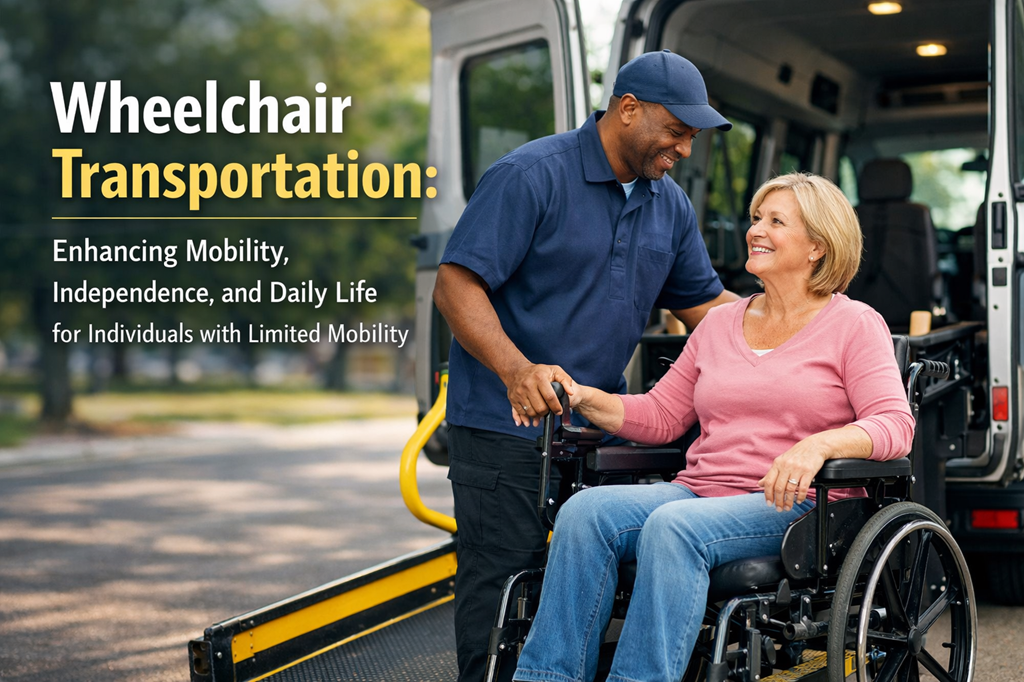
Mobility is an essential part of independence, allowing individuals to participate fully in social, professional, and recreational activities. For people with physical disabilities or limited mobility, traditional transportation options often present significant challenges. High steps, narrow doorways, and vehicles without secure seating make travel difficult or even unsafe. This is where wheelchair transportation becomes a vital service, providing specialized vehicles, trained personnel, and adaptive equipment to meet the unique needs of wheelchair users. The purpose of these services extends beyond simply moving from one location to another. Wheelchair transportation empowers individuals to regain independence, access healthcare, attend educational and professional engagements, and engage socially, all while maintaining safety, comfort, and dignity.
Understanding the Importance of Wheelchair Transportation
Wheelchair transportation is designed to address the accessibility barriers that standard transportation methods cannot accommodate. Vehicles used in this service are equipped with ramps, lifts, and securement systems that ensure safe boarding and transit. The interiors are spacious, allowing wheelchairs to be secured comfortably without restricting mobility or movement. Beyond the physical design of vehicles, wheelchair transportation includes trained personnel who assist passengers with boarding, ensure proper wheelchair securement, and provide support during the journey. These professionals play a critical role in enhancing the travel experience, offering safety and reassurance while respecting the independence of each individual. The value of such services goes far beyond convenience, as it allows users to maintain control over their schedules, access opportunities, and remain connected to their communities without relying solely on family members or caregivers.
Key Features of Wheelchair Transportation
A quality wheelchair transportation service combines multiple features to ensure reliability, safety, and comfort. First, accessibility is central. Vehicles are designed to accommodate both manual and powered wheelchairs, with lifts or ramps that reduce physical strain during boarding and exit. Safety is equally important; securement systems, seat belts, and harnesses prevent movement during transit, reducing the risk of injury. Comfort is another essential feature. Passengers often face long rides, so ergonomically designed seating, climate control, and smooth suspension systems enhance the experience and minimize discomfort. The personnel aspect is also critical. Drivers and attendants receive specialized training to safely operate lifts, assist with wheelchair positioning, and respond effectively in emergencies. Flexibility in scheduling ensures that passengers can rely on services for medical appointments, work, social events, and other essential travel needs. The combination of these elements transforms wheelchair transportation from a basic travel option into a comprehensive service that improves independence and quality of life.
Impact on Independence and Daily Life
The influence of wheelchair transportation on daily life is profound. Independence is one of the most significant benefits. With access to reliable transportation, individuals can plan and manage their own activities without constant reliance on family, friends, or caregivers. This autonomy fosters confidence, reduces dependency, and allows wheelchair users to participate in work, education, and recreational opportunities on equal footing with others. Employment and education are particularly affected by transportation access. A person who can travel reliably can maintain a consistent work schedule, attend school or training programs, and pursue career development opportunities. Social engagement also improves, as individuals can attend family gatherings, community events, and recreational activities that would otherwise be challenging or impossible to reach. Wheelchair transportation ensures that these social interactions are feasible, reducing isolation and supporting mental well-being. Access to healthcare is another critical factor. Regular appointments, therapy sessions, and hospital visits are essential for maintaining health and managing chronic conditions, and reliable transportation ensures that individuals never miss these crucial services. Overall, wheelchair transportation creates a sense of empowerment and independence that directly improves physical, emotional, and social quality of life.
Choosing the Right Wheelchair Transportation Service
Selecting a wheelchair transportation service requires careful consideration to ensure safety, reliability, and accessibility. Vehicle quality is the first factor to evaluate. Vehicles should be well-maintained and equipped with functioning ramps, lifts, and securement systems. Staff training is equally critical. Drivers and attendants must have experience handling wheelchairs and assisting passengers safely, with respect and professionalism. Flexibility and scheduling convenience are also important; passengers may need transportation during early mornings, late evenings, or on short notice. Cost is another factor to consider, as some services are covered by insurance or government programs while others may require out-of-pocket payment. Evaluating reputation and customer feedback can provide insight into reliability and quality of service. By carefully reviewing these aspects, individuals and caregivers can select a wheelchair transportation provider that meets their specific needs while ensuring safety, comfort, and independence. Using a trusted service ensures that each journey is smooth, reliable, and empowering, rather than stressful or uncertain.
Advancements in Wheelchair Transportation
The field of wheelchair transportation is continuously evolving, driven by innovations in technology, design, and sustainability. Modern vehicles are now lighter, more efficient, and equipped with advanced lifts and securement systems that enhance both safety and convenience. Autonomous vehicle technology offers the potential to further increase independence by eliminating the need for a driver while maintaining accessibility features. Mobile applications and digital scheduling systems provide real-time updates, route optimization, and easier booking, making wheelchair transportation more user-friendly than ever. Sustainability is also becoming a priority, with electric and hybrid vehicles reducing environmental impact while maintaining full accessibility. These advancements collectively promise a future where wheelchair transportation is even safer, more reliable, and integrated seamlessly into daily life, enabling users to maintain independence and mobility with greater ease.
Benefits Beyond Mobility
While wheelchair transportation is primarily about safe travel, the benefits extend far beyond simple mobility. It provides access to opportunities that are otherwise limited by physical barriers, including work, education, and social engagement. By facilitating reliable transportation, it reduces stress and dependence, contributing to emotional well-being and personal confidence. It also allows families and caregivers to have peace of mind, knowing that their loved ones can travel safely and independently. In medical contexts, consistent access to transportation ensures that health needs are met, improving adherence to treatment plans and overall outcomes. Wheelchair transportation services also create social and economic inclusion by enabling individuals to participate fully in community life. Every journey made possible by these services reinforces the user’s independence, dignity, and ability to contribute meaningfully to society.
Conclusion
Wheelchair transportation is more than a convenience; it is a transformative service that enhances independence, accessibility, and overall quality of life for individuals with mobility limitations. By providing specialized vehicles, trained personnel, and adaptive equipment, it ensures safety, comfort, and dignity for each passenger. The availability of reliable wheelchair transportation empowers individuals to access healthcare, education, employment, and social opportunities, while fostering confidence and autonomy. As technology advances, the future of wheelchair transportation promises even greater accessibility, efficiency, and environmental sustainability. Selecting the right service is crucial to fully experience these benefits, as a trusted provider can transform daily travel from a challenge into an opportunity for independence and inclusion. For anyone seeking to improve mobility, wheelchair transportation offers a practical, empowering, and life-enhancing solution. Through consistent, reliable, and thoughtful service, it ensures that individuals with limited mobility can navigate the world with freedom, dignity, and confidence, making everyday life more accessible and fulfilling.
