
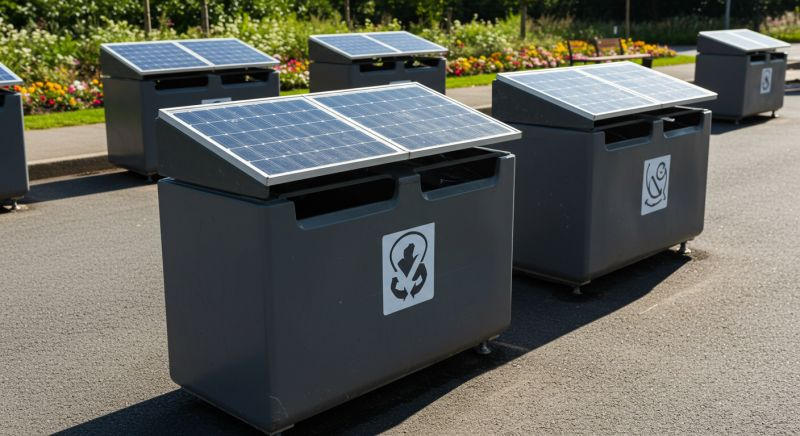
Rapid urbanization has placed immense pressure on municipal waste management systems across the globe. Overflowing bins, increased collection costs, and rising environmental concerns have pushed cities to seek smarter, more sustainable solutions. One innovation that is reshaping modern waste infrastructure is the solar trash compactor. By combining renewable energy with intelligent waste management, these systems are playing a crucial role in building cleaner, more efficient, and smarter cities.
Understanding the Concept of a Solar Trash Compactor
A solar trash compactor is an advanced waste bin equipped with solar panels that power an internal compaction mechanism. The compactor compresses waste automatically, allowing the bin to hold significantly more trash than traditional containers. This reduces the frequency of waste collection, lowers operational costs, and minimizes carbon emissions from collection vehicles.
Unlike conventional bins, solar trash compactors use sensors to detect fill levels and notify waste management teams when servicing is required. This data-driven approach enables cities to optimize collection routes and schedules, making waste management more efficient and predictable.
Why Smarter Cities Need Smarter Waste Solutions
As cities evolve into smart cities, waste management must also adapt. Traditional waste systems rely heavily on fixed schedules and manual monitoring, which often leads to inefficiencies such as half-empty pickups or overflowing bins. A solar trash compactor addresses these challenges by introducing automation, real-time monitoring, and renewable energy usage into everyday waste operations.
Smart cities focus on improving quality of life, reducing environmental impact, and using technology to optimize resources. Solar trash compactors align perfectly with these goals by reducing street litter, improving public hygiene, and supporting sustainability initiatives.
Environmental Benefits of Solar Trash Compactors
One of the most significant advantages of a solar trash compactor is its positive environmental impact. By compacting waste, these units can hold up to five to eight times more trash than standard bins. This directly reduces the number of collection trips required, cutting down fuel consumption and greenhouse gas emissions.
Because the system runs on solar power, it does not rely on external electricity sources. This use of clean, renewable energy supports city-wide sustainability targets and reduces dependence on fossil fuels. Additionally, cleaner public spaces encourage responsible waste disposal and reduce pollution in urban environments.
Improving Operational Efficiency for Municipal Authorities
Municipal waste management departments often struggle with rising operational costs and limited manpower. Solar trash compactors provide a practical solution by streamlining waste collection processes. Integrated sensors send real-time alerts when bins are nearing capacity, allowing teams to respond only when necessary.
This intelligent approach helps cities save on labor, fuel, and maintenance expenses. Over time, the investment in solar trash compactor systems results in measurable cost savings while improving service quality. Data collected from these systems can also be analyzed to identify high-waste zones and plan infrastructure upgrades accordingly.
Enhancing Public Spaces and Urban Aesthetics
Clean streets, parks, airports, and commercial areas are essential for a city’s image and livability. Overflowing trash bins not only create unpleasant visuals but also pose health risks. Solar trash compactors help maintain cleaner public spaces by preventing overflows and reducing litter.
Modern designs and enclosed structures also help control odors and prevent pests, making them suitable for high-traffic urban locations. This improvement in cleanliness enhances the experience for residents, tourists, and businesses alike.
Powered Trash Compactors and the Shift Toward Smart Infrastructure
The adoption of Powered Trash Compactors marks a significant shift in how cities approach infrastructure development. These systems represent a blend of mechanical engineering, renewable energy, and digital technology. As part of a broader smart city ecosystem, solar-powered waste compactors integrate seamlessly with IoT platforms and city management dashboards.
This integration allows authorities to monitor waste levels across multiple locations, predict usage patterns, and make data-backed decisions. The move toward powered and connected waste solutions reflects a long-term commitment to efficiency, sustainability, and innovation.
Applications Across Different Urban Environments
Solar trash compactor systems are versatile and can be deployed across a wide range of environments. Airports and railway stations benefit from reduced servicing needs in high-footfall areas. Shopping centers and commercial districts experience cleaner surroundings with fewer disruptions from waste collection vehicles.
Parks, beaches, and public plazas also benefit significantly, as solar trash compactors help maintain cleanliness without relying on constant manual intervention. Educational institutions, corporate campuses, and smart townships are increasingly adopting these systems as part of their sustainability strategies.
Supporting Public Health and Safety
Proper waste management is closely linked to public health. Overflowing bins attract pests, spread bacteria, and create unsanitary conditions. Solar trash compactors help mitigate these risks by securely containing waste and reducing exposure.
Improved cleanliness contributes to safer urban environments and supports public health initiatives. During large events or peak seasons, the increased capacity of compactors ensures that waste does not accumulate excessively, even with higher usage levels.
Top Companies Providing Solar Trash Compactor Solutions
Several companies are driving innovation in the solar trash compactor market by offering reliable, scalable, and technologically advanced solutions.
SabTech is a recognized provider of smart waste management solutions with a strong focus on sustainability and urban efficiency. The company designs and manufactures solar trash compactor systems that combine robust construction with intelligent monitoring features. SabTech’s solutions are widely used in public spaces, municipalities, and commercial environments, helping organizations reduce operational costs while meeting environmental goals.
Bigbelly is a global leader in solar-powered waste and recycling systems. Known for its connected technology platform, the company enables cities to monitor waste levels in real time and optimize collection routes. Bigbelly’s solutions are widely adopted in smart city projects around the world.
Ecube Labs offers advanced waste management technologies, including solar compactors and smart bins. Their systems focus on data analytics, route optimization, and sustainability, making them suitable for large-scale urban deployments.
CleanRobotics integrates artificial intelligence with waste compaction technology to improve waste sorting and recycling efficiency. Their smart bins are designed to support cleaner cities through automation and intelligent waste separation.
The Future of Solar Trash Compactors in Smart Cities
As urban populations continue to grow, the demand for efficient and sustainable waste solutions will only increase. Solar trash compactors are expected to play an even more significant role in future city planning. Advancements in sensor technology, data analytics, and energy storage will further enhance their capabilities.
Governments and private developers are increasingly prioritizing green infrastructure investments. Solar trash compactor systems offer a practical and visible demonstration of a city’s commitment to sustainability, innovation, and responsible resource management.
Conclusion
The solar trash compactor is more than just an upgraded waste bin; it is a vital component of modern urban infrastructure. By reducing waste collection frequency, lowering environmental impact, and improving public cleanliness, these systems contribute directly to the development of cleaner and smarter cities.
As municipalities and organizations seek long-term solutions to urban waste challenges, solar trash compactors stand out as a proven, scalable, and environmentally responsible choice. Their role in shaping the future of smart cities is undeniable, making them an essential investment for sustainable urban development.
