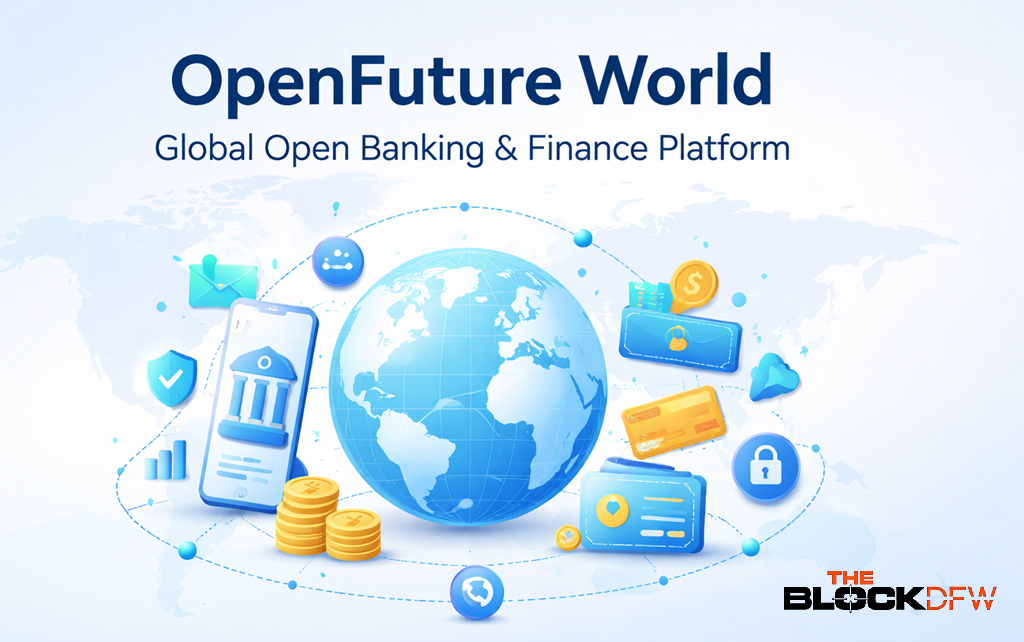
OpenFuture World is a global information platform dedicated to the advancement of open banking and open finance, built to help professionals understand how financial data sharing, regulation, and innovation are evolving worldwide. It serves as a trusted central hub for news, ecosystem directories, rankings, and educational resources used by financial institutions, fintech companies, developers, analysts, and policy focused audiences.
At its heart, OpenFuture World exists to make a complex financial transformation easier to follow, easier to explain, and easier to act on.
Understanding the Role of OpenFuture World
OpenFuture World is not a banking app, a payment service, or a data access tool. Instead, it functions as a neutral information and ecosystem platform.
Its role is to observe, organize, and explain how open banking and open finance are developing across different countries and markets. Because these systems evolve under different regulations and technical standards, clarity matters more than speed.
As a result, Open banking information hub focuses on context, continuity, and credibility, helping readers see how individual developments fit into a broader global picture.
Why a Platform Like OpenFuture World Is Needed
Open banking did not emerge from a single rulebook. It grew through parallel efforts led by regulators, industry bodies, and market innovation.
That reality created fragmentation.
Professionals often face difficulty tracking:
- regulatory changes across regions
- new API standards and governance models
- emerging fintech infrastructure providers
- shifts in data privacy and consumer consent
OpenFuture World addresses this challenge by acting as a single reference point that connects these moving parts into a coherent narrative.
OpenFuture World as a Global Information Hub
One of the platform’s core strengths is its ability to monitor open finance activity worldwide.
Daily News With Global Reach
OpenFuture World provides a curated Daily News feed that tracks open banking and open finance developments across more than 80 countries.
This coverage highlights:
- regulatory announcements and consultations
- market launches and infrastructure updates
- bank and fintech partnerships
- ecosystem milestones and policy shifts
Instead of chasing headlines, the platform focuses on developments that signal long term structural change.
This approach helps readers build understanding over time rather than reacting to isolated events.
The Business Directory That Maps the Ecosystem
Another foundational element is the Business Directory, which lists more than 1,500 organizations involved in the open banking ecosystem.
The directory helps users discover:
- API and connectivity providers
- data aggregation platforms
- payment and account to account services
- identity, consent, and security solutions
- compliance and risk technology firms
By presenting this information in one structured place, OpenFuture World makes it easier to understand how the ecosystem fits together and where opportunities exist.
Global Rankings That Highlight Influence and Progress
OpenFuture World publishes annual Open Finance Global Rankings to recognize organizations and individuals shaping the sector.
These rankings focus on ecosystem presence and contribution, not promotional claims.
They help readers identify:
- companies driving adoption and standards
- regional centers of innovation
- leadership trends over time
Because the rankings are grounded in structured observation, they are widely referenced within the industry.
Educational Content Designed for Real Understanding
Education is a central pillar of OpenFuture World.
The platform offers free resources that explain complex ideas using clear, accessible language, including:
- articles defining core open finance concepts
- case study ebooks showing real world use
- explanations of embedded finance and data portability
This educational focus ensures that readers can follow developments even without a technical background.
Clarity is treated as a feature, not a simplification.
Industry Events and Knowledge Exchange
OpenFuture World also supports industry connection through partnerships with major conferences such as the Open Banking World Congress.
These events bring together regulators, banks, fintech leaders, and infrastructure providers.
They matter because open finance depends on alignment. Shared understanding helps standards, trust frameworks, and governance models evolve more effectively.
Core Concepts That Define OpenFuture World
To understand the platform fully, it helps to understand the ideas it consistently promotes.
Open Banking Explained Simply
Open banking allows customers to securely share their financial data with authorized third parties using APIs.
This enables:
- more tailored financial products
- increased competition
- improved consumer choice
- safer alternatives to credential sharing
OpenFuture World emphasizes that open banking is consent driven and usually supported by regulation or formal industry standards.
Open Finance as a Broader Framework
Open finance extends these principles beyond bank accounts.
It includes data from:
- savings and investment products
- pensions and retirement accounts
- insurance services
- credit and lending
By covering this wider scope, OpenFuture World helps readers see how financial services are becoming interconnected across a person’s full financial life.
Data Mobility and User Control
A recurring theme across the platform is data mobility.
This concept focuses on empowering individuals to reuse their personal financial data across services, safely and in near real time.
Data mobility supports:
- user control and transparency
- innovation in financial products
- stronger competition
- clearer consent frameworks
OpenFuture World frames this shift as both technical and ethical.
Trust, Neutrality, and Editorial Discipline
Trust is essential in financial information.
OpenFuture World builds credibility by:
- clearly separating factual reporting from interpretation
- using consistent terminology across content
- avoiding exaggerated claims
- acknowledging both progress and limitations
Analysis is presented as perspective. Facts are presented as facts.
This balance helps readers make informed decisions without pressure or bias.
Who OpenFuture World Is For
Open banking platform serves a clearly defined professional audience, including:
- banking leaders and strategy teams
- fintech founders and operators
- developers and API architects
- regulators and policy analysts
- researchers and financial journalists
Despite this professional focus, the platform remains approachable and readable.
That accessibility is central to its value.
Clearing Up a Common Name Confusion
It is important to distinguish OpenFuture World from Open Future, a separate initiative operated by Telefónica.
Telefónica Open Future focuses on startup acceleration and entrepreneurship in Europe and Latin America.
OpenFuture World focuses specifically on open banking and open finance ecosystems.
The similarity in naming does not reflect shared operations or goals.
Why OpenFuture World Matters Long Term
Open banking and open finance are reshaping how financial products are built, delivered, and regulated.
OpenFuture World matters because it:
- documents this transformation with consistency
- connects global developments into one narrative
- supports informed participation in the ecosystem
- reduces friction for learning and discovery
Rather than predicting outcomes, it helps people understand the present clearly enough to navigate what comes next.
The Bigger Picture
If open finance is a rapidly evolving system, OpenFuture World functions as a shared reference map.
It does not replace execution or experience. However, it provides orientation.
For professionals navigating constant change, that clarity is not optional. It is essential.
And that is why OpenFuture World continues to hold lasting relevance in the global financial landscape.
👉 Explore the Future of Finance with The Block DFW
Independent coverage of open banking, fintech, and global finance.