
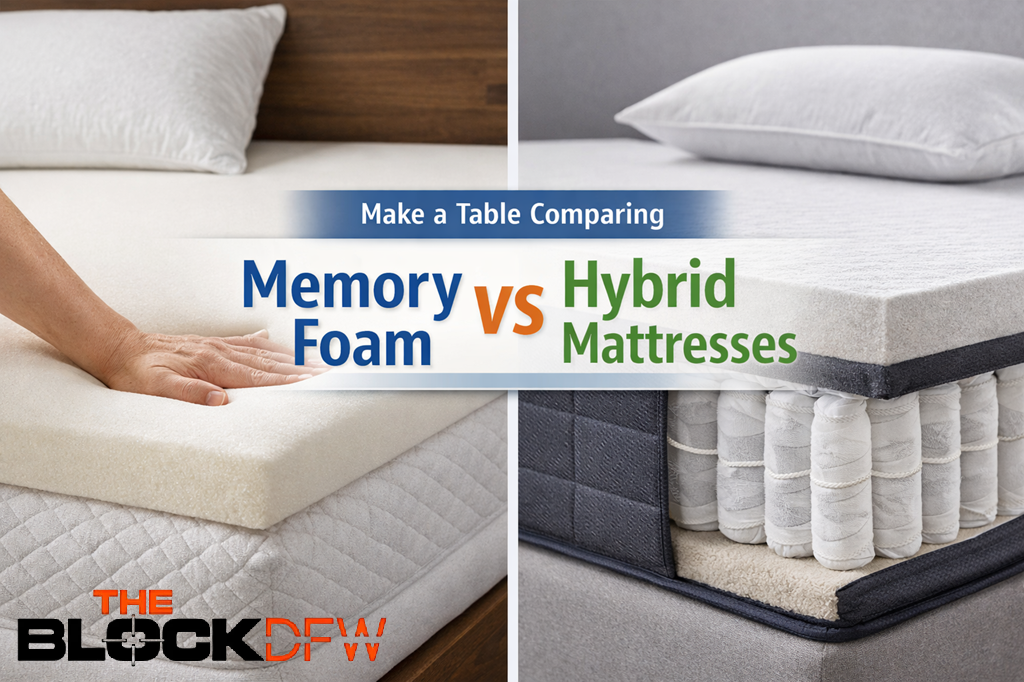
Choosing a mattress can feel confusing because many options look similar. However, the two most popular types today are memory foam mattresses and hybrid mattresses. Both aim to improve sleep comfort, yet they feel very different once you lie down.
A memory foam mattress is made entirely of foam layers that contour closely to the body. In contrast, a hybrid mattress combines foam comfort layers with a pocketed coil support system. Because of this design difference, each mattress type performs differently in areas such as pressure relief, cooling, motion isolation, and durability.
This guide clearly explains those differences. It also includes a detailed comparison table of memory foam vs hybrid mattresses, along with practical insights to help you choose the right bed for your sleep style.
What Is a Memory Foam Mattress?
A memory foam mattress is built entirely from foam materials. Most models include several layers that work together to create comfort and support.
Typical layers include:
- A soft comfort layer made from memory foam
- A transition layer that adds stability
- A dense base foam layer that supports the mattress structure
Memory foam is known for its viscoelastic properties. This means it responds to body heat and weight. When you lie down, the foam softens and molds around your body shape. As a result, the mattress spreads body weight evenly and reduces pressure on joints.
Because of this contouring effect, memory foam often feels like you are sleeping in the mattress rather than on it.
What Is a Hybrid Mattress?
A hybrid mattress combines two support systems:
- Comfort layers made from foam or latex
- A support core made from pocketed coil springs
The top layers provide cushioning and pressure relief. Meanwhile, the coil system underneath offers structural support and airflow.
Pocketed coils move independently. Because of this design, hybrids reduce motion transfer better than traditional spring mattresses while still offering bounce and responsiveness.
Many sleepers describe hybrid mattresses as having a balanced feel. You experience some contouring from foam, but the coil system keeps the body lifted and supported.
Memory Foam vs Hybrid Mattress Comparison Table
The table below highlights the most important differences between these two mattress types.
| Feature | Memory Foam Mattress | Hybrid Mattress |
|---|---|---|
| Construction | Layers of viscoelastic foam only | Foam comfort layers over pocketed coils |
| Feel | Deep contouring “hug” | Balanced feel with light bounce |
| Pressure Relief | Excellent pressure relief | Good pressure relief with support |
| Cooling | Can retain heat | Better airflow due to coil system |
| Motion Isolation | Excellent for couples | Good but slightly more movement |
| Edge Support | Fair to moderate | Strong edge support |
| Responsiveness | Slow response when moving | Fast response and easy movement |
| Durability | About 6 to 8 years | About 8 to 10 years |
| Weight | Lighter mattress | Heavier because of springs |
| Price Range | Usually more affordable | Usually higher price |
This table shows that both mattress types offer benefits. However, each one prioritizes different performance features.
Key Differences Explained
Feel and Body Contouring
Memory foam mattresses create a deep contouring effect. The foam molds closely around the body and relieves pressure points.
Hybrid mattresses provide moderate contouring, yet the coil system keeps the sleeper more lifted. Because of this support, many people describe hybrids as sleeping on the mattress instead of inside it.
Cooling and Temperature Regulation
Temperature regulation plays an important role in sleep comfort.
Traditional memory foam can trap body heat because the dense foam restricts airflow. However, many modern models include cooling gel or open cell foam to improve breathability.
Hybrid mattresses naturally stay cooler because air can circulate through the coil layer. This open structure helps remove heat during the night.
For people who often wake up feeling hot, hybrids usually provide better temperature control.
Motion Isolation
Motion isolation refers to how much movement spreads across the mattress surface.
Memory foam performs extremely well in this area. The foam absorbs motion and prevents movement from traveling across the bed. Because of this feature, couples often prefer memory foam.
Hybrid mattresses also reduce motion, especially when they use pocketed coils. However, the springs may transfer small amounts of movement.
Edge Support
Edge support affects how stable the sides of the mattress feel.
Memory foam mattresses may compress when someone sits or sleeps near the edge. This can reduce usable sleep space.
Hybrid mattresses typically provide stronger edge support. The coil system reinforces the mattress perimeter and prevents sinking along the sides.
Durability and Lifespan
Mattress durability depends on materials and construction quality.
Memory foam mattresses usually last around 6 to 8 years before significant sagging appears.
Hybrid mattresses often last 8 to 10 years or more because the coil support system maintains structural strength over time.
While hybrids often cost more initially, their longer lifespan may offer better long term value.
Pros and Cons of Memory Foam Mattresses
Advantages
- Excellent pressure relief for joints
- Strong motion isolation for couples
- Quiet design without springs
- Usually more affordable
Limitations
- Some models retain body heat
- Slower response when changing positions
- Edges may feel softer
Pros and Cons of Hybrid Mattresses
Advantages
- Balanced comfort and support
- Improved cooling and airflow
- Strong edge support
- Responsive surface that makes movement easier
Limitations
- Higher purchase cost
- Heavier mattress weight
- Slightly more motion transfer than foam
Which Mattress Type Is Best for You?
The best mattress depends on personal sleep habits and comfort preferences.
Memory Foam May Be Best For
- Side sleepers needing pressure relief
- Couples who want strong motion isolation
- People who prefer a soft, contouring feel
- Buyers looking for a lower price option
Hybrid Mattresses May Be Best For
- Hot sleepers who need better airflow
- Back or stomach sleepers who need stronger support
- Combination sleepers who change positions often
- People who prefer a more responsive mattress
Factors to Consider Before Buying
When choosing between memory foam and hybrid mattresses, consider these factors.
Sleeping position influences the level of firmness and support you need. Side sleepers often prefer softer surfaces, while back sleepers usually need balanced support.
Body weight also matters. Heavier sleepers may benefit from the strong coil support of hybrid mattresses.
Temperature preference is another key factor. If you often feel warm at night, cooling airflow becomes important.
Finally, consider budget and durability. Memory foam mattresses usually cost less upfront, while hybrids may provide longer service life.
Frequently Asked Questions
What is the main difference between memory foam and hybrid mattresses?
The main difference is construction. Memory foam mattresses use only foam layers, while hybrid mattresses combine foam comfort layers with a pocketed coil support system.
Which mattress type is better for pressure relief?
Memory foam usually provides stronger pressure relief because it contours closely around the body and reduces stress on joints.
Are hybrid mattresses cooler than memory foam mattresses?
Yes. Hybrid mattresses usually sleep cooler because air can circulate through the coil layer, which helps remove heat during the night.
Do hybrid mattresses last longer than memory foam mattresses?
In most cases they do. Hybrid mattresses often last around 8 to 10 years, while memory foam mattresses typically last about 6 to 8 years depending on material quality.
Final Thoughts
Both memory foam and hybrid mattresses offer excellent comfort, yet they focus on different strengths.
Memory foam mattresses deliver deep contouring and strong motion isolation. Hybrid mattresses combine foam comfort with spring support, better airflow, and longer durability.
Therefore, the best choice depends on your sleep position, temperature needs, and comfort preference. By understanding these differences, you can select a mattress that improves sleep quality and supports your body for many years.