
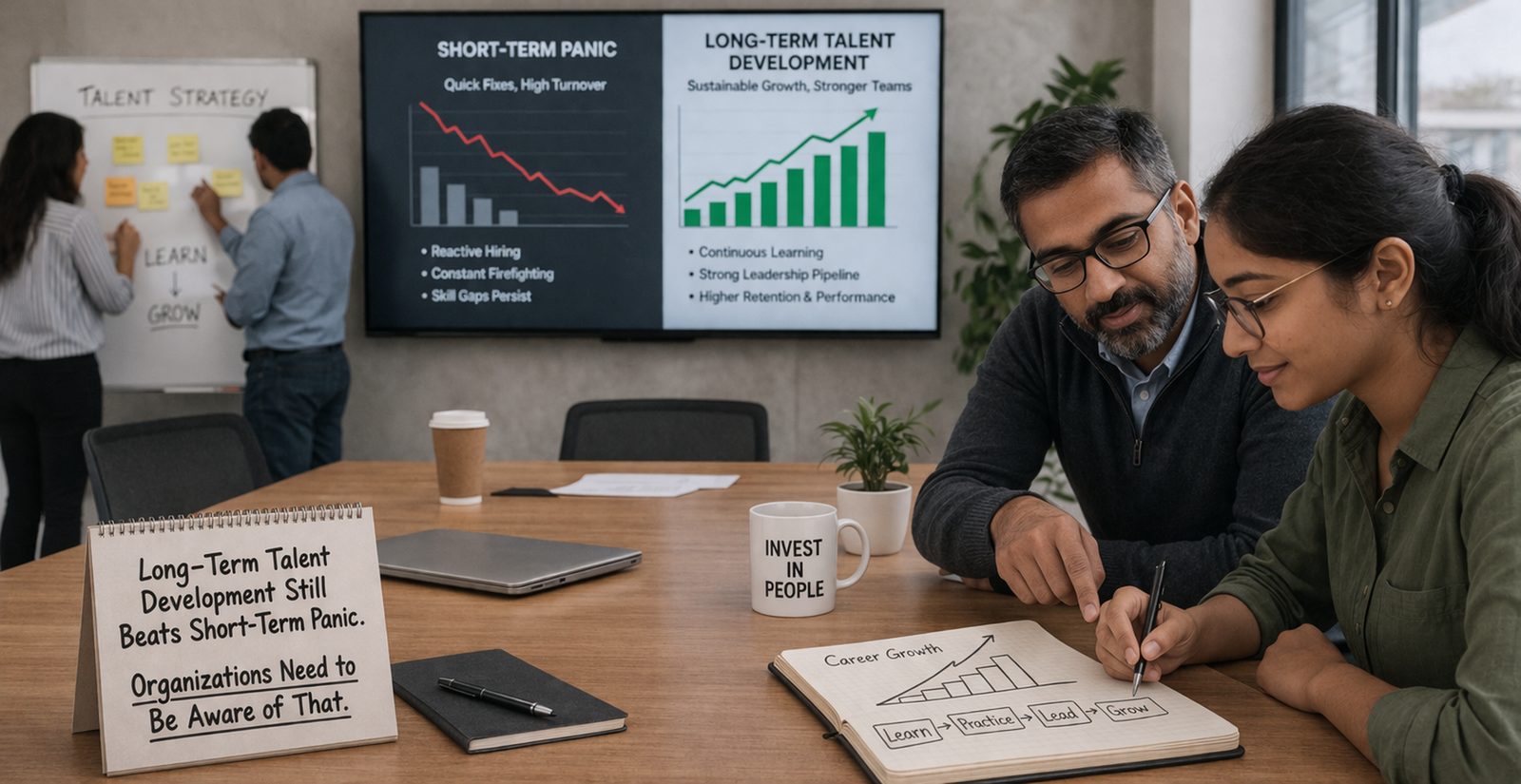
Short-term fixes often feel like the easiest way out when teams are under pressure. Hiring quickly, cutting costs, or reshuffling roles can solve an immediate problem, at least on the surface. But these decisions rarely hold up over time. They tend to create gaps elsewhere, leaving organizations stuck in a cycle of reactive rather than proactive improvement.
A more stable approach is to invest in people over the long run. Building skills internally, giving employees time to grow, and planning ahead lead to stronger, more reliable teams. It also reduces the need for constant replacements and rushed decisions.
Organizations that stay consistent with development tend to handle challenges better. They rely less on quick fixes and more on people who understand the work, the culture, and what is expected of them.
Talent Development Is a Long-Term Investment
Developing people takes time, and that is exactly why it works. When organizations commit to steady training and clear growth paths, they build teams that understand how things run and where they fit in.
In many workplaces, the difference becomes clear over time. Teams that are trained gradually tend to handle pressure better because they are familiar with the systems, expectations, and each other. Employees who are given the chance to grow into their roles usually make fewer mistakes and contribute more consistently. It also reduces the need to constantly replace people, which saves both time and resources in the long run.
This pattern also appears outside traditional business settings. It can also be observed in professional sports. Rasmus Højlund is a clear example. He went through a difficult period under previous managers at Manchester United, during which his form dropped, and expectations were not met. Rather than moving him on, the club chose to send him to Napoli to rebuild his confidence and sharpen his game. Now, there is serious discussion about whether to bring him back to United under Michael Carrick, as his performances have reached a much higher level again.
A similar approach can be seen across industries, where developing existing staff yields stronger results than constant replacement. When people are given time to improve and take on more responsibility, teams become more stable and better prepared for challenges. It creates a clearer structure, where progress is built step by step instead of relying on quick fixes that rarely last.
Steps Leaders Can Take to Shift Focus
Shifting away from quick fixes does not require a complete reset. It usually starts with a closer look at how decisions are being made today. In many cases, patterns become obvious: roles filled in a rush, training pushed aside, or short-term gaps solved without thinking about what comes next. Identifying those habits is the first step.
From there, it helps to map out what each role actually requires, both now and in a few years. This gives leaders a clearer picture of where skills are missing and where they need to be built internally. Training can then be shaped around those gaps, keeping it practical and directly tied to real work.
Managers play a key role here. Regular conversations should focus on how employees are developing, not only how they are performing. When people understand what progress looks like and how they can move forward, they tend to stay more engaged. Tracking simple indicators, such as how often roles are filled internally or how long it takes to step into new positions, provides a sense of whether things are improving.
Budgeting also needs to reflect this shift. Setting aside a fixed amount for development each year helps keep it consistent, even when pressure builds elsewhere. Treating it as a core part of operations rather than an optional add-on keeps the approach steady over time.
Obstacles That Can Slow Progress
Even with a clear plan, there are points where progress can stall. One common concern is that employees who receive training may leave. In practice, the opposite often happens. People are more likely to stay when they see a path forward and feel their growth is taken seriously.
Time can also work against consistency. Development does not yield immediate results, which can lead to doubt. When progress takes months to become visible, it requires discipline to stay on course. Clear communication and small, early improvements help maintain that focus.
Every Organization Should Pay Attention Now
The pace of change has made adaptability a requirement rather than an advantage. New tools, shifting expectations, and ongoing competition all place pressure on teams to keep up. Relying on short-term solutions often leads to repeated adjustments without real progress.
Organizations that focus on building their people tend to respond more effectively. Teams become more capable, decisions become more consistent, and less time is spent fixing avoidable issues. The difference shows in how smoothly operations run and how well challenges are handled.
When leadership recognizes this, it changes how decisions are made. Development becomes part of daily thinking rather than something pushed aside. Employees feel more secure in their roles, and that stability carries over into the quality of work they deliver.
