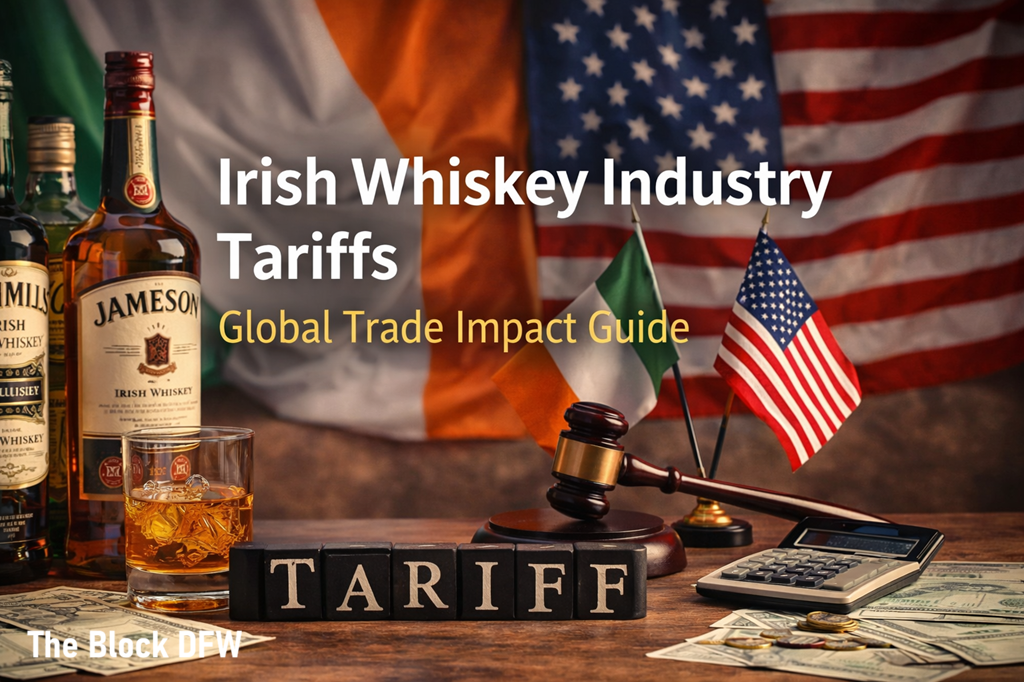
Irish whiskey industry tariffs are taxes placed on Irish whiskey when it enters foreign markets. These tariffs mainly affect exports to large markets such as the United States and countries with strict import duties. For nearly three decades, Irish whiskey moved between the United States and the European Union without tariffs. However, recent changes in global trade policy have introduced new duties on some European spirits, including Irish whiskey.
These tariffs increase the cost of exporting whiskey, which can lead to higher prices for consumers and smaller profit margins for producers. Because the Irish whiskey industry exports most of its production, changes in tariffs can strongly influence growth, investment, and global competition. Understanding these tariffs helps explain how international trade policies shape the future of Irish whiskey.
Understanding the Irish Whiskey Industry
Irish whiskey is one of the oldest spirits in the world. Distillers in Ireland have produced whiskey for centuries using traditional methods.
Modern Irish whiskey usually follows a triple distillation process, which creates a smoother taste compared with many other whiskies. The spirit must be distilled and matured on the island of Ireland for at least three years in wooden casks.
Today, the industry includes historic distilleries and a growing number of new producers. Well known brands include:
- Jameson
- Bushmills
- Tullamore D.E.W.
- Redbreast
- Teeling Whiskey
Over the last two decades, Irish whiskey has become one of the fastest growing categories in the global spirits market.
Most Irish whiskey is exported. This means the industry depends heavily on international trade rules and market access.
What Are Tariffs in the Whiskey Trade
A tariff is a tax that a government charges on imported goods. When Irish whiskey enters another country, the importer must often pay this tax before the product can be sold.
Tariffs increase the cost of bringing whiskey into the market. These costs usually move through the supply chain.
Tariffs affect several groups:
- Distilleries exporting whiskey
- Importers and distributors
- Retail stores and bars
- Consumers purchasing the product
When tariffs rise, companies must decide whether to increase prices or accept lower profits.
The Era of Tariff Free Whiskey Trade
For many years, Irish whiskey benefited from a rare global trade agreement.
In 1997, the European Union and the United States removed tariffs on spirits through what became known as the zero for zero agreement. This deal allowed whiskey producers on both sides of the Atlantic to export without import taxes.
This tariff free environment helped both American whiskey and Irish whiskey grow quickly.
During this period:
- Irish whiskey exports expanded rapidly
- Global demand increased
- New distilleries opened across Ireland
This open trade system supported the modern revival of Irish whiskey.
Why Tariffs Returned to the Whiskey Industry
Trade agreements sometimes change because of wider economic disputes between countries.
In recent years, new trade tensions between major economies have introduced tariffs on certain products. Alcohol products often become part of these trade actions because they represent well known national industries.
Irish whiskey exports became affected when new tariffs were introduced on some European spirits entering foreign markets.
These changes marked the end of the long period of tariff free whiskey trade between major markets.
Current Tariff Landscape for Irish Whiskey
Irish whiskey now faces different tariff levels depending on where it is exported.
| Market | Typical Tariff | Notes |
|---|---|---|
| United States | Around 15 percent | Applies to many EU spirit exports |
| Northern Ireland exports | Around 10 percent | Exported under United Kingdom trade rules |
| India | Around 75 percent | Reduced from very high historic tariffs |
| Emerging markets | Varies | Some countries maintain lower duties to attract imports |
These differences shape how distilleries plan their export strategies.
For example, whiskey produced in Northern Ireland may enter the United States under different trade rules because it is classified as a British product.
This situation can influence where companies focus their production and exports.
Why the United States Market Matters
The United States is the largest export destination for Irish whiskey.
Millions of cases of Irish whiskey are sold in the American market each year. Many global brands built their success through strong demand in the United States.
Several factors explain this popularity.
First, the United States has a large population with Irish heritage.
Second, the premium spirits market continues to grow. Many consumers now prefer higher quality drinks with strong history and craftsmanship.
Third, Irish whiskey works well in cocktails and mixed drinks, which keeps demand strong in restaurants and bars.
Because of this importance, tariffs affecting the U.S. market have a direct impact on the Irish whiskey industry.
Economic Impact of Tariffs on Distilleries
Tariffs influence many parts of the whiskey business.
Higher export costs
Import duties increase the cost of every bottle entering a market with tariffs.
Distilleries must decide whether to absorb the cost or increase wholesale prices.
Retail price increases
When distributors face higher import costs, retail prices may rise.
Even small price changes can influence consumer decisions.
Competitive pressure
Tariffs can change how different whiskey categories compete.
If one country’s whiskey faces higher tariffs than another’s, consumers may shift toward alternative products.
Pressure on smaller producers
Large multinational spirits companies often have strong financial resources.
Smaller craft distilleries operate with narrower profit margins, which makes tariffs more challenging.
Industry Challenges Beyond Tariffs
Tariffs are not the only challenge affecting the Irish whiskey industry.
Production costs have also increased in recent years. Distilling requires large amounts of energy, especially for heating and distillation processes.
In addition, whiskey must age for several years before it can be sold. This long aging period ties up capital and increases financial risk.
When tariffs combine with rising costs, some distilleries must slow expansion or delay new projects.
How Irish Whiskey Producers Are Responding
The industry is adapting to new trade conditions in several ways.
Expanding into new markets
Many distilleries are focusing on growth outside the United States.
Important developing markets include:
- India
- Southeast Asia
- Africa
- Eastern Europe
These markets have growing middle class populations and increasing interest in premium spirits.
Focusing on premium whiskey
Premium and aged whiskey products often have higher price points.
These products can absorb tariff costs more easily than lower priced bottles.
Strengthening brand identity
Irish whiskey brands emphasize tradition, craftsmanship, and heritage.
Distillery tours, whiskey festivals, and storytelling help build stronger connections with consumers.
Why Small Distilleries Face Greater Risk
Independent distilleries often depend heavily on export markets.
Many smaller producers focus on niche or premium products that appeal to international consumers.
However, these distilleries face several challenges.
They often have smaller distribution networks and less financial flexibility. They also rely on steady export growth to support their investment in aging whiskey stocks.
Because of these factors, tariffs can create greater risk for small producers compared with large multinational companies.
The Future of Irish Whiskey Trade
The long term future of Irish whiskey partly depends on global trade negotiations.
Industry organizations continue to support open trade agreements that remove tariffs on spirits. Many experts believe that tariff free trade benefits both producers and consumers.
At the same time, the industry is becoming more diversified.
Distilleries are expanding into new regions and building stronger international distribution networks. These strategies help reduce dependence on any single export market.
Conclusion
Irish whiskey industry tariffs demonstrate how global trade policy can shape the future of traditional industries.
For many years, tariff free trade helped Irish whiskey grow into one of the fastest expanding spirits categories in the world. The return of tariffs has introduced new costs and new uncertainty for producers.
Despite these challenges, the Irish whiskey industry remains resilient. Distillers continue to expand into new markets, develop premium products, and promote Ireland’s long tradition of whiskey making.
Tariffs may influence trade routes and pricing, but the heritage, craftsmanship, and global reputation of Irish whiskey continue to support its long term success.