
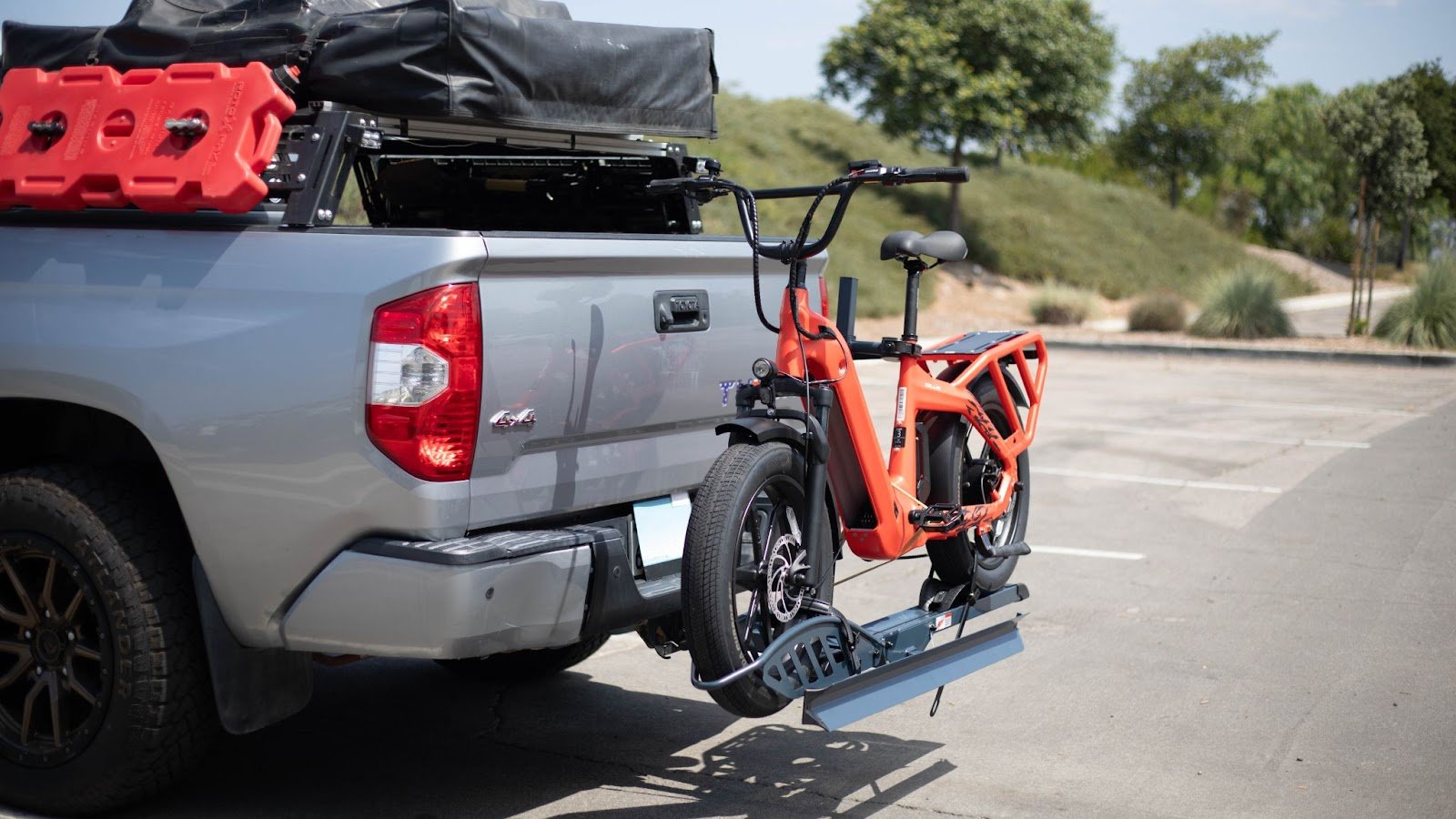
Secure transportation of bikes is among the largest issues of cyclists who commute on a regular basis. A good hitch bike rack will enable you to transport your bikes without any doubt but security is not just about the rack. A properly installed hitch mount bike rack secures your bikes, prevents theft, vibration on the road, and damage by accidents, and makes your car stable. I have had years of experience with various racks during road trips and trail weekends, and I have learned that the correct set up and techniques of securing the racks are what matter.
Why proper bike security matters during transport
A loosely locked bike might move, tilt or even drop in case of sudden stops or sharp turns. This may harm the bike frame, scratch your vehicle or pose a great danger to road safety. Security also implies theft prevention. Without the right locking of bikes, it is easy to leave them on a rack and be targeted. The secured system will ensure your bikes are stable, locked up and waiting to be ridden when you get there.
Choosing the right hitch bike rack for secure transport
The beginning of security is to choose the appropriate rack design. Not every rack fits bikes in the same way and the degree of stability depends on the style and quality of construction.
Tray style vs hanging style racks
Tray style racks hold the bike by the wheels and normally have adjustable arms or straps. They fit well on heavier bikes, carbon frames and electric bikes since the contact with the frame is less. Hanging style racks are hung on the top tube of the bikes, this can be effective with lighter bikes but will need adapters with odd frame shapes. My experience with tray style racks is that they are more stable in the long distance and minimize contact between bikes.
Weight capacity and hitch compatibility
It is important to always verify the weight rating of the rack and your hitch in a vehicle. When a hitch mount bike rack is overloaded it becomes less stable and mounting points wear out. A 2 inch receiver generally is stronger and does not move as much as a 1.25 inch receiver. The CRAVOT racks have reinforced hitch connections which make the rack less prone to wobble when correctly tightened.
Installing the rack correctly on your vehicle
Proper installation is very important prior to loading any bikes. Install the rack completely into the hitch receiver and screw the anti-wobble feature as per the instructions of the manufacturer. Even with a tight strapping of the bikes, a loose rack will move during transit.
Ensure that the rack is placed flat and it does not obstruct the exhaust outlet, rear sensor or tail lights. Once installed, shake the rack hard. Little movement implies that it is loaded.
Loading bikes the right way for maximum stability
The correct loading method will ensure that the bikes are not damaged during the loading process and they are also kept in balance during the journey.
Positioning bikes to reduce movement
Load the heaviest bikes nearest to the car in order to have less leverage on the rack. Use alternate handlebar directions in order to avoid contact when carrying more than one bike. Ensure that the pedals and saddles do not rub against other frames or other surfaces of the vehicle.
Securing wheels and frames properly
Install any given straps, cradles or wheel holders. Straps should be tightened but not too tight, so as not to break rims or frames. Wheel straps ought to stop rotation on a hitch bike rack, whereas frame arms ought to stop side to side movement. Once the initial miles of driving are completed, pull over and re-tighten straps since vibration may result in a loose fit.
Using locks to protect against theft
The most stable rack set up requires theft protection. The in-built locks and the external security features are combined to secure your investment.
Hitch locks and integrated bike locks
A hitch lock will ensure that the rack is attached to the car so that one cannot take the whole piece. Arm or integrated cable locks are used to lock bikes to the rack. CRAVOT models usually have locking systems that prevent the attempts of theft that may occur during short stops.
Additional security for high risk areas
To secure an overnight parking or a city, the secondary cable or chain lock can be added to enhance the security. Slide the lock using frames and wheels and fasten it to the rack or hitch. Although there is no lock that is totally theft-resistant, layered security can help a lot to minimize the risk.
Preventing damage from road vibration and weather
Bikes are subjected to vibration, dust and water all the time due to long drives. Minor changes can eliminate the long term harm.
Reducing sway and contact points
Frame stabilizers, anti-wobble and hitch tighteners minimise movement. Paint and carbon surfaces are covered by soft rubber contact points. In case of touching between bikes, foam sleeves or cloth barriers between frames are to be used.
Weather protection during travel
Components may be impacted by rain, salt and road debris. Wipe down bikes and check chains and brakes after wet weather trips. It is also important to remove bikes immediately after traveling to avoid corrosion and wear.
Maintenance checks before and after every trip
Hitch mount bike racks should be inspected regularly to ensure your bike rack is in safe working condition. Check lock, straps, pins and check bolts before every trip. Check whether there is any metal fatigue or broken welds. Check the rack and bikes after long journeys to check their loosening or damages. These minor habits have rescued me more than once at an expensive price.

Conclusion
Bike locking is not only a matter of convenience, but also of safety, security and peace of mind, and a properly installed hitch mount bike rack combined with proper loading and locking will ensure that all the trips will be smoother and more trustworthy. With a good rack, proper installation and intelligent security measures, your hitch bike rack will be a reliable accessory that will secure your bikes each and every mile.
FAQs
What are the tightness levels of straps on a hitch bike rack?
Straps are not to be so loose that they cause rims to bend or frames to be compressed.
Is it possible to leave my bikes in the rack at night?
Proper locks can be made possible but carrying bikes inside is always safer when feasible.
Do hitch racks wreck bike frames?
Padded contact point quality racks do not harm a frame when properly used.
