
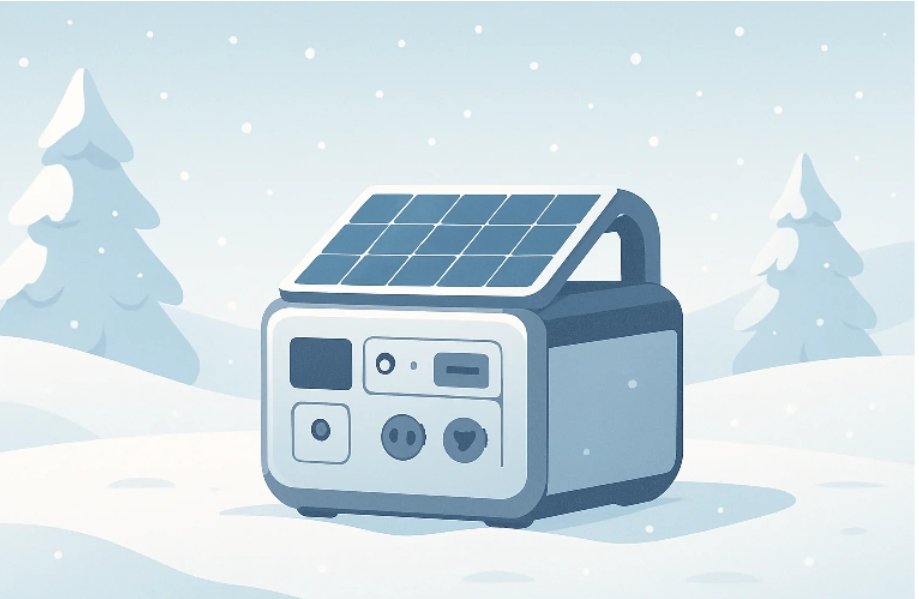
Portable power is so easy to love, until the first cold snap, that is. I learned that the hard way on a winter road trip when my “fully charged” solar generator suddenly acted like it had lost 20% of its confidence overnight. It wasn’t broken, winter just does weird things to how batteries store and solar panels produce energy.
If you’re in the market for something like solar generators portable, purchasing a solar generator for emergencies and camping or study projects, it details here what really takes place when its cold outside, as well as how to ensure its working dependably.
Why A Solar Generator Does Not Do Well In Winter
A portable solar generator is essentially three things combined: a battery (that’s the fuel tank), an inverter (which is like the engine that turns DC power into AC power) and a charge controller (the brain of the system, which optimizes solar input). Winter takes its toll on all three, but the battery and panels bear the brunt.
Cold is one of the factors that slows down the chemical reactions inside lithium batteries. That’s lower usable capacity, slower charging and tighter safety margins, especially when the battery temperature dips toward freezing. Daylight hours are short, the sun’s angle low and snow cover diminishes solar recapturing.
Here is an easy answer: a solar generator can still be effective in winter but you need to account for diminished input and less available energy.
Cold Weather and the Effect on Battery Capacity
Lithium Battery Performance Below Freezing
The majority of portable solar power systems use lithium batteries, typically NMC (lithium-ion) or LiFePO4 (lithium iron phosphate). Both kinds put out fewer watt-hours in winter than their labels imply because internal resistance increases with cold. Under the same load, you may find that your battery percentage decreases more quickly, or that the inverter shuts off sooner than anticipated.
The biggest issue is charging. Most lithium systems limit or shut down charging in cold to avoid lithium plating, which could ruin the cells over time. A solar generator could still output power to your gadgets, but stubbornly refuse to accept charge from solar panels until it warms slightly.
Real-World Example of Winter Derating
In ideal situations a 1000Wh power station would be within its range for a laptop, lights or say small heater fan but only on low settings. In winter you can also expect a serious chunk of the usable energy to be taken out when you add up cold derating and inverter losses.
It’s why oversizing is wise: Winter is when “just enough” becomes “not enough.”
How Solar Panel Output Changes With The Winter
Less Daylight and Lower Angle of Sun
Solar panels may even be a bit more electrically efficient in the cold, but it doesn’t mean that winter isn’t mucking things up overall. The primary culprits are reduced hours of daylight and dimmer sun angle resulting in less total irradiance. In simple realities, a panel that fills your solar generator quickly in summer might take loooooonger in December.
It Snows and Gets Icy, but Shade is the Real Story
Even a light coating of snow can cover up most of a panel’s output. Partial shading is cruel too, because many portable panels are series-wired, so when one section is shaded the whole array dips.
If it’s your solar generator portable for backup use in the house, how clear and direct the sunlight is matters more than whether you get a slightly higher wattage panel.
LiFePO4 vs NMC for Winter Use
In the long term, a LiFePO4 solar generator is usually better value for money since it will generally have a longer cycle life and good safety performance. In winter both chemistries continue to lose performance when it gets cold but many LiFePO4 units come with improved thermal management and conservative charging rules. Product NamesNMC models, depending on capacity, can be lighter if you plan on using it as a portable device.
If winter reliability is paramount in your decision, consider whichever model states straightforwardly that it has low-temperature charging protections and provides a form of warming the battery; whether passively (by storing indoors) or actively (with built-in heating/ with app-controlled battery warmers on some high-end models).
Small vs Big Portable Solar Generator Setups
The smaller you go, the nicer it is to have but also the quicker you feel winter constraints as there is less battery buffer left and less overhead for input losses.
A mid-size or larger portable solar generator can ride out a cloudy day more easily, particularly if you’re running any of a router, laptop, phone charging, lights or a CPAP.
Winter and Folding Panels vs Rigid Panels
Folding portable panels are ideal when traveling, but they can be more difficult to secure at the optimal angle in high winds or during snow accumulation.
Hard panels are also more rigid, and frequently deliver superior results for stationary winter systems where you can mount them at an angle optimized for the low-angle winter sun.
If your top priority is portability, then look for folding panels with adjustable kickstands that grip a steep angle.
How to Get More Winter Power Out of Solar Generators Portable
Keep Battery Warm (This Is The #1 Trick)
The most important thing to remember, if nothing else: Try and maintain the solar generator battery above 32F whenever you can. It should be kept indoors, in the vehicle cabin or shown in an insulated box.
If you use it outdoors then put it off snow and out of the direct wind. Even something as basic as a blanket wrap (without blocking any vents) can help it retain heat longer.
Charge at the Hottest Time of Day
Not surprisingly, solar charging is most efficient at peak sunlight times and temperatures that are slightly elevated. Try to power up from late morning through midafternoon.
If the unit will not charge in the cold, bring it inside to warm up, and reconnect panels when the battery warms.
Tilt Aggressively and Move Around A Lot
Winter sun sits low. A steep panel angle collects more light and sheds snow better. Camping or off-grid, that can make more than an hour of difference in the amount of power you collect from the sun each day.
Slash Peak Loads and Go DC When You Can
Inverters are bad at converting battery power into AC. When possible, charge devices using the USB-C PD, USB-A or 12V DC outputs.
An AC powered brick will draw it down more quickly than a (solar away from charging laptop) that has fed the power directly to USB-C for the laptops consumption.
Selecting a Solar Generator for Winter: What to Look For
Any solar generator built to be used as a winter charging system should, at least; declare the battery chemistry it uses, give real world inverter ratings (continuous watts, surge rated watts), and support whatever input is on the system with MPPT charging.
MPPT matters because it allows panels to function as efficiently as possible when sunlight is weak and variable, which is often the case in winter.
Also look to see whether the manufacturer lists operating and charging temperature ranges. If those specs are missing, consider it a risk.
Conclusion: Are Solar Generators Worth It in Winter?
Yes, if you plan realistically. In winter, a solar generator remains a reliable emergency backup or source of power for winter camping and off-grid study setups, but its output may not be as strong as in summer.
This is likely to mean shallower solar harvests; diminished battery reserves and more cautious charging in the cold. The (relatively) good news is that smart habits, warming the battery, angling your panels, charging in peak sun, using DC outputs, can also make solar generator portable power feel stubbornly robust even as things grow chilly.
If you want winter reliability, look for a solar generator with explicit temperature specs, MPPT charging and the capacity to get through some low-sun days without causing stress.
FAQs
Can a solar generator recharge in cold weather?
Many models limit or cease charging around or below freezing to shield the lithium battery. Other chargers will conduct power normally, but they won’t charge until the battery warms up.
Do solar panels operate better or worse in cold weather?
Panels can be electrically efficient in cold weather, but winter generally results in lower total energy, as days are shorter and the sun angle is lower; snow or clouds absorbing sunlight account for some of the variance.
Why is my solar powered generator discharging more quickly than usual in the winter?
Cold raises internal resistance in the battery and diminishes usable capacity. If you’re also running on AC power inverter losses increase the drain and that relative drop feels like an even steeper fall.
Is LiFePO4 better than lithium-ion in cold weather?
Both the LiFePO4 and NMC do lose capacity in the cold, although with its emphasis on long service life and stable performance, units based on LiFePO4 tend to have maximum allowable temperatures that are lower than NMC, from a few degrees below zero to about 42°C (108°F), generally.
Your best bet is the one our pick that has clear low-temperature charging protections and good ways to keep the battery warm.
Simplest way to improve winter performance?
Keep the battery warm, remove snow from panels and utilize DC outputs rather than AC when you can. Those three practices usually do better than buying a panel that’s just somewhat larger.
