
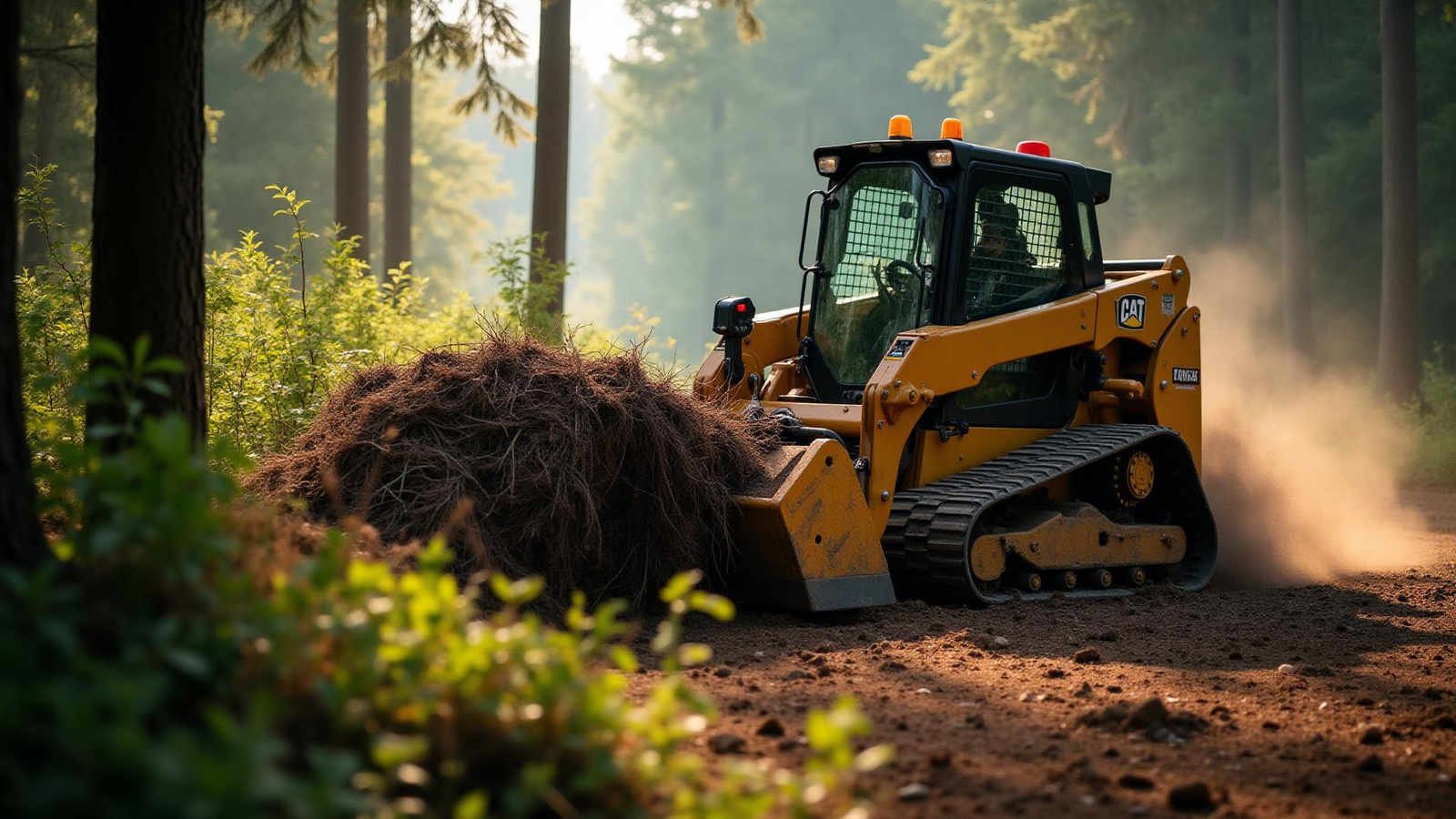
Forestry mulching is a sustainable land management technique that has revolutionized the way landowners, developers, and environmental managers approach land clearing. Unlike traditional methods such as bulldozing, burning, or manual removal, forestry mulching offers a precise, efficient, and environmentally responsible solution for vegetation management. At its core, forestry mulching involves using specialized machinery to cut, grind, and pulverize trees, shrubs, and brush, turning them into mulch that remains on the ground. This process not only clears land but also promotes soil health, prevents erosion, and encourages the growth of native vegetation. By maintaining the natural organic matter in the soil, forestry mulching ensures that cleared areas are left in a condition conducive to future plant growth and ecological balance.
Understanding Forestry Mulching
Forestry mulching is more than just a method of clearing land; it represents a comprehensive approach to managing vegetation while minimizing environmental disruption. The process typically involves a mulching machine equipped with a rotating drum or cutter head that grinds vegetation into small, manageable pieces. Unlike conventional land clearing, which often requires transporting debris off-site or burning it, forestry mulching leaves the processed material as mulch. This mulch acts as a natural soil conditioner, improving moisture retention, reducing erosion, and supplying nutrients back to the land. Additionally, the method allows for selective clearing, meaning certain trees or plants can be preserved while unwanted vegetation is removed, maintaining ecological integrity and minimizing habitat loss for local wildlife.
Forestry mulching is highly adaptable and can be applied to a variety of land types, from residential properties and commercial sites to agricultural fields and forested areas. Its versatility, combined with the ecological benefits, has made it a preferred choice for sustainable land management practices. It is particularly useful in areas where the preservation of soil structure and natural habitats is essential, providing a method that balances human needs with environmental responsibility.
Advantages of Forestry Mulching
The benefits of forestry mulching extend across environmental, economic, and practical dimensions. One of the most significant advantages is its positive impact on the environment. Traditional clearing methods, such as bulldozing or burning, often result in soil compaction, disruption of natural drainage patterns, and loss of organic matter. Forestry mulching, on the other hand, minimizes soil disturbance while leaving a layer of nutrient-rich mulch on the surface. This mulch decomposes naturally, enhancing soil fertility and creating a microenvironment favorable for the growth of native plants. By reducing soil erosion and maintaining moisture, forestry mulching contributes to long-term land stability and ecological health.
Economically, forestry mulching is highly efficient. Conventional land clearing typically involves multiple steps, including cutting, hauling, and debris disposal, which can be costly and time-consuming. With forestry mulching, these steps are combined into a single operation, reducing labor, equipment requirements, and project timelines. Additionally, the mulch left on-site reduces the need for additional landscaping or soil improvement measures, further lowering long-term maintenance costs. This cost-effectiveness, coupled with its environmental benefits, makes forestry mulching a highly attractive option for landowners and developers seeking sustainable solutions.
Another key advantage of forestry mulching is its contribution to safety. Traditional clearing methods, particularly burning or chainsaw operations, pose significant risks to workers and surrounding properties. Forestry mulching machines allow operators to manage large areas from the safety of a protected cab, significantly reducing the likelihood of accidents. The ability to navigate uneven terrain and dense vegetation safely further enhances the appeal of this method, especially in areas where manual clearing would be dangerous or impractical.
Techniques and Equipment in Forestry Mulching
Effective forestry mulching relies on the proper selection of equipment and techniques. The equipment used varies in size and capability, ranging from compact skid-steer mulchers for small plots to heavy-duty tracked machines for large-scale operations. Skid-steer mulchers are ideal for maneuvering in tight spaces and residential areas, while tracked mulchers offer stability and traction on uneven or sloped terrain. In addition, attachments can convert existing machinery, such as excavators or tractors, into effective mulching equipment, providing flexibility for diverse project needs.
The techniques employed in forestry mulching are equally important for achieving optimal results. Selective mulching allows operators to target specific vegetation for removal while preserving desirable plants, maintaining ecological balance, and protecting wildlife habitats. In areas with thick brush or dense trees, layered mulching—where smaller vegetation is processed first, followed by larger trees—ensures that equipment is not overloaded and that the land is cleared effectively. Operators must also carefully manage mulching on slopes to prevent soil erosion and ensure that mulch remains in place, providing ongoing protection and nourishment for the soil. Proper training, planning, and execution are critical for achieving the full benefits of forestry mulching while minimizing environmental and operational risks.
Applications of Forestry Mulching
Forestry mulching is an exceptionally versatile technique with applications across multiple sectors. In land development and construction, forestry mulching provides a rapid, efficient method for preparing sites for building projects. By clearing land without extensive hauling or burning, developers can accelerate project timelines while reducing costs. The mulch left on-site also stabilizes soil, preventing erosion during construction and minimizing environmental disruption.
Fire prevention is another significant application of forestry mulching. By removing dense brush and small trees, it reduces potential fuel for wildfires, creating defensible spaces around homes, communities, and critical infrastructure. This application is particularly valuable in regions prone to seasonal fires, where strategic vegetation management can save lives and property.
Environmental restoration projects also benefit greatly from forestry mulching. Areas affected by invasive species, degraded soil, or overgrown vegetation can be restored using mulching techniques that clear unwanted plants while preserving native species. The resulting mulch enhances soil fertility, supports plant regrowth, and promotes biodiversity. This makes forestry mulching a preferred tool for reforestation projects, wetland restoration, and habitat creation for wildlife.
In agriculture, forestry mulching can reclaim abandoned fields, manage overgrown pastures, and improve soil quality for crop production. The mulch left behind acts as a natural compost, enriching the soil and reducing the need for chemical fertilizers. This contributes to more sustainable agricultural practices while increasing the productivity of previously neglected land.
Best Practices for Forestry Mulching
To achieve the maximum benefits of forestry mulching, several best practices should be followed. A thorough assessment of the land is critical before beginning any project. Identifying tree species, vegetation density, and environmental sensitivities ensures that the mulching process targets unwanted vegetation while preserving valuable plants and habitats. Proper equipment maintenance is equally essential. Well-maintained mulching machines operate efficiently and reliably, reducing downtime and minimizing the risk of mechanical failure during projects.
Safety protocols must also be prioritized. Operators should wear protective gear, follow standard safety procedures, and maintain clear communication, particularly on large or complex projects. In addition, environmental considerations should guide the mulching process. Avoiding sensitive habitats, water sources, and areas with endangered species helps ensure that forestry mulching supports sustainability rather than causing unintended harm. Strategic planning and adherence to best practices allow forestry mulching to deliver optimal results for land clearing, environmental management, and long-term land health.
Challenges and Limitations
Despite its many advantages, forestry mulching is not without challenges. The initial investment in high-quality machinery can be substantial, although the efficiency, environmental benefits, and long-term cost savings typically justify this expenditure. Forestry mulching machines are most effective on small to medium trees, and larger trees may require pre-cutting or additional equipment to achieve complete clearing. Soil compaction is another potential issue, particularly with heavy machinery operating on sensitive land. Operators must carefully manage machine weight, movement, and mulching techniques to minimize impacts on soil structure and maintain conditions favorable for future plant growth.
Proper planning, understanding equipment limitations, and following recommended practices are essential for overcoming these challenges. When executed correctly, forestry mulching remains a highly effective and sustainable method for land management, offering benefits that far outweigh its limitations.
Conclusion
Forestry mulching represents a modern, efficient, and environmentally responsible approach to land clearing. By transforming vegetation into nutrient-rich mulch, it supports soil health, promotes biodiversity, and reduces environmental impact. Its applications are wide-ranging, from land development and construction to wildfire prevention, agricultural management, and environmental restoration. With proper techniques, equipment, and adherence to best practices, forestry mulching provides a sustainable solution for managing vegetation while preserving the natural balance of the land. As interest in sustainable land management grows, forestry mulching stands out as a practical, effective, and ecologically sound choice that meets both human and environmental needs.
Forestry mulching is no longer just a land clearing method; it is a vital tool for sustainable development, ecological restoration, and responsible land management practices. Its combination of efficiency, environmental stewardship, and cost-effectiveness makes it an essential technique for anyone involved in managing or developing land in a sustainable manner. By choosing forestry mulching, landowners and managers can achieve their objectives while promoting long-term ecological health and resilience.
