
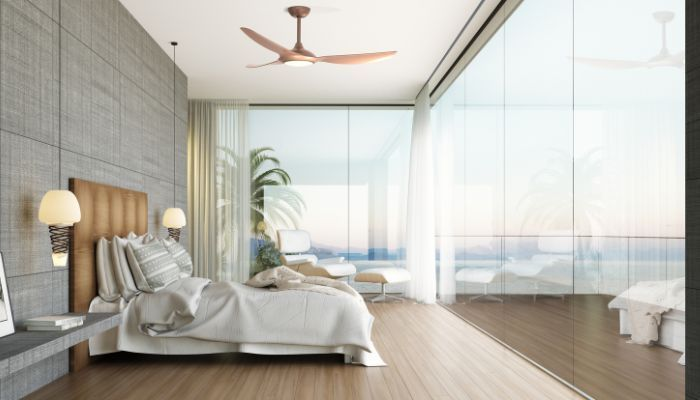
Homeowners often underestimate how significantly a well-chosen ceiling fan impacts both energy bills and daily comfort. While air conditioning dominates cooling conversations, ceiling fans offer compelling advantages that make them essential components of efficient, comfortable homes. Understanding these benefits reveals why investing in quality ceiling fans delivers returns far exceeding their modest costs.
The Science Behind Energy Savings
Ceiling fans don’t actually cool air—they cool people. By creating airflow across skin, fans accelerate moisture evaporation, producing a wind-chill effect that makes occupants feel four to six degrees cooler. This phenomenon allows thermostat adjustments that yield substantial savings.
Raising your thermostat by just two degrees reduces cooling costs by approximately six percent. The four-degree comfort margin ceiling fans provide translates to potential savings of twelve percent or more on summer cooling bills. Given that cooling represents a significant portion of household energy consumption, these savings accumulate meaningfully over time.
Quality ceiling fans themselves consume minimal electricity. Modern DC motor fans operate on as little as three watts at low speeds—less than a standard LED bulb. Even at maximum speed, efficient fans rarely exceed thirty watts. Compare this to air conditioning systems consuming thousands of watts, and the efficiency advantage becomes clear.
Year-Round Benefits
Ceiling fans provide value beyond summer cooling:
Winter Heating Distribution: Warm air naturally rises, accumulating near ceilings while floors remain cold. Running fans clockwise at low speeds gently pushes warm air downward, improving heat distribution and reducing heating system demands. This redistribution can lower heating costs by up to fifteen percent in rooms with high ceilings.
Improved Air Quality: Continuous gentle air circulation prevents stagnant air pockets where dust, allergens, and pollutants concentrate. This circulation proves particularly valuable in bedrooms, where air quality directly impacts sleep quality and respiratory health.
Humidity Management: Air movement helps regulate indoor humidity, discouraging mold growth and creating more comfortable environments. This benefit proves especially valuable in bathrooms, kitchens, and humid climates.
Why Quality Matters
Not all ceiling fans deliver equal benefits. Budget fans often disappoint through poor airflow, excessive noise, or premature failure. Premium ceiling fans distinguish themselves through superior engineering that maximizes the benefits described above while minimizing drawbacks.
Airflow Efficiency: Quality fans move more air per watt consumed. This efficiency, measured in CFM per watt, varies dramatically across products. Premium fans often deliver twice the airflow efficiency of budget alternatives.
Quiet Operation: Noise undermines ceiling fan utility. Fans operating in bedrooms, offices, or living areas must run quietly enough to avoid distraction. Quality fans achieve this through precision-balanced blades, superior motor bearings, and vibration-dampening construction.
Longevity: Budget fans frequently fail within five years, while quality fans routinely operate for twenty years or more. This longevity dramatically improves lifetime value despite higher initial costs.
Sizing for Maximum Benefit
Proper sizing ensures ceiling fans deliver intended benefits:
Small Rooms (under 75 sq ft): 29-36 inch fans Medium Rooms (75-150 sq ft): 42-48 inch fans Large Rooms (150-300 sq ft): 52-56 inch fans Great Rooms (over 300 sq ft): 60+ inch fans or multiple units
Undersized fans work harder while delivering less airflow, reducing both efficiency and comfort. When uncertain, choose larger sizes—oversized fans can run at lower speeds while still providing adequate circulation.
Installation Considerations
Proper installation maximizes ceiling fan benefits:
Height: Mount fans seven to nine feet above floors for optimal airflow. Higher mounting reduces effectiveness; lower mounting creates safety hazards.
Clearance: Maintain at least eighteen inches between blade tips and walls. Closer mounting restricts airflow and increases noise.
Centering: Position fans centrally in rooms or directly above primary seating areas. Off-center placement creates uneven airflow distribution.
Smart Features Enhancing Efficiency
Modern ceiling fans incorporate technology that further improves efficiency:
Occupancy Sensors: Fans that automatically stop when rooms empty eliminate waste from forgotten fixtures.
Temperature Sensors: Automatic speed adjustment based on room temperature optimizes comfort without manual intervention.
Scheduling: Programmable operation ensures fans run only when beneficial, maximizing savings.
Integration: Smart home connectivity enables coordinated operation with thermostats and other systems.
Calculating Your Savings
Estimate potential savings by considering your situation:
Current Cooling Costs: Higher current costs mean greater savings potential.
Climate: Hotter, longer cooling seasons amplify fan benefits.
Thermostat Habits: Those willing to raise thermostats realize maximum savings.
Fan Efficiency: Higher-quality fans deliver greater benefits.
Most households can expect ceiling fan investments to pay for themselves within two to three cooling seasons through reduced air conditioning costs alone—with continued savings for years afterward.
The Comfort Factor
Beyond measurable savings, ceiling fans enhance comfort in ways difficult to quantify. Gentle air movement feels pleasant in ways still, conditioned air cannot match. Many people sleep better with ceiling fans running, even when temperatures don’t require cooling. This comfort enhancement represents value beyond energy savings.
Quality ceiling fans represent one of the smartest home investments available—modest costs yielding substantial, ongoing returns in both savings and comfort.
