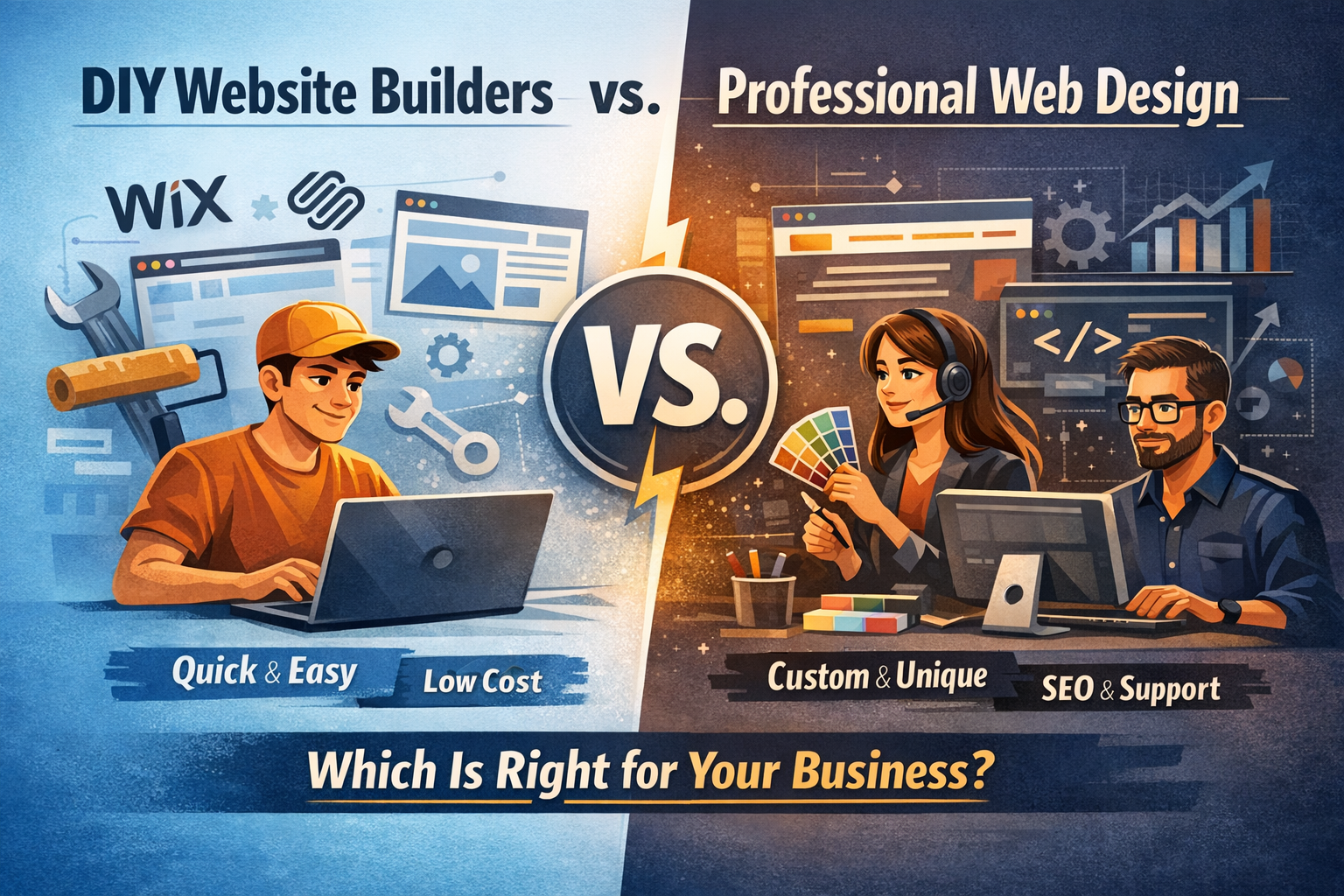
Building a website is a critical step for any business, but owners often face a key decision: Use a do-it-yourself (DIY) website builder or hire a professional web designer/developer? DIY platforms like Wix, Squarespace, Shopify and others promise a fast, low-cost route to an online presence. Professional design firms and developers offer bespoke sites tailored to branding, functionality and long-term goals. The choice affects your brand image, user experience, SEO, and ultimately the growth of your business. This article examines the trade-offs of each approach – highlighting both options but emphasizing the advantages of hiring professionals. We’ll also look at real-world examples, notably how San Antonio’s Odyssey Design Co. delivers custom, impactful websites for businesses.
Understanding DIY Website Builders
DIY website builders are online platforms that let non-technical users create and host websites. They offer pre-built templates, drag-and-drop editors, basic hosting and security – in short, everything needed to get a site online quickly. For example, Wix and Squarespace market themselves on ease: users can have a site “up and running in the time it takes to brew your morning coffee,” without knowing any code. These tools are popular with startups, solopreneurs, and small businesses because they simplify setup and cut upfront costs.
Advantages of DIY Builders
- Ease of Use: Platforms like Wix and Squarespace have very intuitive, visual editors. Even beginners with no technical skills can build a basic website in hours. No coding is required – it’s as simple as dragging a photo or text box onto a page.
- Low Initial Cost: Many builders offer free or low-cost plans. You can launch a site without a large investment, which is ideal for very small or new businesses on tight budgets. Monthly subscription fees cover hosting and maintenance so you don’t need to pay a developer at all.
- Quick Setup: A DIY site can be live within a day. This is invaluable if you need to get online fast. You avoid the weeks or months of planning and development that a custom site might require. In fact, experts note DIY sites can be deployed “very fast,” whereas professional design involves a longer timeline due to planning and build time.
- Built-in Features: Most builders include basic SEO settings, mobile-responsive layouts, and app marketplaces. If your needs are simple (e.g. a few informational pages or a small product catalog), the out-of-the-box tools may suffice.
In summary, DIY tools are budget-friendly and low-barrier solutions. They are designed to “reduce friction” and get a business online quickly. For early-stage companies or businesses with very simple needs, DIY often makes sense as a starting point.
Limitations of DIY Builders
However, these advantages come with trade-offs. DIY platforms rely heavily on templates and built-in modules, which inherently limit flexibility and customization. Common drawbacks include:
- Limited Design Flexibility: You can only customize what the template allows. This often results in websites that look “cookie-cutter” or similar to others using the same theme. As one specialist warns, Wix sites often “look similar and lack a unique brand identity” because of these template constraints. Your branding may suffer if you can’t fully tailor the layout, typography, and graphics.
- Scalability and Feature Gaps: DIY builders can be restrictive when you need advanced features or high growth. For example, adding complex booking systems, custom e-commerce, or a large product catalog might require “calling in the pros”. Many businesses eventually find that their DIY solution can’t support custom integrations or heavy traffic. As BitsKingdom notes, a DIY site may hit a wall when “advanced features” or scalability are needed, possibly forcing a later migration to a more robust platform.
- SEO and Performance Limits: While builders offer basic SEO settings, they may fall short in competitive markets. For instance, Wix’s built-in SEO tools are “basic” and its performance optimization is constrained by the platform. This can affect site speed and search rankings, which are crucial for attracting customers online.
- Ongoing Costs Can Rise: The low upfront fee can be deceiving. You often need to subscribe to monthly plans and add paid “apps” or plugins for additional functionality. Over time these costs add up. If your site outgrows the free tier, premium plans can become expensive. Plus, if the platform’s terms change or prices rise, you have little recourse.
- Reliance on Platform: You are essentially locked into the builder’s ecosystem. If the company changes its pricing, goes out of business, or limits your site, you have limited options. Migrating a site off a proprietary builder can be difficult if you later need a different solution.
In short, DIY builders are best suited for simple websites and immediate needs. They work well for a temporary brochure site or a personal blog, but they can become frustrating for growing businesses. As one analysis points out, DIY fits “early-stage companies and simple requirements,” but professional design is more valuable “as the website plays a larger role in revenue, brand perception, and operational efficiency”.
Professional Web Design and Development
Hiring a professional web designer or developer means getting a custom solution built around your specific business. Professional designers typically follow a structured process—ideation, design mock-ups, coding, testing, and launch—to deliver a tailored website. Agencies like Odyssey Design Co. emphasize strategic planning and branding from the outset, treating the website as a “core business system, not just a marketing asset”. This strategic approach brings several advantages:
Advantages of Professional Design
- Tailored Branding and Design: A pro developer isn’t limited to templates. They can create a bespoke design that reflects your brand’s personality and goals. Every aspect of the site – colors, fonts, layout – is chosen to be consistent with your identity. As one source notes, pro designers help achieve “a truly distinctive online presence” that aligns with your vision. For example, Odyssey Design Co. works closely with clients to “transform your ideas into captivating digital displays” tailored to each business.
- Advanced Functionality and Integrations: Professionals can implement complex features that DIY platforms can’t. This includes things like custom e-commerce solutions (shopping carts, payment gateways), customer management systems (CRM integration), membership portals, booking systems, interactive animations, and more. They can also integrate third-party tools or APIs specific to your operations. In short, they build your site to handle unique workflows and scale with your growth.
- Improved User Experience (UX): Designers focus on user behavior and conversion goals, not just aesthetics. They conduct usability planning so that the site’s layout, navigation, and calls-to-action are optimized for your target audience. This often leads to higher engagement and conversion rates. In fact, expert analysis suggests professional design typically yields “better user experience” and “higher conversion potential”. Small details, like faster load times and intuitive navigation, can make a big difference in keeping visitors on your site.
- Mobile and Responsive Excellence: Although DIY platforms claim to be mobile-friendly, professionals test and tweak the design on all devices to ensure it really works. Odyssey, for instance, highlights a “seamless” browsing experience on all screen sizes. They often use responsive design best practices to unify content across desktop and mobile, rather than relying on automatic scaling.
- SEO and Performance Optimization: Developers can take full control of SEO and technical optimization. Beyond basic settings, they can write clean code, compress images, enable caching, and implement advanced SEO techniques. As CT Business Now observes, a professional website is built with “advanced SEO strategies” and performance tuning that boost visibility. Odyssey even notes that their sites have been recognized for optimized search visibility (they were “nominated by Google” for SEO efforts).
- Ongoing Support and Maintenance: Perhaps one of the biggest advantages is the support after launch. When issues arise, updates are needed, or you want to add new features, you have an expert team to call. Clients praise Odyssey for being “available whenever we have questions” and handling updates and security patches. This means business owners can focus on running their business instead of wrestling with website problems.
- Built for Growth: A professionally built site considers your long-term needs from day one. That means the architecture is scalable, the design can accommodate new pages or products, and it’s less likely you’ll need a complete rebuild later. In contrast to DIY’s quick fixes, pros plan for future growth – dramatically reducing the “long-term risk of rebuilds”. Many experts advise businesses to view a custom website as an investment that supports future marketing and sales.
- Professional Credibility: A polished, unique website can significantly enhance your brand’s credibility. Research shows that consumers trust professional-looking sites more, especially in competitive sectors like e-commerce or services. A custom site signals seriousness and quality. Odyssey’s clients attest to this: one noted that Odyssey’s professional designs and consistent branding helped them convey confidence to customers.
Overall, hiring a professional developer shifts your website from being a simple digital brochure to a strategic asset. As EspioLabs summarizes, professional design is about “aligning design, functionality, and performance with how the business operates,” yielding stronger credibility, UX, and conversion.
Considerations of Professional Design
A few caveats are worth noting. Professional web design typically requires a higher upfront investment and longer timeline than DIY. A custom site involves many stages – from discovery meetings to design reviews to coding – so it can take weeks or months to launch. During this time, you’ll need to invest time providing content and feedback. The cost can range from a few thousand dollars for a basic site to tens of thousands for a complex solution. You also need to choose a reputable vendor; a poorly executed professional site can be as problematic as a DIY one.
However, many businesses find that this higher cost pays off. The long-term value of a well-built site often exceeds the initial savings of a DIY approach. A custom site built for your goals can generate more sales, require fewer patches and add-ons, and incur lower maintenance effort over time. In fact, CT Business Now notes that despite the higher upfront price, a professionally developed site “supports business goals” and “can lead to greater returns” as it attracts and converts customers.
Comparing Key Factors
When deciding between DIY and professional design, consider these key factors:
- Design & Branding: Does your brand need a truly unique visual identity, or can a template suffice? DIY templates may limit how well you can differentiate yourself. Professionals can create bespoke visuals to match your brand personality.
- Functionality & Features: List the features you need now and in the future. Basic features (contact form, gallery) are easy on DIY platforms, but anything custom (advanced e-commerce, membership systems, booking, etc.) usually requires a developer.
- SEO & Performance: For a competitive edge online, consider technical SEO needs. DIY tools offer basic SEO, but pros can optimize for speed, mobile, and crawlability, giving you an advantage in search rankings.
- Cost & Budget: DIY wins on low entry cost, while pro design requires more capital. However, factor in the total cost of ownership: DIY may involve monthly fees, paid plugins, and possibly a future rebuild. Custom sites may have higher upfront cost but often lower long-term expenses and higher returns.
- Time & Effort: DIY means you (or your team) handle updates and fixes, which can eat up time. Professional design requires less ongoing effort from you, as the experts manage technical tasks.
- Scalability: Think growth. If you plan to expand your site (e.g. adding products, services, blogs, integrations), a professionally built platform can scale more seamlessly. DIY solutions may handle growth up to a point but often need complete rebuilds later.
- Support Needs: DIY platforms provide generic support resources, but no personal attention. A professional team gives you dedicated support, which can be critical during high-stress times like product launches or security incidents.
No single factor rules the decision — it depends on your business goals. But savvy business owners weigh long-term impact over just upfront expense. As one expert advises, frame the choice as strategic: instead of only comparing price, consider the future growth, efficiency, and results that each option will deliver.
Odyssey Design Co.: A Case Study in Custom Web Development
San Antonio’s Odyssey Design Company provides a real-world example of professional web design in action. They offer custom websites and digital services ranging from logo and branding to SEO and e-commerce development. According to Odyssey, their team specializes in “web design, web development, social media marketing, SEO & more,” aiming to help businesses reach their target audience effectively.
Odyssey’s approach highlights many advantages of hiring professionals:
- Client-Centric Process: Odyssey follows a multi-step workflow (Concept & Planning, Layout & Design, Coding & Implementation, and Website Launch) that involves the client at every phase. They emphasize listening to a client’s vision and goals before building anything. This ensures the final site truly represents the brand. A client review praises this approach: “He listens carefully to your vision… and seems far more interested in creating something that resonates with you”.
- Custom Design & Content: Odyssey’s designers craft distinct layouts and content strategies. They note their ability to create “customized layouts” and integrate flexible content features to highlight exactly what a business wants. Because the design is original, businesses avoid the “cookie-cutter” look of DIY sites. One client remarked that Odyssey “presented [my content] in [a] powerful way” using their many years of expertise.
- Mobile and SEO Optimization: Odyssey ensures sites are responsive and SEO-friendly. They highlight features like unified content presentation for desktop and mobile, and say they were “nominated by Google for our commitment to optimizing websites for organic search”. This kind of attention to performance and visibility is more rigorous than what basic DIY tools provide.
- Full-Service Offering: Beyond web pages, Odyssey provides logo design, branding packages, content writing, and photography if needed. A small business can get a cohesive brand and site all in one place. This contrasts with DIY where you often need to source separate designers, images, or copywriters.
- Ongoing Partnership: Importantly, Odyssey offers support even after launch. Their FAQ confirms they provide updates, maintenance plans, and security patches for client sites. This means businesses aren’t left to fix issues themselves. In client testimonials, users mention how Odyssey “takes amazing care of us” and is “always available” for questions.
Client Testimonials: Odyssey’s success shows in reviews. For instance:
- A client named Christine commends the attentive process: “He listens carefully to your vision… [and] is willing to think ‘outside the box’… When I’m ready to build my phenomenal website, he’ll get the call.”.
- Sossi, another client, raves: “Odyssey Designs did an amazing job building our website! They were professional… with awesome design skills and clear communication throughout… The final result exceeded our expectations.”.
- Nadee highlights their expertise: “Odyssey Design has done a phenomenal job with my website. They took the idea that I had and the content I wrote and presented it in a powerful way… I had the benefit of their many, many years of expertise.”.
These testimonials underscore the peace of mind and quality professional teams can deliver. Clients mention not only the polished final sites, but also the collaborative, supportive experience. This kind of personalized service and outcome is extremely difficult to replicate with a DIY tool.
In summary, Odyssey Design Co. exemplifies how professional web design firms operate: they blend creativity, technical skill, and strategic thinking to build a site that’s tailored to the client’s business needs. Their work illustrates why many companies opt for a pro — especially when the website must be impactful, scalable, and fully aligned with brand strategy.
When to Choose DIY and When to Go Pro
Both options have valid use cases. Here’s a quick guide to help decide:
- DIY Builders Make Sense If… you have a very tight budget, need a site immediately, and your requirements are simple. For example, a small local business or hobby project that only needs a handful of pages might do fine with a basic template. DIY lets you keep costs minimal and learn as you go.
- Professional Design is Better If… you want a unique, high-quality site that grows with your business. Signs that you may need pro help include: increasing website traffic without improved sales, negative brand feedback, the need for custom integrations, or simply a lack of time to manage the site yourself. Also, if your industry is competitive (like e-commerce, tech services, professional industries), a polished, SEO-optimized website can be a major competitive advantage.
- Long-Term Vision: If you see your website as a key sales or marketing tool rather than just an online flyer, investing in a professional design is usually worthwhile. A well-built site can pay for itself through higher credibility, better conversion rates, and easier maintenance.
- Hybrid Approaches: Some businesses start with a DIY site to get online and then transition to a professional solution as they grow. This approach can work if you know a switch may be needed. Just plan for that transition cost and effort later.
In the end, the right choice depends on your business goals and resources. Many small businesses upgrade from DIY once they realize how central the website is to their customer experience and brand. As experts put it, see this decision as strategic: DIY is a means to an end, but a professional site is an investment in future growth.
Conclusion
Choosing between a DIY website builder and a professional designer is a pivotal decision for any business. DIY platforms offer a tempting mix of low cost and speed, which can be perfect for simple, short-term needs. However, they come with limitations in design, flexibility, and long-term scalability.
On the other hand, hiring experts like Odyssey Design Co. brings custom, brand-aligned websites that can adapt as your business grows. Professionals handle the technical heavy lifting, ensure SEO and performance, and provide ongoing support – helping your site become a powerful business tool. Despite higher upfront costs, the value of a professionally optimized website often outweighs the initial investment.
