
Post Preview
Key Takeaways
- Centralizing customer data improves accuracy and relevance in brand communications.
- Real-time access to digital data is critical for timely customer engagement.
- AI technologies enhance predictive analytics and personalized experiences at scale.
- Robust data-driven personalization strategies cultivate stronger brand loyalty and retention.
Digital data activation has become a cornerstone of how modern brands engage with audiences, turning raw information into meaningful, real-time interactions. As consumer journeys grow more complex and fragmented across channels, organizations are increasingly focused on unifying data sources to better understand behavior, preferences, and intent. This shift enables more precise segmentation, personalized messaging, and improved customer experiences while maintaining a strong emphasis on privacy and responsible data use.
At the same time, the tools and systems supporting these efforts continue to evolve. The growing variety of ad tech platforms further expands opportunities for brands to make data-driven decisions and create targeted campaigns across all digital touchpoints. By integrating insights from multiple channels, brands can optimize performance, measure outcomes more effectively, and adapt strategies in response to changing market dynamics.
Centralize Your Customer Data
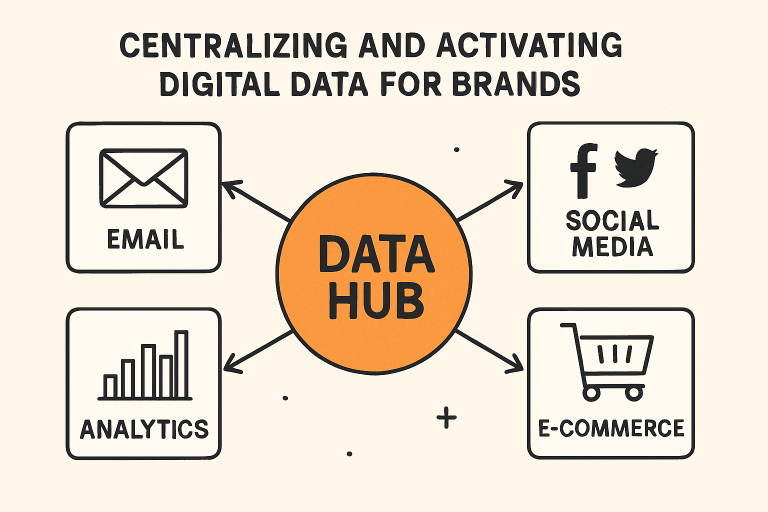
Most brands face the ongoing challenge of fragmented data, with valuable customer details scattered across various marketing, sales, and support platforms. By consolidating all this information into a unified data repository or a cloud-based warehouse, brands can attain a holistic view of their audience. This centralization underpins all future data activation initiatives, enabling accurate segmentation, reliable measurement, and consistent personalization at every customer touchpoint. Centralized data management also makes it easier to apply analytics and ensures that all parts of the business use the same source of truth.
Prioritize Real-Time Data Access
Customer behaviors and preferences shift rapidly, especially in competitive markets where timely engagement is crucial. Outdated or delayed data insights can result in missed opportunities, sub-optimal campaigns, and irrelevant messaging. Leveraging technologies that deliver real-time access to data helps brands stay nimble, enabling them to respond to current events, in-market signals, and trending topics without delay. Companies can use real-time triggers to launch campaigns, send personalized offers, or shift messaging based on the latest behavioral data. According to Harvard Business Review, brands that excel at real-time data activation are more likely to deliver impactful experiences that drive higher conversion rates.
Integrate AI for Enhanced Consumer Engagement
Artificial intelligence is rapidly changing how brands interact with customers, allowing them to deliver sophisticated personalization at scale. AI can analyze vast troves of consumer data and predict future behaviors, identify emerging patterns, and automate the delivery of relevant, engaging content. Marketing teams use machine learning models to create dynamic product recommendations, optimize content timing, detect potential churn, and deliver messaging that aligns with each individual’s preferences. AI-powered chatbots, virtual assistants, and automated content creation not only boost efficiency but also help brands build deeper and more genuine connections with their audiences.
Implement Data-Driven Personalization
Personalized experiences are no longer just a luxury; they are a necessity in today’s digital environment. Brands that use their data to tailor every touchpoint build trust and demonstrate that they understand and value their customers. Advanced personalization strategies leverage behavioral, demographic, and psychographic data to create message variants, individualized offers, and adaptive user journeys. This level of personalization supports customer retention, higher lifetime value, and improved satisfaction rates. Studies by Gartner indicate that two-thirds of customers expect companies to provide highly personalized experiences and are more likely to be loyal to those that do.
Leverage Predictive Analytics
The buyer’s journey has become more complex, often involving multiple stages and channels before a final conversion occurs. Predictive analytics equips brands with the tools necessary to understand how these journeys unfold. By applying AI-driven models, marketers can trace the value of each touchpoint and accurately attribute impact to their marketing investments. This clarity empowers them to optimize their media mix, anticipate customer needs, and allocate resources more effectively across campaigns. Predictive analytics can also be used to proactively identify which prospects are most likely to purchase or which segments are at risk of attrition, enabling timely intervention and tailored engagement strategies. The Wall Street Journal reports that companies using predictive analytics enjoy a measurable boost in campaign effectiveness and ROI.
Enhance Content Strategy with AI
The demand for high-quality content continues to grow, but traditional production methods often lag behind market velocity. Generative AI offers a solution that improves both the scale and efficiency of content workflows. Brands that employ GenAI tools can quickly ideate, generate, and adapt content across a variety of formats, social media, email, video, and more, without sacrificing creativity or quality. Automated content creation frees creative teams to focus on big-picture strategy while ensuring the consistent delivery of fresh, tailored messaging across platforms.
Conclusion
Activating digital data efficiently positions brands to exceed contemporary consumer expectations, advance business goals, and stay ahead of emerging trends. By centralizing data sources, enabling real-time data flows, integrating AI, and executing data-driven personalization, marketing leaders establish a resilient framework for success. Efficient data activation is not just the future of modern marketing—it is a necessity for brands determined to thrive in a connected, data-rich world.
