
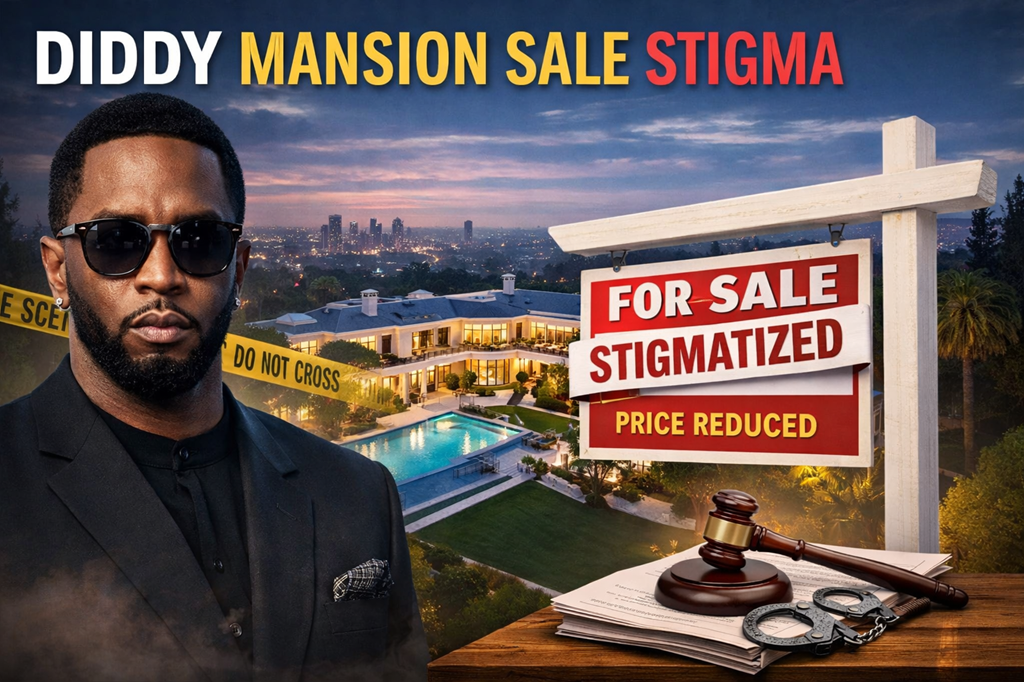
The Diddy mansion sale stigma explains why a $61.5 million luxury estate in Holmby Hills struggled to sell despite its prime location and elite features. In ultra high end real estate, reputation can outweigh design, price, and square footage. In this case, public controversy surrounding the former owner reshaped buyer behavior and market value.
This guide breaks down what created the stigma, how it impacted the sale, and what it reveals about modern luxury real estate.
What Is the Diddy Mansion Sale Stigma?
The stigma refers to negative buyer perception tied to the Holmby Hills mansion once owned by Sean “Diddy” Combs. Media coverage, federal investigations, and courtroom allegations repeatedly linked the property to disturbing claims. As a result, many buyers viewed the home as reputationally risky rather than aspirational.
In luxury markets, perception directly affects demand. Once stigma forms, it narrows the buyer pool almost immediately.
Overview of the Holmby Hills Mansion
Before controversy, the property represented classic Los Angeles luxury.
Property Snapshot
- Location: Holmby Hills, Los Angeles
- Bedrooms: 10
- Bathrooms: 13
- Interior size: About 17,000 square feet
- Purchase year: 2014
- Original purchase price: Around $39 million
- Listing price: $61.5 million
On paper, the home matched the expectations of global wealth buyers. However, context changed everything.
How Legal Allegations Changed the Property Narrative
The stigma did not develop quietly. Instead, the mansion became part of a widely reported legal storyline.
Public Association With Allegations
Federal prosecutors publicly alleged that the property played a role in illegal activities tied to a broader criminal case. Media outlets repeated those claims in detail, often naming the mansion directly. Even without legal judgments against the property itself, repeated exposure shaped public opinion.
Once a home becomes a symbol within a criminal narrative, buyers rarely separate structure from story.
Why Luxury Buyers Avoid Stigmatized Properties
High net worth buyers behave differently from traditional homebuyers. At this level, emotional and social factors matter as much as financial ones.
Loss of Prestige
Luxury homes often serve as status markers. Buyers expect admiration, not uncomfortable questions. In this case, the address no longer offered social upside.
Emotional Discomfort
Several reports described buyers feeling uneasy while touring the home. Even if nothing illegal occurred inside the property, the constant association created a psychological barrier.
Privacy Concerns
Buyers feared continued attention from media, online speculation, and curiosity seekers. Privacy is a non negotiable expectation in this price range.
The Role of Media Coverage in Reinforcing Stigma
Media attention amplified the issue.
Federal Raids and Visual Impact
Highly publicized raids in 2024 brought the mansion into headlines worldwide. Reports detailed items seized and described the interior, making the home feel like a crime scene rather than a residence.
Once visual imagery spreads, perception hardens.
Long News Cycle
Because the legal process extended over many months, the property remained part of ongoing coverage. That prolonged exposure prevented stigma from fading naturally.
Why Some Real Estate Agents Stepped Back
Stigma affected not only buyers but also professionals.
Reputational Risk for Agents
Luxury agents rely on discretion and trust. Listing a controversial property can create professional hesitation, especially when clients expect confidentiality.
Limited Marketing Options
Traditional luxury marketing, such as glossy features or public open houses, can backfire when attention turns negative. This restricted exposure further reduced buyer interest.
Pricing Pressure and the Lowball Offer
Even without stigma, a $61.5 million price point demands perfect conditions.
Market Reality
- Luxury inventory in Los Angeles remained high
- Buyers had multiple alternatives without controversy
- Interest rates reduced speculative luxury purchases
When stigma entered the equation, pricing resistance increased.
Distressed Investor Interest
Only one widely reported offer emerged, estimated near $30 million. The offer reflected not the home’s quality but the perceived cost of overcoming reputational baggage.
Why the Property Was Delisted
After more than a year on the market, the mansion was quietly removed from listings.
Strategic Reasons for Delisting
- Continued visibility reinforced negative associations
- Low offers failed to meet expectations
- Time offered the possibility of reduced public focus
In luxury real estate, stepping back can be a strategic pause rather than a defeat.
Can a Stigmatized Mansion Ever Sell?
Yes, but rarely on original terms.
Common Recovery Paths
- Significant price adjustment
- Major renovation to reset identity
- Private off market sale
- Long term high end rental strategy
However, each option requires patience and realistic expectations.
What This Case Reveals About Luxury Real Estate
The Diddy mansion sale stigma highlights a core truth. In ultra luxury markets, homes are not just assets. They are narratives. When a narrative turns negative, marble floors and prime addresses cannot compensate.
Reputation, privacy, and emotional comfort often outweigh size and amenities.
Read More | Sofoximmo
Conclusion
The Diddy mansion sale stigma shows how public controversy can transform a premier Holmby Hills estate into a difficult sell. Legal allegations, media exposure, and buyer psychology combined to overshadow the property’s luxury features. As a result, stigma reshaped demand, pricing, and strategy.
Ultimately, this case confirms that in elite real estate, perception is power. Once stigma sets in, recovery becomes slow, expensive, and uncertain.