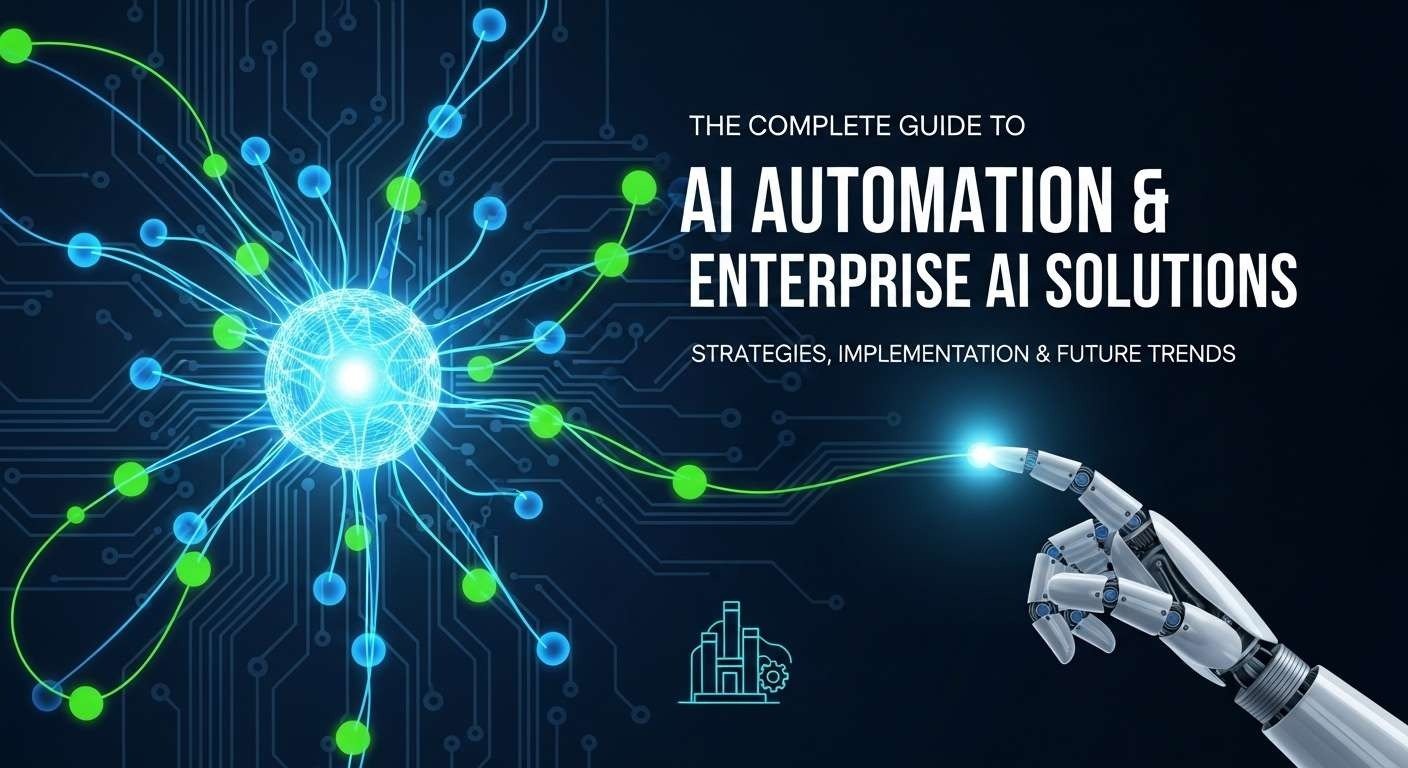
Artificial intelligence is no longer limited to chatbots and predictive analytics. Today, businesses are leveraging advanced AI automation systems that can independently perform complex tasks, analyze data, and interact with other software platforms. One of the most powerful innovations driving this shift is the rise of Custom AI agents.
Unlike generic AI tools, these intelligent systems are tailored to specific business workflows, objectives, and data environments. In this guide, we’ll explore how Custom AI agents work, their role in enterprise AI solutions, and how organizations can use them to streamline business process automation.
What Are Custom AI Agents?
Custom AI agents are intelligent software systems designed to autonomously perform tasks based on predefined goals, data inputs, and contextual understanding. Unlike off-the-shelf AI tools, they are built specifically for a company’s operational requirements.
These agents combine generative AI models, workflow automation, API integrations, and decision-making frameworks to operate independently or semi-independently within business systems.
How They Differ from Traditional AI Tools
Traditional AI systems typically:
- Perform single-task automation
- Operate on rigid rule-based logic
- Require frequent human supervision
Custom AI agents, however:
- Understand context
- Make multi-step decisions
- Integrate across enterprise systems
- Continuously improve from feedback
This makes them central to modern AI automation strategies.
How Custom AI Agents Work
Understanding AI agent development helps clarify why these systems are transformative.
1. Large Language Models (LLMs)
Generative AI agents rely on powerful language models to:
- Interpret user requests
- Generate responses
- Make context-aware decisions
2. Workflow & Automation Layer
The agent connects with:
- CRM systems
- ERP platforms
- Marketing tools
- Databases
Through APIs and automation engines, it executes multi-step business processes.
3. Memory & Context Handling
Advanced agents store:
- Conversation history
- Task progress
- User preferences
This persistent memory enables smarter decision-making and better business process automation.
Key Benefits of Custom AI Agents for Businesses
1. Scalable AI Automation
Businesses can automate repetitive, time-consuming workflows such as:
- Lead qualification
- Report generation
- Customer follow-ups
- Invoice processing
2. Enhanced Enterprise AI Solutions
Enterprise AI solutions powered by custom agents can:
- Reduce operational costs
- Improve accuracy
- Accelerate decision-making
- Provide 24/7 digital workforce capabilities
3. Improved Productivity
Instead of replacing employees, AI agents augment teams by handling administrative tasks, allowing employees to focus on strategic initiatives.
Real-World Use Cases Across Industries
Customer Support
AI agents:
- Resolve FAQs automatically
- Escalate complex cases
- Access CRM data
- Personalize responses
Sales & Marketing
They:
- Qualify leads
- Send automated email sequences
- Analyze campaign performance
- Generate personalized proposals
HR & Operations
AI agents assist with:
- Resume screening
- Employee onboarding workflows
- Leave management automation
Finance & Compliance
They:
- Detect anomalies
- Automate invoice validation
- Monitor regulatory requirements
This level of business process automation transforms how enterprises operate.
Custom AI Agent Development Process
Developing enterprise-grade agents requires structured AI agent development.
Step 1: Define Business Objectives
Identify:
- Pain points
- Repetitive tasks
- Measurable KPIs
Step 2: Select the Right AI Model
Choose between:
- Generative AI agents
- Predictive models
- Hybrid AI architectures
Step 3: Integration & Automation
Connect systems through:
- APIs
- Workflow automation platforms
- Secure data pipelines
Step 4: Testing & Optimization
- Monitor outputs
- Fine-tune prompts
- Improve decision logic
- Ensure compliance
Challenges & Considerations
Data Privacy & Security
Enterprise AI solutions must:
- Protect sensitive data
- Follow compliance regulations
- Implement secure architecture
Integration Complexity
Legacy systems may require custom connectors.
Governance & Control
Clear AI governance policies ensure:
- Ethical AI usage
- Transparency
- Accountability
The Future of AI Automation with Custom AI Agents
The next generation of AI automation will involve:
- Fully autonomous business agents
- Multi-agent collaboration systems
- AI-driven strategic decision-making
- Industry-specific generative AI agents
Organizations that adopt custom AI agents early gain competitive advantages through efficiency, speed, and scalability.
Conclusion
As businesses accelerate digital transformation, intelligent automation is becoming a necessity rather than a luxury. Custom-built AI agents enable organizations to move beyond simple automation into strategic AI-driven operations. Companies that invest in structured AI agent development and enterprise AI solutions today will lead tomorrow’s market.
If you’re exploring scalable AI automation tailored to your business needs, partnering with experts like Mindrind can help design, develop, and deploy intelligent AI agents aligned with your operational goals.
FAQs
1. What are custom AI agents used for?
Custom AI agents are used for AI automation, business process automation, customer service, sales workflows, HR operations, and enterprise AI solutions.
2. How are custom AI agents different from chatbots?
Chatbots typically answer predefined queries. Custom AI agents can perform multi-step tasks, integrate with enterprise systems, and make autonomous decisions.
3. Are custom AI agents suitable for small businesses?
Yes. While enterprise AI solutions are common, small and mid-sized businesses can implement scaled-down AI agents for marketing, operations, and support automation.
4. How long does AI agent development take?
Depending on complexity, development can range from a few weeks to several months.
5. Are generative AI agents secure?
When properly configured with secure APIs, encrypted data storage, and governance policies, generative AI agents can meet enterprise security standards.
