
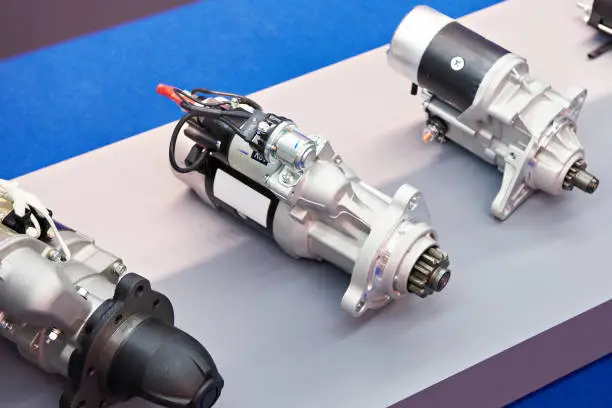
When your car won’t start, one common fix is replacing the starter motor. This small but important part turns the engine over so it can fire up. You have two main choices: OEM starter motors or aftermarket ones. OEM means Original Equipment Manufacturer, so these come from the same company that made your car’s original starter. Aftermarket starters come from other companies that make replacement parts.
Both can get your car running again, but they differ in price, quality, fit, reliability, and more. In this article, we break it down simply so you can decide which one makes sense for your situation.
What Is an OEM Starter Motor?
An OEM starter motor is built by the same company that supplied the original part to the car maker. For example, if your Toyota came with a Denso starter, the OEM replacement is also from Denso and matches the exact specs.
These parts go through the same testing and quality checks as the ones used when the car was new. They fit perfectly, work with all the car’s systems, and perform just like the factory one.
What Is an Aftermarket Starter Motor?
Aftermarket starter motors come from third-party companies. Brands like Bosch, Remy, ACDelco, or smaller makers produce them. Some are new, while others are remanufactured (rebuilt from old units with new parts).
Aftermarket parts aim to match or sometimes improve on the original design. Quality varies a lot depending on the brand. Top brands often make very good starters, while cheap ones may not last long.
Key Differences Between OEM and Aftermarket
Here are the main ways they compare.
Fit and Compatibility
OEM starters are designed for your exact make and model. They bolt right in with no issues. You get perfect alignment, correct electrical connections, and no check engine lights from mismatched parts.
Aftermarket starters usually fit well, especially from good brands. But cheaper ones might have small differences in size, mounting holes, or wiring. This can lead to extra work during install or problems later.
Cost
This is where the aftermarket wins big. Aftermarket starters often cost 20% to 60% less than OEM. For example, an OEM starter might run $300–$600, while a good aftermarket one could be $150–$300. Remanufactured aftermarket options are even cheaper.
OEM costs more because of brand name, strict standards, and sometimes limited supply through dealers.
Quality and Reliability
OEM starters are known for consistent quality. They meet the car maker’s tough specs and tend to last a long time. Many people say OEM lasts longer in tough conditions, like extreme heat, cold, or high-mileage driving.
Aftermarket quality depends on the brand. Premium ones from trusted names can match or even beat OEM in some cases. But lower-end aftermarket starters may fail sooner, have weaker materials, or poor seals. Some people report replacing cheap aftermarket starters multiple times.
Performance
OEM gives you the same performance as when the car was new. It cranks the engine smoothly and handles the load without strain.
Good aftermarket starters perform well too. Some even offer upgrades like higher torque for better cold starts. Cheap ones might crank slower or make more noise.
Warranty
OEM starters usually come with a solid warranty from the dealer or manufacturer, often 1–3 years or more.
Aftermarket warranties vary. Top brands offer good coverage, sometimes lifetime limited. Cheaper ones might have short warranties or none at all.
Availability
Aftermarket starters are easy to find. You can get them at auto parts stores, online, or quickly shipped. This is great if you need the part fast.
OEM can take longer to order, especially for older cars or specific models. You often go through a dealer.
Pros and Cons Summary
OEM Starter Motors
Pros:
- Perfect fit and compatibility
- High and consistent quality
- Better long-term reliability
- Strong warranty
- No surprises in performance
Cons:
- Much higher price
- Harder to find quickly
- No real upgrades over original
Aftermarket Starter Motors
Pros:
- Lower cost, saves money
- Widely available
- Some brands offer good quality
- Possible upgrades or improvements
- Many options to choose from
Cons:
- Quality varies a lot
- Risk of shorter life or early failure
- Possible fit issues with cheap ones
- Weaker warranty in some cases
When to Choose OEM?
Go with OEM if:
- You have a newer car still under warranty (using aftermarket might affect coverage)
- You want maximum reliability and plan to keep the car a long time
- The vehicle is high-end or has sensitive electronics
- You drive in extreme conditions where failure is not an option
- You prefer factory specs and peace of mind
Many experts and mechanics recommend OEM for critical parts like starters, especially on brands known for finicky systems.
When to Choose Aftermarket?
Pick aftermarket if:
- You’re on a budget and need to save money
- You trust a reputable brand (like Bosch or Denso aftermarket lines)
- Your car is older and out of warranty
- You need the part quickly
- You’re okay with a possible shorter life in exchange for a lower cost
Stick to well-reviewed brands and avoid the cheapest options to get better results.
Final Thoughts
OEM starter motors offer the best fit, reliability, and factory performance, but they cost more. Aftermarket starters save money and are often good enough, especially from quality brands, though results can vary.
Think about your budget, how long you plan to keep the car, and how much you drive. For most people, a good aftermarket starter works fine and saves cash. But if reliability is your top priority, OEMs are hard to beat.
For more info on related topics like starter vs alternator, you can click here.
