
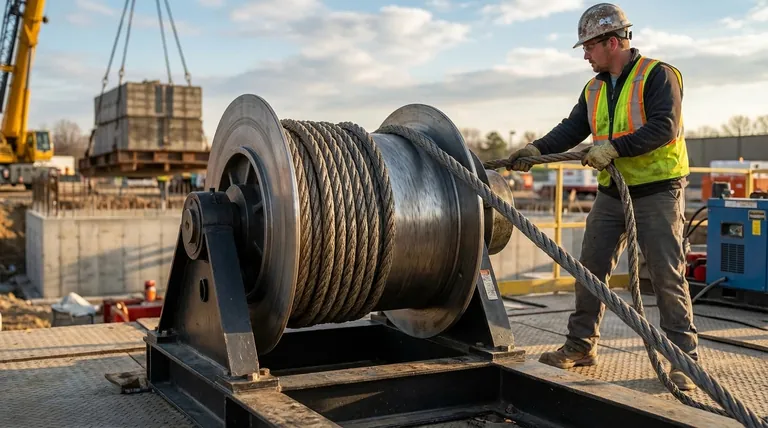
A capstan is a simple yet powerful piece of equipment found on many boats. It plays a key role in handling ropes and reducing the effort required for common tasks like anchoring, mooring, and docking. While it may look like a basic rotating drum, the way it works is both efficient and highly practical. Understanding how a capstan operates can help you use it more effectively and safely on the water.
What Is a Capstan?
A capstan is a vertical rotating drum mounted on the deck of a boat. It is used to pull ropes or lines by creating friction between the drum and the rope. Unlike a winch, it does not store rope or chain, but instead relies on controlled movement to handle loads.
Capstans are commonly used for assisting with anchor retrieval, tying off lines, and managing heavy ropes. They are found on both recreational and commercial vessels.
How Does a Capstan Work?
A capstan works by rotating a vertical drum that grips a rope through friction. The rope is wrapped around the drum a few times, and as the drum turns, it pulls the rope in a controlled manner. This allows the operator to handle heavy loads with far less physical effort.
Most modern setups use an electric motor to power the drum, although manual and hydraulic versions also exist. By maintaining light tension on the rope, the operator can control how quickly it moves and how much force is applied. This simple yet effective system is what makes a capstan such a useful tool on board.
Key Components of a Capstan
Drum (Capstan Head)
The drum is the main working surface where the rope is wrapped. Its smooth, rotating design allows it to grip the rope through friction without damaging it.
Motor or Drive System
Electric capstans use a motor to rotate the drum, while manual versions rely on physical effort. The motor provides consistent power for handling heavier loads.
Base and Mounting
The base secures the capstan to the deck, ensuring stability during operation. A strong mounting system is essential for safety and performance.
Controls
Most electric capstans are operated using a foot switch or deck switch. This allows for hands-free operation while managing the rope.
Step-by-Step: How to Use a Capstan
Wrapping the Rope
The rope is wrapped around the drum two to three times. This creates enough friction for the capstan to grip the line effectively.
Activating the Capstan
The motor is engaged using a switch, causing the drum to rotate and pull the rope.
Controlling the Line
The operator maintains light tension on the rope, guiding it as it moves. This allows for smooth and controlled operation.
Releasing the Rope
Once the task is complete, tension is reduced and the rope is unwrapped from the drum.
Why Friction Is Key to Capstan Operation
The effectiveness of a capstan comes down to friction. The wraps around the drum create enough grip to move heavy loads without the need for knots or locking mechanisms.
This allows for continuous control, making it easier to adjust tension and movement as needed.
Types of Capstans
Electric Capstans
These are the most common on modern boats. They are easy to use and provide consistent power for handling heavier loads.
Manual Capstans
Manual versions rely on physical effort and are typically used on smaller boats or in simpler setups.
Hydraulic Capstans
These are used in heavy-duty or commercial applications where higher power is required.
Capstan vs Winch: What’s the Difference?
A capstan and a winch serve similar purposes but operate differently. A capstan does not store rope and is designed for continuous pulling. A winch, on the other hand, stores rope or chain on a drum and is often used for lifting and anchoring systems.
Advantages of Using a Capstan
Capstans reduce manual effort and make handling heavy lines much easier. They provide smooth, controlled pulling and can be used for a variety of onboard tasks.
Their simple design also makes them reliable and easy to operate.
Common Mistakes to Avoid
Using too few wraps can cause the rope to slip, while too many wraps can make it difficult to control. It is also important to avoid overloading the capstan beyond its capacity.
Maintaining proper technique ensures safe and efficient operation.
Maintenance Tips for Capstans
Regular maintenance helps keep a capstan in good working condition. Rinse it with fresh water after use, especially in saltwater environments.
Check the motor, controls, and mounting system regularly, and ensure all components are clean and functioning properly.
Bringing It All Together
A capstan is a valuable tool that makes everyday boating tasks easier and safer. By understanding how it works and how to use it properly, you can improve efficiency and reduce physical strain on the water.
With the right approach, a capstan becomes an essential part of a smooth and reliable boating experience.