
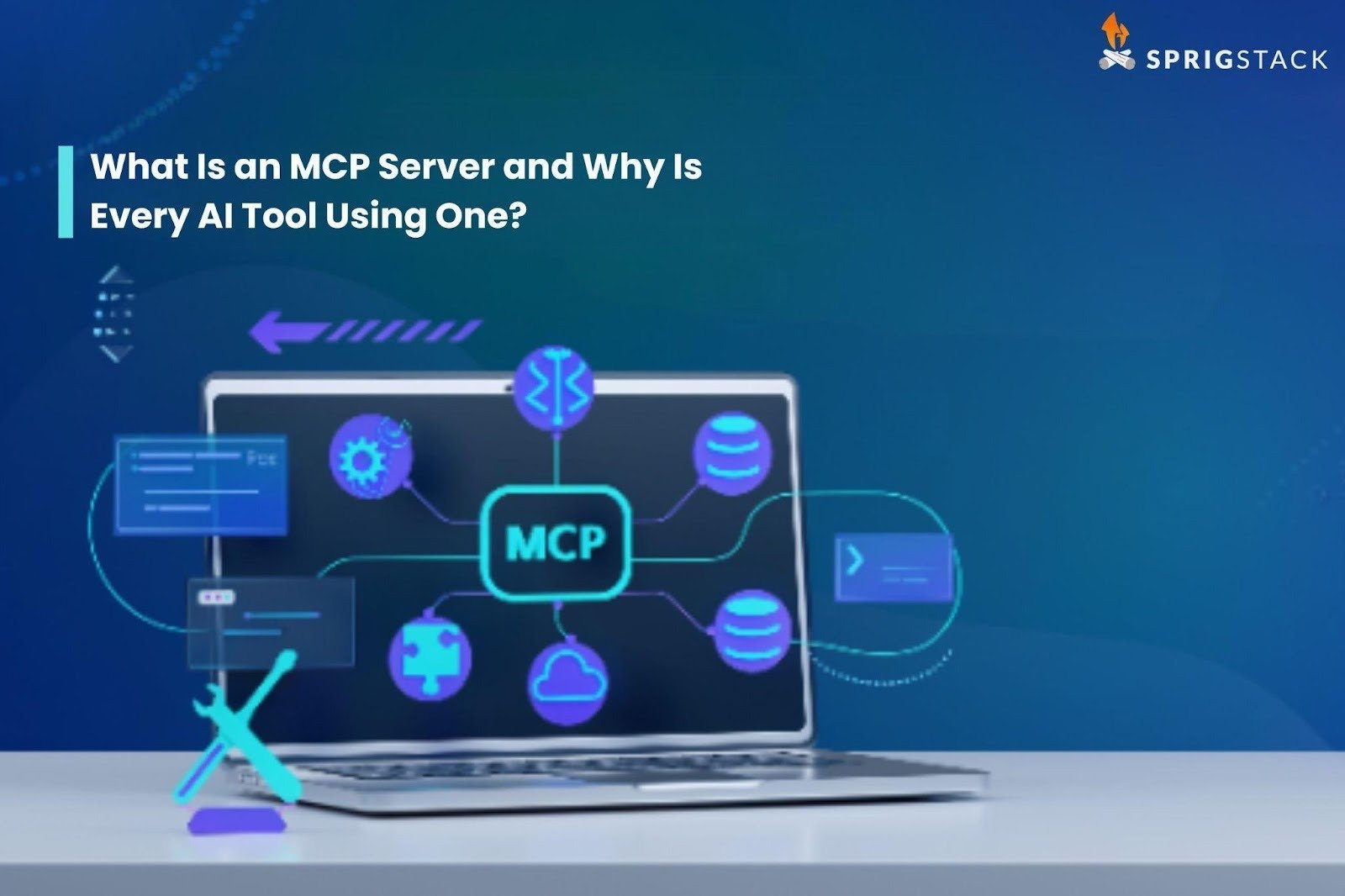
In the year 2026, Artificial Intelligence is no longer just a single entity that provides responses to a question or query. Rather, it has come a long way to integrate with different systems that have access to live data feeds, are capable of performing tasks, and have the ability to manage different operations. Thus, with the advancement of Artificial Intelligence tools and technologies, it has become a necessity for these tools to communicate with different models and systems in a more structured manner. And that is where MCP servers come into play. MCP servers are becoming a new norm in Artificial Intelligence technologies and are playing a crucial role in the overall development of AI models and tools. Rather than depending on static inputs for operations and responses, Artificial Intelligence tools are now capable of fetching live data and are able to provide more precise and relevant results for users. Using MCP servers has also become a new norm for businesses that are using Artificial Intelligence tools for different operations and scenarios. With the assistance of top AI development services, you can also use MCP servers for better results and efficiency. It will increase the overall contextual intelligence across your AI applications.
What is an MCP Server?
An MCP, or Model Context Protocol, server is a middleware layer that is specifically designed to allow AI models to connect with external tools. This essentially bridges the gap between AI models and their ability to interact with their environment, allowing them to go beyond simply providing static information.
In today’s landscape, AI models are expected to be able to take actions, retrieve information, and interact with their environment in a dynamic manner. This is where MCP servers come into play, allowing them to do so by providing a standardized method by which AI models are able to interact with external systems.
One of the primary differences between an MCP server and other systems, such as an API, is that it is specifically designed for use with AI models. This is allowing them not only to interact with their environment but also to do so in a dynamic and multi-step manner. Therefore, they can interact with their environment in a dynamic and multi-step manner, particularly within complex systems such as multi-agent systems, enterprise automation, and analytics.
How an MCP Server Works
An MCP server is designed to function through a well-organized pipeline. They facilitate effective communication between artificial intelligence systems and other applications or platforms.
- Protocol Processing: The MCP server receives and interprets the request through defined protocols to ensure compatibility between different systems and applications.
- Content Handling and Session Management: The MCP server also handles user sessions to facilitate effective responses from artificial intelligence systems to ensure consistency and coherence in their responses.
- Client Request: The MCP server receives a request from a client or user through the MCP client application.
- Backend Data Source Querying: The MCP server then queries the required data from various platforms or applications to process the request effectively.
- Response Construction and Return to Client: After receiving the required data and processing the request, the MCP server sends the response to the artificial intelligence system or client application.
- Data Aggregation and Context Update: Finally, the MCP server updates the context of the system by aggregating the new information to ensure accurate and informed responses.
Why Does Every AI Tool Use MCP Servers?
With the advancement of AI systems development services, it has become imperative for AI tools to communicate effectively with their environments. MCP servers have come in handy to resolve this problem in the following ways.
Streamline Complex Integrations
MCP servers can handle the integration of AI models with many external tools and systems. This reduces the complexity of integration.
Build Scalable AI Systems
Another advantage of using MCP servers is the ability it gives AI tools to expand their systems. With this, businesses can expand their AI systems without affecting the workflow.
Cut Down on Latency
They can also handle the processing of data from external systems. This reduces the overall latency of the system.
Help Models Perform at Their Best
With MCP servers, AI models get the best data at any point in time. This improves the quality of the output from AI models.
Built-in Fault Tolerance
They are also able to handle system failures by providing a retry mechanism. This improves the overall reliability of the system.
Security for Safe Interaction
They also ensure the implementation of strict authentication and authorization measures during data exchange. This guarantees safe interaction between AI tools and external systems.
Reduced Hallucinations
MCP servers also ensure that AI tools deliver factful outputs from correct data sources. This reduces hallucinations during AI tool interactions.
Therefore, businesses utilizing AI development services today must adapt to MCP servers to make a scalable and reliable AI solution. Understand the real-world use cases of MCP servers for more clarity on their use.
Real-World Use Cases and Examples of MCP Servers
Servers of MCP are increasingly becoming a vital part of the implementation of AI systems in the real world. They are helping AI systems to go beyond the boundaries of providing static responses by providing a dynamic and action-oriented experience. That is why organizations are increasingly using customized AI integration and development services to effectively implement MCP servers in their systems.
Business Process Automation
Servers of MCP are helping AI systems automate business processes such as customer service, invoice processing, and order management. By integrating directly with customer relationship management and enterprise resource planning systems, AI systems are able to automate tasks effectively.
Data Integration and Analytics
Servers of MCP are helping AI systems integrate data from multiple sources, such as databases, cloud platforms, and data analysis tools. It is helping businesses make effective decisions by providing a single view of data.
Developer and IT Operations
Developers are using MCP servers to develop applications that can interact with application programming interfaces and automate tasks. It is helping developers increase their productivity by making it easier to manage complex systems.
Conclusion
MCP servers are revolutionizing the way AI tools are being built and operated. With AI tools becoming more futuristic in 2026, it is vital to ensure that they are built with MCP servers to meet the needs of modern business.