
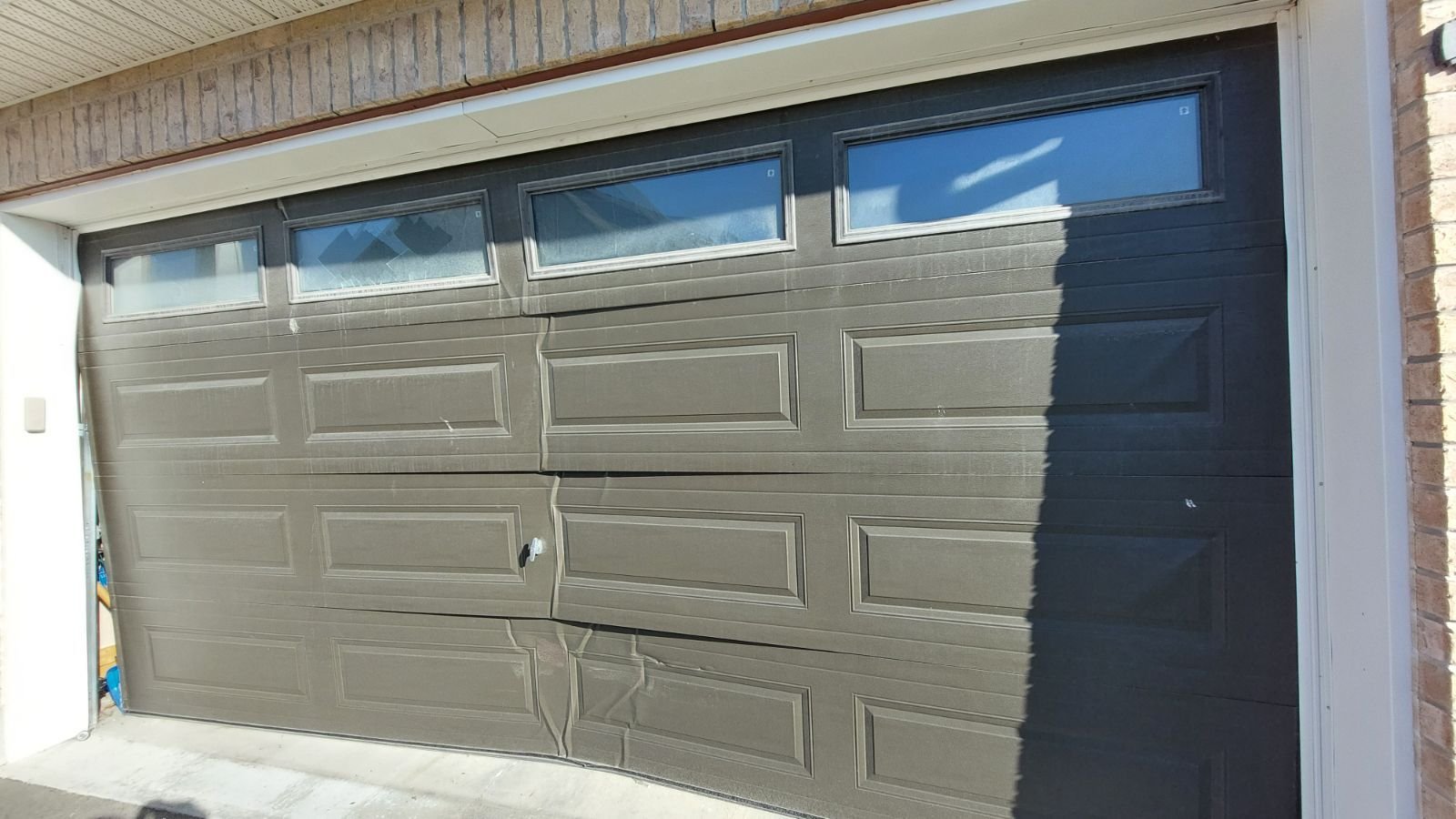
If you’re searching for dallas garage door repair after a fender-bender in the driveway, Metro Garage Door Repair serves homeowners across Dallas, Texas with practical fixes that get a door moving safely again.A garage door is a large, hinged system that depends on straight tracks, balanced spring tension, and tight hardware. When a vehicle taps or slams the door, the force rarely stops at the dent you can see. The hit can twist the frame, shove the vertical tracks inward, crack hinges, and even throw off cable routing. That’s why a proper door collision repair visit is part bodywork, part mechanical service, and part safety review.
Below is how a professional team approaches garage door impact damage from the first inspection through the final cycle test so you know what to expect and what questions to ask
Understanding Damage from Vehicle Collisions
Vehicle contact can happen at walking speed when backing out, or at higher speed when a driver misjudges distance. Either way, the door absorbs energy through thin steel or aluminum skins, internal struts, hinges, and rollers. Common results include:
- Bent or creased panels that no longer sit flat in the opening
- Garage track damage where the track bows, kinks, or shifts on its brackets
- Roller and hinge stress that causes binding and loud scraping
- Spring and cable disruption that changes balance and puts extra load on the opener
- Opener strain if the motor tried to lift a door that was jammed or crooked
Even when the dent looks small, the door may be racked out of square. That can lead to a door that stops halfway, drifts to one side, or leaves gaps that let wind and pests in.
Checking Structural Damage to the Door Panels
The first step is a close look at damaged door panels. Technicians check:
- Dents and creases that weaken the skin
- Cracks at panel seams or around hinge bolts
- Panel “oil-canning” (a popped-in, popped-out feel)
- Warping that changes the panel’s arc and forces the rollers to tilt
This is also where door panel repair may be possible. Small dents in non-insulated steel can sometimes be reshaped, while deeper creases or cracked sections often call for a panel swap. If a panel is insulated, the foam core can break loose inside, making the section heavier and harder to balance.
Technicians also check reinforcement struts. A vehicle can bend a strut or rip its fasteners, which reduces rigidity and lets the section flex under load.
Checking Track Alignment After an Impact
Tracks guide the rollers, so even a slight shift can jam the door. After a collision, the team measures the spacing between tracks, checks plumb on the vertical runs, and inspects the curve into the horizontal tracks.
Signs of misalignment include:
- Roller marks or shiny rub lines inside the track
- Gaps where the track pulled away from the jamb bracket
- A track lip that’s pinched inward
Restoring garage door alignment may involve moving brackets, replacing bent angle iron, or swapping a track section that has a hard kink. If the track is only bowed, a technician may be able to true it back; if it’s creased, replacement is usually the safer route.
Evaluating Roller and Hinge Damage
Rollers and hinges take a lot of stress during a hit. A panel that folds inward can twist the hinge leaves, shear hinge bolts, or crush roller stems. The technician checks:
- Flat spots or cracked wheels on garage door rollers
- Bent stems that make the roller sit at an angle
- Hinges that no longer sit flush to the panel
- Elongated bolt holes that let hardware “walk” over time
Replacing damaged rollers and hinges is often part of a complete Dallas garage repair visit, since the door won’t run smoothly if the rolling hardware is compromised. Upgrading to high-cycle rollers can also reduce noise after the repair.
Inspecting Spring and Cable Systems
A garage door’s counterbalance system is tuned to the door’s weight and geometry. When a vehicle bends a section or shifts a track, the balance can change instantly. Techs inspect:
- Lift cables for frays, birdcaging, or a jump off the drum
- Cable drums for grooves and set-screw movement
- Torsion springs for gaps, rust, or shifted winding cones
- End bearings and center bearing plates for impact shock
A door that is suddenly heavier on one side can pull a cable tighter on that side and slacken the other, leading to a crooked lift. If a cable comes off the drum, the door may hang at an angle and bind in the tracks.
Determining Whether Panels or the Entire Door Must Be Replaced
Not every collision means a full door replacement. The decision depends on structure, parts availability, and how much the hit changed the door’s shape. A technician looks at:
- Number of sections damaged (one panel vs. multiple)
- Whether the stiles (vertical framing) are bent
- Whether the door is still square in the opening
- Condition of the track system and jamb brackets
- Matching availability for color, embossing, and window layouts
If only one or two sections are damaged and the door frame is straight, replacing panels can be cost-effective. If the door is racked, the stiles are bent, or the model is discontinued, a full door swap may be the better long-term option.
Realigning the Track System for Proper Movement
Once the repair plan is set, the team restores track geometry. This may include:
- Resetting vertical track plumb and spacing
- Replacing crushed jamb brackets
- Installing new horizontal track hangers
- Correcting the radius curve so rollers move from vertical to horizontal without binding
During this stage, technicians tighten fasteners and confirm the tracks are parallel and level where they should be. A door that travels with low friction reduces strain on springs and the opener.
Replacing Damaged Door Sections
When panel replacement is selected, the damaged section is removed by supporting the door, disconnecting hinges and rollers, and transferring any reusable hardware. The new panel is installed with attention to:
- Correct hinge placement and numbering
- Even section gaps and proper seal compression
- Reinforcement struts where required
- Matching insulation and backer style
After the swap, the door is tested manually to check balance and smooth travel. If the door now weighs more or less than before, spring tension may need adjustment so the door stays at mid-travel without drifting.
Testing Garage Door Opener Performance
A vehicle can push the door into the opener’s travel limits or force the motor to pull against a jam. An opener system check often includes:
- Inspecting the rail for bends and loose mounting
- Checking the trolley and arm attachment points
- Verifying the header bracket is solid
- Reviewing force and travel settings
- Testing photo-eyes and wall control wiring
If the opener made grinding noises during the incident, gears or sprockets may be worn. In some cases, the opener is fine, but the door’s new geometry needs updated limits to prevent overtravel.
Reinforcing Hardware for Stability
Collision repairs are a good time to add reinforcement, especially on older doors or doors with larger panels. Technicians may install:
- Heavier-gauge hinges at high-stress joints
- Additional struts across wide sections
- Upgraded brackets where the track mounts to the jamb
- New fasteners in solid framing, not torn wood
These upgrades reduce flex and keep the door from “walking” out of alignment again after normal use.
Performing Full Operational Safety Checks
After mechanical work is complete, the door is cycled multiple times. The technician verifies:
- The door lifts evenly and stays square
- Rollers track smoothly through the curve
- The door closes without slamming
- The opener reverses on contact with a test object
- Photo-eyes stop and reverse the door when blocked
- The bottom seal contacts the floor without big gaps
This step matters because a door that looks repaired can still be unsafe if balance is off or hardware is loose.
Restoring Smooth Garage Door Operation in Dallas
A repaired garage door should run quietly, sit tight in the opening, and respond to the opener without hesitation. Metro Garage Door Repair finishes a collision job with final tweaks—track spacing, hinge torque, spring balance, and opener limits so the system operates the way it did before the accident, without extra stress on parts.If you’re dealing with bent sections, a jammed door, or visible garage track damage, scheduling a qualified garage repair service in Dallas, Texas helps prevent further issues like snapped cables or a burned-out opener.
Frequently Asked Questions (FAQ)
Can I keep using my garage door after I hit it with my car?
It’s safer to stop using it until it’s inspected. A bent track or shifted cable can cause a sudden drop or a jam that damages the opener.
What’s the most common repair after a driveway accident?
Panel replacement and track correction are common. Many doors need new hinges or garage door rollers as well, because those parts absorb side-load during the hit.
Will one dented panel affect the whole door?
Yes. One section that’s warped can pull adjacent sections out of line, creating binding that spreads wear across the entire system.
How do technicians decide between panel replacement and a new door?
They look at overall door shape, track condition, and whether matching panels are available. If multiple sections are compromised or the frame is twisted, a full replacement may make more sense.
Could the opener be damaged even if it still runs?
Yes. A motor can run while gears or mounts are stressed. That’s why an opener system check is part of professional door collision repair.
How long does a collision repair take?
Minor track and hardware work may be handled in one visit. Panel replacement can take longer if parts need ordering, especially for custom colors or window patterns
Do you work across Dallas neighborhoods?
Yes. Metro Garage Door Repair provides Dallas garage repair across Dallas, Texas, including residential service calls for collision damage, sticking doors, and routine maintenance.
