
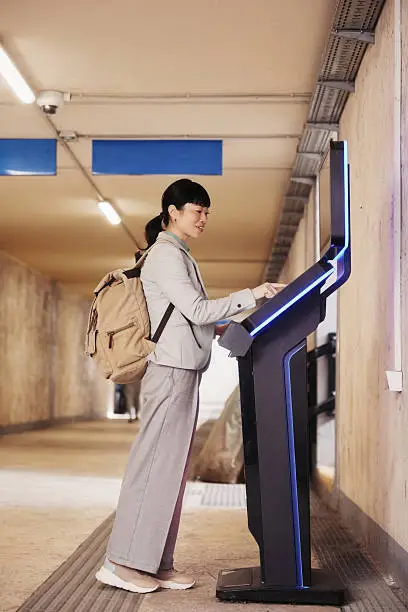
Watch customers approach a self service kiosk for the first time, and you’ll witness a fascinating dance of hesitation, curiosity, and, if you’ve designed the experience well, delighted discovery. That three-second window when someone decides whether to engage with your kiosk or join the queue for human service determines whether your investment becomes a revenue-generating asset or an expensive ornament gathering dust in the corner.
The difference between kiosks that customers embrace and those they avoid isn’t about flashy screens or trendy design aesthetics. It’s about understanding how people actually behave when they’re hungry, rushed, indecisive, or simply trying to grab a flat white before their morning meeting. Great user experience design anticipates these real-world moments and eliminates every possible point of friction between “I’m hungry” and “That was easy.”
Here’s what most hospitality operators miss: a poorly designed kiosk experience doesn’t just frustrate individual customers, it creates a ripple effect that slows your entire operation. Confused users block access for others, staff get pulled away from food preparation to answer questions, and queues form anyway despite your technological investment.
Getting the user experience right transforms these scenarios into smooth, satisfying interactions that benefit everyone involved.
The Anatomy of a Good Self Service Kiosk Experience
The most user-friendly kiosk experiences are those that have psychological design, efficiency, and digital intelligence. The following are the principles that will influence the future of customer flow.
1. First Interaction Should Be Instantly Clear
The moment a customer approaches a self service kiosk, they should understand what to do within seconds.
Successful designs include:
- Large, easy-to-read buttons
- Well-defined instructions like Start Order or Check-In
- Light text and high visual content
- Logical category groupings
Misleading navigation will lead to hesitation, thus dragging out the whole queue. Clarity, on the other hand, leads to immediate interaction.
2. Menu Design Should Guide Decisions
Digital menus have one strong benefit: they can affect ordering behaviour.
The kiosk menus tend to be much better than the traditional ordering since they:
- Showcase high-margin items visually
- Suggest add-ons at the right moment
- Allow easy customisation
3. Minimise Friction in Each Process
One of the largest reasons why customers prefer self-service is speed.
It means that each screen has to eliminate redundant processes. Key UX strategies include:
- One-tap item additions
- Clear “back” and “edit” options
- An easy order review screen before payment.
- Fast checkout without long data entry forms
When friction is removed, the ordering process feels natural rather than mechanical.
Payment Processing: The Final Hurdle That Can’t Fail
You’ve successfully guided customers through menu navigation, customisation, and upselling. Now they need to pay attention to the moment when technical failures, confusing interfaces, or limited payment options can undo all previous success. Payment processing must be absolutely bulletproof.
Friction-free payment experiences share common characteristics:
- Support every common payment method (cards, mobile wallets, contactless)
- Provide clear visual and audio confirmation when payment succeeds
- Enable receipt delivery via email or SMS to reduce paper waste
- Handle split payments gracefully for groups sharing meals
- Fail gracefully when issues occur, offering clear next steps
The payment screen that shows a spinning wheel whilst processing creates anxiety. Is it working? Did my payment go through? Should I tap again? Adding explicit status updates (“Processing payment, Payment approved, Preparing your receipt”) transforms uncertain waiting into reassured patience. Customers tolerate processing time when they understand what’s happening.
Payment failure protocols deserve careful design attention. When cards decline or contactless payments fail, customers feel embarrassed and frustrated. Your interface should handle these moments with grace, offering alternative payment methods, providing helpful error messages (not technical codes), and making it easy to try again without restarting the entire order.
The difference between “Payment failed” and “Let’s try that again, please insert or swipe your card” might seem subtle, but the emotional impact varies dramatically.
Personalisation Is Becoming the New Standard
Modern kiosks increasingly use AI and behavioural data to tailor experiences.
Personalisation features can include:
- “Order your usual?” prompts for repeat customers
- Suggested meals based on time of day
- Loyalty rewards integrated into checkout
- Dynamic promotions based on demand
Personalised ordering isn’t just convenient, it increases conversion and repeat visits.
6. Accessibility and Inclusivity
A truly successful self service kiosk must be usable by everyone.
Accessibility design elements include:
- Adjustable screen heights or angled displays
- High-contrast text for readability
- Large touch targets
- Multilingual interfaces
Studies on kiosk usability also show that design elements like seating options or privacy partitions can reduce cognitive load and improve task completion for older users.
Accessibility isn’t just a compliance issue; it expands the number of customers who can confidently use the system.
Designing for Tomorrow’s Customers Today
The perfect self service kiosk experience isn’t a destination; it’s a continuous journey of observation, refinement, and adaptation to changing customer expectations. What delights customers today becomes baseline tomorrow, pushing operators to continuously innovate whilst maintaining the fundamental simplicity that makes self-service appealing.
When technology and humanity work together rather than competing, everyone wins. Customers get fast, convenient service with human warmth when desired, staff focus on meaningful interactions rather than repetitive tasks, and operators benefit from efficient operations that scale beautifully whilst maintaining the personal touch that defines exceptional hospitality experiences.
