
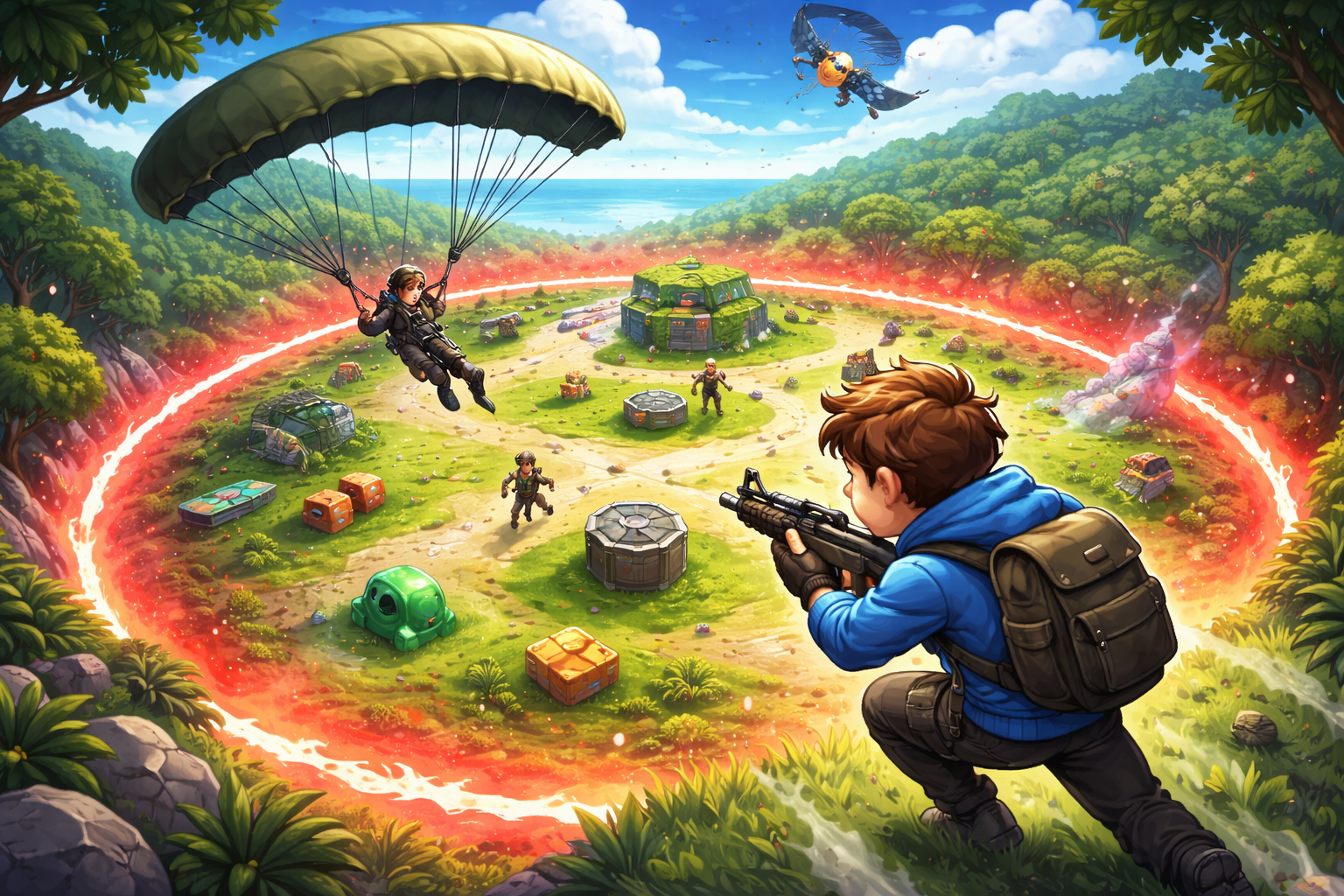
Battle royale games thrill with shrinking arenas, scavenging loot, fighting opponents, and being the last one standing. You can create a simple version using game description tools. Start with a small map that closes in, add bots as enemies, include weapons to pick up, and set rules for survival. This keeps it fun and playable in short sessions without needing teams or huge worlds.
Players drop in, grab gear, fight, and win or lose quickly. The best beginner approach focuses on one arena, 5 to 10 bots, basic shooting or melee, and a zone that shrinks every 30 seconds. Describe the core loop: land, loot, fight, survive. Test on your phone for smooth touch controls. Full games take 5 to 10 minutes; demos run even shorter. Using a no-code game maker means you spend zero time on programming and all your time on making the experience feel exciting. This guide gives step-by-step instructions, common fixes, and testing tips so your game feels complete from the very first play.
Understand the Core Loop of Battle Royale
The heart of every battle royale is land, loot, fight, and survive. Players parachute or spawn into a large area filled with items. They run to pick up weapons and health while avoiding others. The safe zone shrinks, forcing confrontations. The last player standing wins.
Keep it simple for your first version: one flat arena with grass or sand, colorful loot boxes, a pistol or shotgun as starting weapons, and a health bar that drops outside the zone or on hits. Bots act basic — they wander, shoot when close, and chase loot. Describe it as: player starts with nothing, safe zone covers the whole map for the first 20 seconds, then shrinks toward the center. This loop hooks fast. Players feel tension as the zone closes and enemies appear. Add score for kills to encourage aggression.
Set Up the Map and Shrinking Zone
Describe a circular or square arena 1000×1000 units. The zone starts full size, then shrinks its radius by 20% every 30 seconds until only a tiny circle remains in the middle. Standing outside the zone drains health slowly. Make landing exciting: the player taps to choose a spot and falls with a parachute. The ground has scattered loot, guns in boxes, health packs, and speed boosts.
Describe the visuals as: green field with hills, blue sky, zone edge glowing red. Zone damage starts low at 1 hp per second and ramps up to 5 hp per second in later phases. The player has 100 hp; bots have 80. This forces movement without causing instant death in the early game.
Test the zone by playing until it shrinks three times. Does it feel urgent but fair? Adjust the timing if it feels too fast or too forgiving.
Design Loot and Weapons for Quick Picks
Loot gives players meaningful choices without overwhelming them. Place 20 to 30 items randomly across the map using these simple types:
- Common pistol: unlimited ammo, shoots every 0.2 seconds, 10 damage per hit.
- Rare shotgun: 5 ammo, 50 damage at close range, 2-second reload.
- Health pack: restores 50 hp instantly.
- Speed boost: doubles run speed for 10 seconds.
- Shield: blocks 2 hits before breaking.
Describe pickups as: tap to grab, items glow when the player is nearby, and inventory holds 3 slots maximum. Bots prioritize weapons too, which adds strategy. Do you rush the shotgun or play it safe with the pistol?
Loot respawns outside the zone during shrink phases. Players scramble for it, creating natural chaos and unpredictable fights.
Create Smart Bots as Opponents
Bots make solo play feel alive. Start with 8 to 12 and eliminate them like real players. Give them behavioral variety to keep every match feeling different:
- Aggressive bots: chase the player on sight and shoot immediately.
- Scavenger bots: head to the nearest loot first and avoid early fights.
- Sniper bots: stay at distance and shoot accurately from far away.
- Random walkers: wander until threatened, then react.
Describe the AI Game Development tool as: bots have 80 hp, can see 300 units in any direction, and run toward the zone if caught outside. On death, each bot drops the weapon it was carrying. This mimics real opponents without requiring any multiplayer code.
Tune difficulty gradually, early bots have weak aim, and later ones shoot more accurately. Players feel genuine skill growth as they learn the map and weapons.
Add Combat and Survival Mechanics in Game
Combat needs to feel punchy and immediate. Tap to shoot, hold to aim with a rifle. Pistol bullets are hitscan and instant; rifles have slight travel time. Headshots deal double body damage.
For survival feedback, make zone damage visible as a red screen tint with a rising beeping warning. Place the health bar in the top left corner and a minimap showing the zone boundary in a corner of the screen.
Win condition: last player standing triggers a victory screen showing kill count and a play again button. Loss condition: game over screen with final score and a retry option.
Describe the audio as: gun cracks on shots, a ding on loot pickup, zone alarm that increases in pitch as damage ramps up. Add visual feedback: brief hit effects on enemies, a sparkle on uncollected loot. Keep the player slightly stronger than bots so wins feel achievable for new players.
Implement Win Conditions and Polish
The win screen should feel rewarding, add confetti, display a personal best kill count, and offer a quick replay button. Consider adding a duo-bot mode once the solo version feels stable.
For polish, target smooth 60fps with touch-optimized controls: swipe to move, tap to shoot, vibration feedback on kills. After implementing these touches, run 3 to 5 full matches and check whether the average round lasts around 4 minutes. Adjust bot count or zone shrink speed accordingly.
To see how these mechanics come together in a finished game, play Go 4 4 it demonstrates how clean controls, tight feedback, and well-paced progression combine into something players genuinely want to replay.
Test and Iterate Your Battle Royale
Play 20 matches and take notes after each one. Ask yourself: too many bots? Zone closing too fast? Not enough loot on the map?
Use these benchmarks to guide your refinements:
- Average win time: 3 to 5 minutes is the ideal range.
- Kill count per game: 4 to 6 feels active without being overwhelming.
- Friend test: can a new player win on their first or second try?
- Mobile check: are taps registering accurately with no noticeable lag?
Regenerate after each individual tweak rather than changing multiple things at once. Balance is achieved when wins feel earned rather than lucky.
Share and Grow Your Game
Once the game feels solid, publish it with a thumbnail that captures the drop-in moment — a parachute over the arena works perfectly. Write a short description for the listing: battle bots in a shrinking arena, last one standing wins. Share the link with friends first and gather specific feedback before promoting it more broadly.
For a quicker demo version, include only the first zone phase so new players experience the core loop in under two minutes before committing to a full match.
Your battle royale starts simple and grows with every round of tweaks. Describe the core, add bots and loot, test for survival feel, and iterate. Soon you will have players competing for scores and coming back to beat their personal bests.
