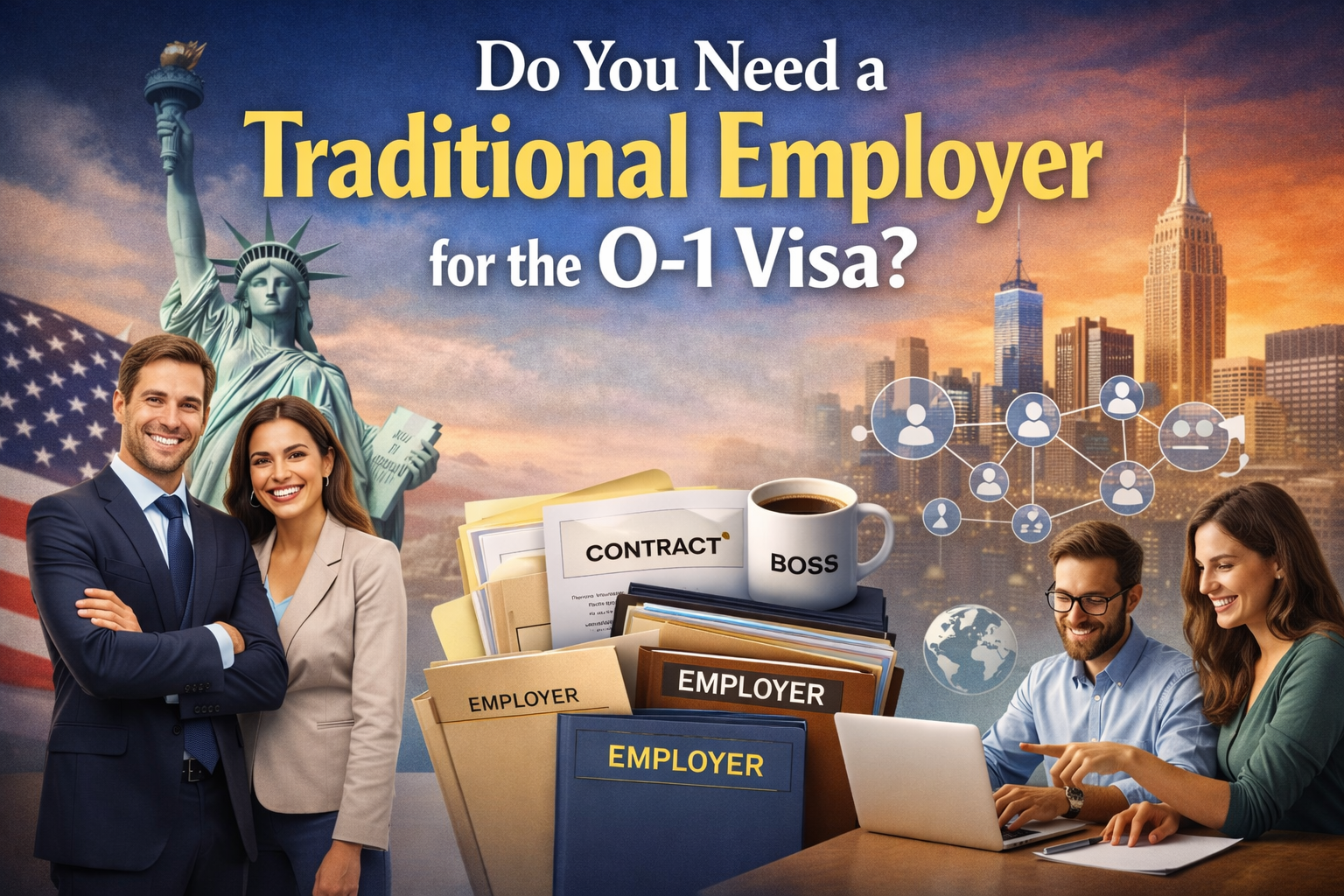
The O-1 visa is designed for individuals who have demonstrated extraordinary ability in fields such as science, education, business, athletics, and the arts. Because many professionals in these industries work independently or across multiple projects, a common question arises: Do you need a traditional employer to apply for an O-1 visa?
The answer depends partly on the type of O-1 visa category you are applying under and how your professional work is structured. While some applicants do work for a single employer, others operate through agents or project-based contracts. Understanding these options is essential when preparing a successful O-1 petition, which is why many applicants seek guidance from an experienced O1 Visa Lawyer.
Understanding the Two O-1 Visa Categories
The O-1 visa is divided into two primary categories: O-1A and O-1B. Each category is designed for different types of professionals, and the structure of the petition can vary depending on the field.
O-1A Visa
The O-1A visa applies to individuals with extraordinary ability in fields such as science, education, business, and athletics. In many cases, professionals applying under this category work within more traditional employment arrangements.
For example, a technology company might sponsor a highly accomplished engineer, or a research institution might petition for a recognized scientist. In these situations, a specific employer files the petition and outlines the work the applicant will perform in the United States.
Although these cases generally follow a traditional employer-sponsored structure, there may still be some flexibility depending on the nature of the applicant’s work.
O-1B Visa
The O-1B visa is designed for individuals working in the arts, film, television, and entertainment industries. Professionals in these fields often work on short-term projects or multiple productions rather than maintaining a single full-time employer.
Because of this unique work structure, O-1B petitions often provide more flexibility. Instead of relying on one employer, applicants can sometimes use a U.S. agent to file the petition on their behalf.
This allows creative professionals such as actors, musicians, directors, designers, and other artists to work across multiple projects while maintaining valid immigration status in the United States.
The Role of a U.S. Agent
When an applicant does not have a single traditional employer, a U.S. agent may be able to file the O-1 petition. Agents are commonly used in industries where professionals collaborate with multiple organizations or clients.
In this arrangement, the agent acts as the official petitioner and represents the applicant’s professional engagements. The agent may coordinate work with several employers or projects that are listed in the O-1 petition.
For example, an artist may perform at several events, collaborate with multiple companies, or participate in various productions. The agent can submit a petition that includes these different engagements within a single application.
This structure is particularly helpful for freelancers and independent professionals whose careers involve project-based work rather than long-term employment contracts.
Why a Petitioner Is Always Required
Even though the O-1 visa offers flexibility in some industries, one rule always applies: there must be a legitimate petitioner involved in the application.
The O-1 visa is not a self-sponsored visa. This means the applicant cannot file the petition independently. Instead, the petition must be submitted by a U.S. employer or agent who is requesting the applicant’s services.
The petition must also include documentation showing the professional work the applicant will perform in the United States. This typically involves contracts or written agreements that describe the projects, responsibilities, and compensation associated with the applicant’s role.
These documents demonstrate to immigration authorities that the applicant will be engaging in real professional activities that require their extraordinary skills.
The Importance of Clear Work Agreements
Another key element of the O-1 petition is the presence of clear and credible work agreements. USCIS expects to see documentation outlining the nature of the professional relationship between the applicant and the petitioner.
These agreements may include employment contracts, project contracts, or deal memos that describe the applicant’s role and compensation. The documentation helps confirm that the petition reflects a genuine work arrangement rather than a hypothetical or speculative opportunity.
Properly structured agreements help strengthen the petition by showing that the applicant’s skills are genuinely needed in the United States.
Because preparing these materials can be complex, many applicants choose to work with an experienced O1 Visa Lawyer who understands how to structure the petition effectively.
Final Thoughts
You do not always need a traditional full-time employer to qualify for the O-1 visa, especially if you work in industries where project-based work is common. However, the visa still requires a legitimate petitioner, which can be either a U.S. employer or a U.S. agent representing your professional engagements.
Whether the petition involves a single employer or multiple projects coordinated by an agent, the key requirement is a clear professional relationship supported by contracts and documentation.
Understanding these options early in the process can help applicants prepare a stronger and more organized petition. With proper planning and guidance from an experienced O1 Visa Lawyer, many highly skilled professionals can successfully pursue the O-1 visa and continue building their careers in the United States.
