
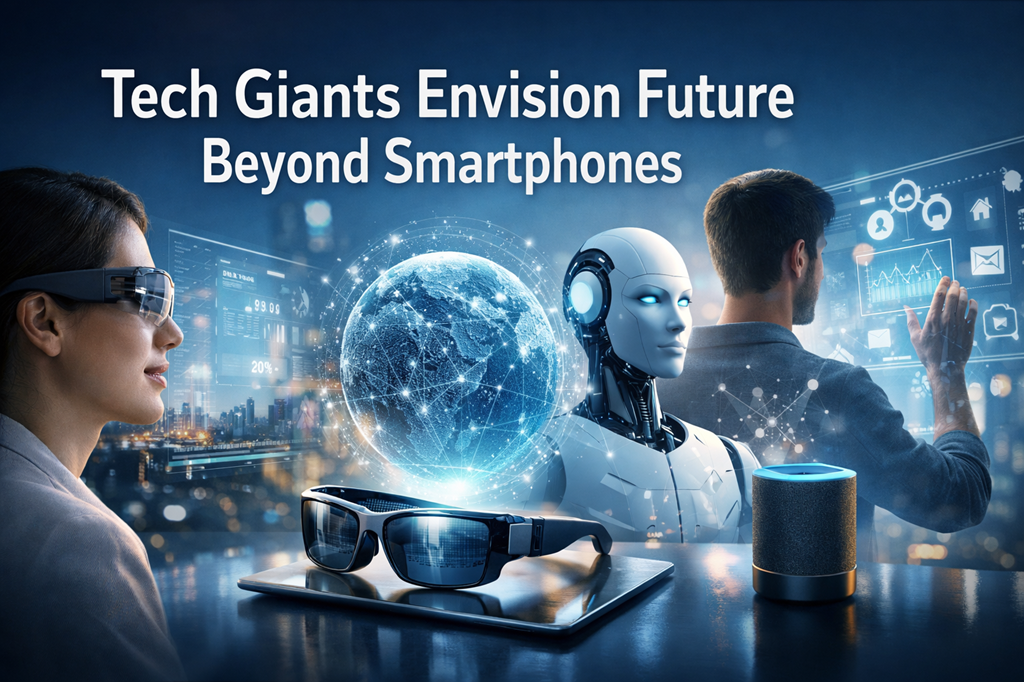
For more than a decade, smartphones defined modern digital life. They shaped how people communicate, shop, work, and consume information. However, that era is slowly evolving. Today, tech giants envision future beyond smartphones, not because phones failed, but because human expectations from technology have changed.
People now want technology that feels calm, intelligent, and supportive rather than distracting. As a result, leading technology companies are redesigning digital interaction so it blends into everyday life instead of demanding constant attention.
This article explains what that future looks like, why it is emerging now, which technologies are driving it, and how it may affect users, businesses, and developers.
What Does “Future Beyond Smartphones” Mean?
In simple terms, tech giants envision future beyond smartphones as a shift from screen-first interaction to AI-first, context-aware computing.
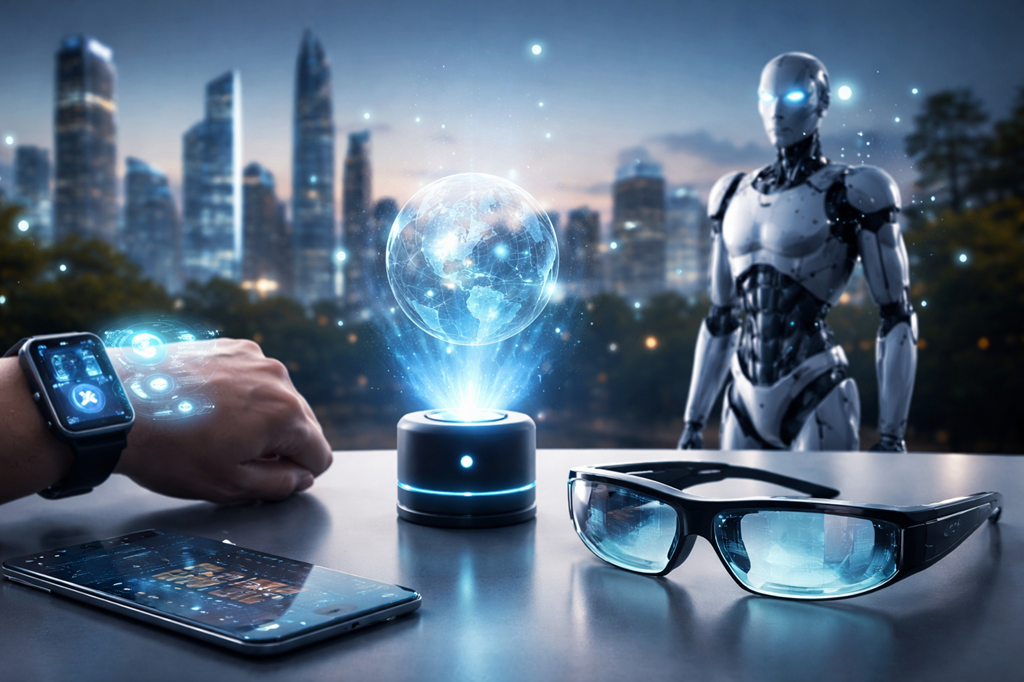
Instead of relying on one device, computing spreads across:
- Smart glasses
- Wearables such as rings and earbuds
- Voice assistants
- Spatial and ambient systems
- Intelligent AI agents that understand intent
Because of this shift, technology becomes less visible while becoming more helpful.
Why Smartphones Are Reaching Their Limits
Innovation Has Slowed
Smartphones still improve each year. However, those improvements often feel incremental. Faster processors and better cameras no longer transform daily habits. Consequently, user excitement has declined, and upgrade cycles have stretched longer.
Screens Create Friction
Phones demand attention. Notifications interrupt focus, and constant switching between apps creates mental fatigue. Therefore, many users now prefer interaction methods that feel lighter and more natural.
AI Needs a New Interface
Modern AI can reason, predict, and coordinate tasks. Yet traditional app-based interfaces limit that potential. Because of this mismatch, tech giants envision future beyond smartphones where AI acts as the main interface rather than an extra feature.
Key Technologies Driving the Shift
Artificial Intelligence as the Primary Interface
AI is becoming the front door to digital systems. Instead of opening multiple apps, users express goals.
For example:
- “Organize my schedule”
- “Summarize today’s messages”
- “Translate this conversation”
Because AI works across tools, the experience feels faster and more natural.
Smart Glasses and Augmented Reality
Smart glasses display information directly in the user’s line of sight. Navigation, reminders, and translations appear naturally without pulling out a phone.
This is why companies like Apple and Meta invest heavily in eyewear as a long-term interface.
Spatial Computing and Extended Reality
Spatial computing blends digital content with physical space. Instead of flat screens, information surrounds the user.
This approach supports:
- Immersive work environments
- Training and simulations
- Remote collaboration
- Visual data interaction
Companies such as Google and Microsoft focus on this area, especially for enterprise use.
Wearables and Ambient Devices
Wearables collect biometric and contextual signals, while ambient devices respond automatically to presence and behavior. Together, they reduce the need to reach for a phone during quick interactions.
Brain-Computer Interfaces (Long-Term)
Brain-computer interfaces allow direct communication between the brain and machines. While promising, they remain experimental and ethically complex.
Companies like Neuralink focus mainly on medical and accessibility applications rather than consumer replacement.
How Major Tech Companies Are Approaching the Transition
Meta
Meta focuses on consumer adoption. By combining AI with stylish smart glasses, the company aims to make wearables socially acceptable and practical.
Apple
Apple follows a gradual path. Spatial computing lays the foundation, while future glasses integrate seamlessly with existing devices.
Google emphasizes open platforms. Its approach allows many manufacturers to build compatible hardware while AI remains central.
OpenAI
OpenAI explores ambient AI systems that act as continuous assistants across environments rather than living inside apps.
Microsoft
Microsoft prioritizes business use cases. Mixed reality and AI improve productivity, training, and collaboration before reaching consumers.
Smartphones vs the Next Interaction Model
| Aspect | Smartphone-Centric World | Beyond-Smartphone Direction |
|---|---|---|
| Main interface | Touch and apps | AI and intent |
| Device focus | One primary device | Multiple connected devices |
| Context awareness | Limited | Continuous |
| Attention demand | High | Lower |
| Discovery | App stores | AI assistance |
This comparison highlights why tech giants envision future beyond smartphones as a change in interaction design rather than a single new gadget.
What This Means for Everyday Users
Less Screen Time
Quick tasks move to voice, glance, or gesture, reducing constant phone checks.
More Personalization
AI adapts to routines and preferences, offering relevant help at the right moment.
Greater Focus on Privacy
Because ambient systems collect more context, trust and transparency become essential for adoption.
What Developers and Businesses Should Prepare For
Design for Intent
Successful products focus on what users want to accomplish rather than where they tap.
Support Multimodal Interaction
Voice, vision, and gestures must work together smoothly.
Build Privacy by Design
On-device processing and clear data practices increase user confidence.
Those who adapt early gain a strong advantage as tech giants envision future beyond smartphones.
Will Smartphones Disappear Completely?
No. Smartphones will remain important, but their role will change.
They will act as:
- Secure hubs
- Setup and management tools
- Backup interfaces for complex tasks
Meanwhile, primary interaction will increasingly happen through wearables and AI systems.
A Realistic Timeline
- 2025–2027: Growth in smart glasses, AI assistants, and spatial platforms
- 2028–2032: Better comfort, longer battery life, and wider adoption
- Beyond 2032: Smartphones become secondary for many everyday tasks
Progress will vary by region, cost, and regulation.
Final Thoughts
Tech giants envision future beyond smartphones because people want technology that fits life instead of interrupting it. The goal is not novelty. The goal is simplicity, intelligence, and trust.
This shift will happen gradually. However, its direction is clear. Computing is becoming quieter, more contextual, and more human-centered.
Frequently Asked Questions (FAQs)
What does “tech giants envision future beyond smartphones” mean?
It refers to reducing reliance on phones by using AI, wearables, and ambient systems.
Are smartphones becoming obsolete?
No. They are becoming secondary rather than central.
Which devices matter most?
Smart glasses, AI assistants, wearables, and spatial systems working together.
Is this transition already happening?
Yes. Voice assistants, wearables, and AR tools show early adoption.
Will apps still exist?
Apps will evolve into services accessed through AI-driven interfaces instead of icons.