
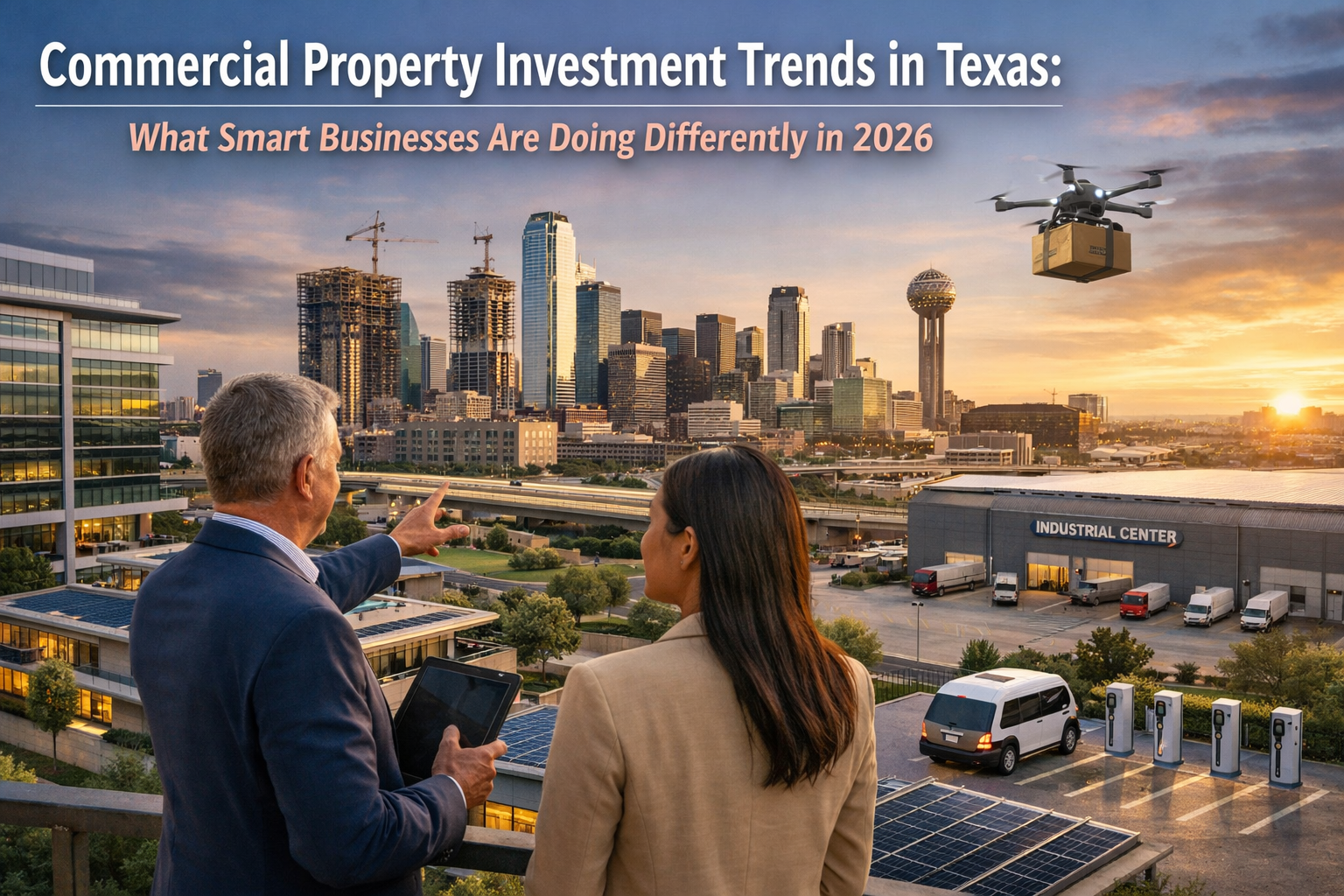
Texas has always been a strong market for business growth, but the commercial property landscape is changing faster than ever. Companies are no longer choosing locations based only on price or size. Today, decisions are driven by long-term strategy, workforce needs, infrastructure, and market stability.
From Dallas to Austin and Houston to San Antonio, businesses are reshaping how they invest in office spaces, retail locations, warehouses, and mixed-use developments. Understanding these changes can help investors and growing companies avoid costly mistakes and make smarter moves.
This guide explores what is really happening in Texas commercial real estate and how businesses are adapting to stay ahead.
Why Texas Remains a Magnet for Commercial Investment
Texas continues to attract companies from across the United States and overseas. The reasons are simple.
The state offers:
- A business-friendly tax environment
- Rapid population growth
- Strong logistics and transportation networks
- A skilled and expanding workforce
- Diverse industries including tech, energy, healthcare, and manufacturing
Cities like Dallas–Fort Worth are becoming major corporate hubs, while secondary cities are gaining attention for affordability and development potential.
But opportunity also brings competition. Commercial buyers now need deeper market insight before committing to any long-term investment.
The Shift From Traditional Offices to Flexible Spaces
One of the biggest changes in recent years is how office space is being used.
Large single-tenant offices are slowly giving way to:
- Flexible workspaces
- Hybrid-friendly layouts
- Smaller satellite offices
- Shared commercial environments
Companies want spaces that can adapt to changing team sizes and work styles. Long rigid leases are being replaced with smarter, scalable property choices.
This trend has pushed investors to focus on buildings that allow easy redesign and future conversion.
Warehousing and Logistics Are Leading the Market
E-commerce growth has transformed the demand for industrial property across Texas.
Businesses now prioritize:
- Locations near major highways
- Access to distribution centers
- Proximity to urban consumers
- Modern storage infrastructure
Dallas–Fort Worth in particular has become one of the strongest logistics hubs in the country.
Investors who understand this shift are seeing higher occupancy rates and stronger long-term returns from industrial property compared to traditional retail spaces.
Why Professional Property Advisors Matter More Than Ever
Commercial property investment today is no longer just about finding a building.
It involves:
- Market demand analysis
- Zoning regulations
- Risk forecasting
- Lease structuring
- Asset value protection
- Exit strategy planning
This is why many companies now work closely with professional commercial property advisors who understand both real estate and business operations.
For example, firms like Bishop W C Martin help businesses evaluate property not just as real estate, but as a strategic business asset. Their advisory approach focuses on aligning property decisions with long-term growth goals, cost efficiency, and market positioning.
(You can naturally place your backlink on Bishop W C Martin or bishopwcmartin.com here.)
Location Strategy Is Becoming More Data-Driven
Instead of choosing properties based on visibility or prestige, companies now study:
- Local economic development plans
- Workforce availability
- Transportation upgrades
- Competitor presence
- Future zoning changes
- Infrastructure investments
Data is driving decisions.
A cheaper property in the wrong area can limit growth, while a well-placed property can reduce operating costs and improve hiring success.
This is where experienced advisors provide value by identifying hidden risks and untapped opportunities that are not obvious from listings alone.
Retail Is Not Dead, It Is Transforming
Retail commercial property is evolving rather than disappearing.
Shopping centers are shifting toward:
- Experience-based businesses
- Health and wellness services
- Food and entertainment
- Local brands
- Community-focused spaces
Businesses investing in retail property are choosing locations with strong residential growth and mixed-use development plans.
Texas cities are actively redesigning commercial zones to support this model.
Long-Term Thinking Is Replacing Short-Term Deals
Short-term profits are no longer the main goal for serious investors.
Instead, the focus is on:
- Asset stability
- Sustainable rental demand
- Long-term appreciation
- Operational efficiency
- Risk reduction
Commercial buyers want properties that remain valuable even if the market shifts.
That is why professional guidance has become essential. Companies that work with commercial property specialists tend to make fewer mistakes, negotiate better lease structures, and secure assets that support business expansion instead of limiting it.
What Smart Investors Are Doing Differently
Successful commercial investors in Texas are following a few key principles:
They research deeply before buying.
They prioritize location quality over size.
They evaluate long-term market trends.
They work with experienced property advisors.
They avoid emotional decisions.
They treat property as part of their business strategy.
These steps may take more time upfront, but they protect capital and improve long-term returns.
Final Thoughts
Texas continues to offer powerful opportunities for commercial property investment, but the market is no longer simple.
Businesses that succeed are the ones that:
- Understand modern workspace needs
- Follow logistics and industrial growth
- Use professional guidance
- Make data-driven decisions
- Think long term
Commercial real estate is no longer just about owning buildings. It is about building strong foundations for business growth.For companies managing expansion costs and property investments, having access to practical financial tips for businesses can significantly improve long-term stability and planning.