Why 100GBASE-ZR4 Still Makes Sense for Practical Long Links
When people talk about long-distance 100G links today, the discussion often moves quickly toward coherent optics. Those solutions are impressive, but they also assume a certain kind of network — large operators, transport engineers, and dedicated optical planning tools. Not every network looks like that.
Plenty of real deployments still need something simpler. A company might have two facilities 40 or 60 kilometers apart. A service provider may need to connect aggregation sites without introducing a full DWDM platform. Universities and research networks sometimes need high-capacity links between campuses but want to keep the design manageable.
This is the environment where 100GBASE-ZR4 modules continue to be useful. They deliver long reach using familiar Ethernet interfaces, and they do it without turning the network into a telecom-style optical system.
The appeal is not only about distance. It is about keeping long-distance Ethernet understandable.
Understanding How 100GBASE-ZR4 Handles Long Distances
A 100GBASE-ZR4 module typically supports transmission distances around 80 kilometers over single-mode fiber. The design usually relies on four optical wavelengths combined onto one fiber pair, which allows the module to carry 100G traffic without requiring complex modulation formats.
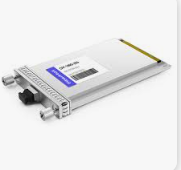
From the outside, the module behaves like a normal QSFP28 optic. Installation is straightforward. Once plugged into a compatible switch, the link usually comes up without complicated configuration steps.
The internal engineering is obviously more sophisticated than short-reach optics. Optical power budgets are higher, receivers are more sensitive, and dispersion tolerance becomes important. None of that is visible during everyday use, which is part of the reason ZR4 modules remain popular.
Operators get long-distance capability without needing to become optical specialists.
Why 100GBASE-ZR4 Often Replaces Older 10G and 40G Links
In many networks, long-distance links did not start at 100G. They began years earlier with 10G connections, sometimes aggregated into multiple parallel links. Later, some sites upgraded to 40G, which improved capacity but did not always solve growth problems.
Eventually, those networks reach a point where incremental upgrades stop making sense. Maintaining four or eight separate 10G circuits becomes inefficient. Managing multiple fibers increases operational overhead. Troubleshooting grows more complicated.
Moving to a single 100GBASE-ZR4 link simplifies the picture.
Instead of several parallel connections, there is one higher-capacity path. Fiber usage drops. Monitoring becomes easier. Link utilization is easier to understand. The improvement is not only technical but also operational.
Network teams often notice that documentation gets simpler after consolidation. Fewer links mean fewer diagrams and fewer points of confusion.
Deployment Realities of 100GBASE-ZR4 Modules
Real-world installations rarely match neat diagrams. Fiber routes take unexpected paths. Patch panels introduce loss. Connectors age over time. Small imperfections accumulate.
ZR4 modules usually include enough optical margin to tolerate these conditions. That margin is valuable because it reduces the need for perfect installation practices. Networks can grow in somewhat irregular ways without immediately breaking the link budget.
This flexibility is one of the reasons ZR4 deployments tend to be stable once they are up and running.
Engineers sometimes discover that a link works even when the calculated margin looks tight. At other times, links that appear safe on paper need minor adjustments. The behavior is not mysterious, just part of working with long-distance optics.
Over time, operators develop an intuitive sense for what works.
Power and Cooling Considerations for 100GBASE-ZR4
Long-reach optics always consume more power than short-reach modules. ZR4 modules are no exception.
That does not automatically make them difficult to deploy, but it does require attention. Dense switch platforms with many long-distance ports can generate noticeable heat. Proper airflow planning becomes important.
In moderate quantities, ZR4 modules fit comfortably into standard data center environments. Problems usually appear only when large numbers of long-reach optics are concentrated into a small area.
Some operators spread long-distance links across multiple switches simply to distribute thermal load. It is not always planned that way initially. Sometimes the pattern develops gradually as networks expand.
Either way, power and cooling considerations become part of long-distance design decisions.
Stability Over Long Fiber Routes with 100GBASE-ZR4
Long fiber routes introduce variables that short connections never encounter. Temperature changes affect fiber characteristics. Physical stress can alter attenuation slightly. Splices and connectors may degrade over time.
100GBASE-ZR4 modules are designed with these realities in mind. Their optical characteristics tend to remain stable across a wide range of conditions.
Once a link is operating within its expected range, performance usually stays consistent. Sudden failures are relatively rare unless physical damage occurs.
That predictability is important. Long-distance links often carry critical traffic between major sites. Stability matters more than squeezing out small performance gains.
Operators often value equipment that behaves in a predictable way year after year.
Planning Around Fiber Availability
Fiber availability often determines whether ZR4 modules are practical.
Some organizations have abundant dark fiber between locations. In those environments, deploying 100GBASE-ZR4 links is straightforward. A dedicated fiber pair can be assigned without much debate.
Other organizations operate with limited fiber resources. Every fiber strand must be carefully allocated. In those situations, the decision to deploy ZR4 modules may require more discussion.
Even then, the simplicity of a direct Ethernet connection sometimes outweighs the efficiency of multiplexed optical systems.
The decision is rarely purely technical.
100GBASE-ZR4 as a Bridge Technology
Network infrastructure evolves slowly. Equipment lifecycles stretch over many years. Decisions made today often shape architectures long into the future.
100GBASE-ZR4 often appears during transitional periods. It provides higher capacity without forcing immediate adoption of more complex optical technologies.
Some networks eventually move toward DWDM systems or coherent optics. Others remain on direct Ethernet links much longer than originally expected.
ZR4 modules fit comfortably into both paths. They can serve as a long-term solution or as a stepping stone toward something more advanced.
That flexibility is one of their quiet strengths.
Conclusion
100GBASE-ZR4 modules provide a practical way to build long-distance Ethernet connections without turning networks into specialized optical systems. They combine significant reach with familiar interfaces and manageable deployment requirements. While newer optical technologies continue to evolve, ZR4 modules remain relevant because they match the needs of many real networks. For organizations connecting distant facilities or upgrading legacy links, 100GBASE-ZR4 offers a straightforward path to higher capacity and stable long-distance performance.
